
A value trap is an investment that looks inexpensive on familiar ratios but fails to deliver because the business, finances, or shareholder claim deteriorates. The low price may be compensation for a real problem rather than a market mistake. Distinguishing a bargain from a trap requires more than comparing today's valuation with its own history. The business may no longer deserve the valuation it once had.
What Exactly Is a Value Trap?
To put it simply, a value trap is a stock that looks cheap—whether that's based on earnings, sales, book value, or cash flow—but the discount is only there because the underlying business is falling apart. The stock isn’t cheap in spite of its problems; it’s cheap because of them.
The trap usually gets set with backward-looking data. Sure, the company made great money last year. Yes, it used to dominate its market. The balance sheet might have even looked bulletproof a few quarters ago. But when the stock price tanks faster than the financial reports update, traditional valuation metrics can make the company look like a screaming buy.
And that’s where the illusion takes hold. A trailing price-to-earnings ratio only tells you what people were willing to pay for yesterday’s profits. It promises absolutely nothing about tomorrow. A high dividend yield just shows you what the payout would be if nothing went wrong—it doesn't mean the company has the cash to keep paying it. Even a low price-to-book ratio, which hints at hidden asset value, doesn't mean much if those assets can't generate a decent return anymore.
The market isn’t perfect, but it is a forward-looking machine. When a stock falls sharply, the question you should be asking isn’t, “Wow, how cheap is this compared to last year?” The real question is, “What just broke, and is this business model still viable?”
A true value opportunity usually involves a fundamentally solid business going through a temporary rough patch. Maybe the market freaked out over a single bad quarter. Maybe it’s a cyclical company nearing the bottom of a normal cycle, or maybe a great company just made a dumb acquisition and is busy cleaning it up. The business has a black eye, but it’s not bleeding out.
A value trap is a whole different animal. The problems here are structural. Demand is disappearing. Competitors are eating their lunch. Debt is tying management's hands, and the C-suite keeps promising a magical turnaround with zero proof. The old profit engine isn't just resting; it’s rusting away.
Think of a genuine value stock like a well-built house with ugly wallpaper and an overgrown lawn. It needs some elbow grease, but the bones are great. A value trap is a house with a gorgeous front porch but termites eating the foundation. From the sidewalk, it looks like a steal. But once you buy it, every time you open a wall, you find a new nightmare.
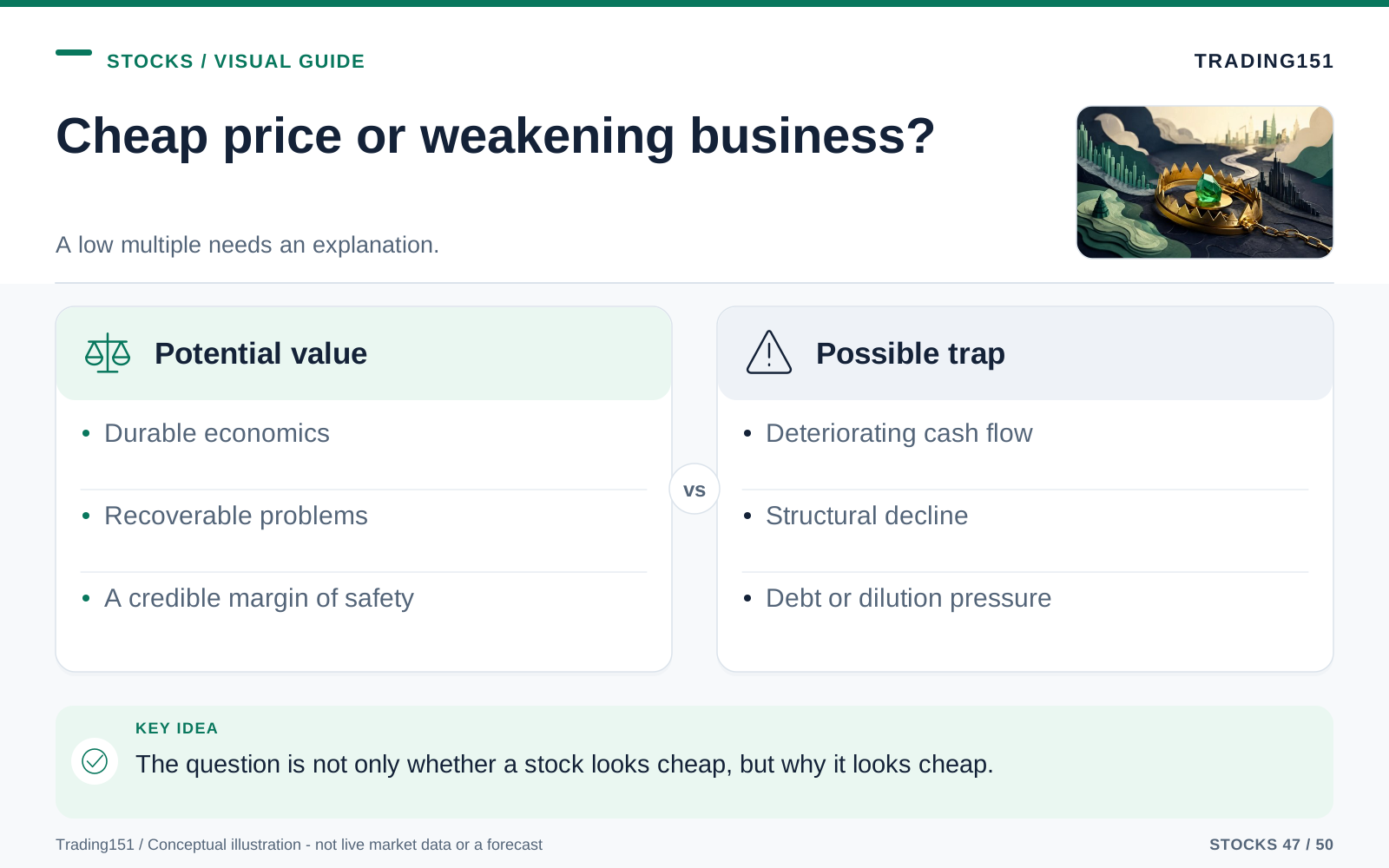
Read this diagram as text
- Potential value
- Durable economics; Recoverable problems; A credible margin of safety
- Possible trap
- Deteriorating cash flow; Structural decline; Debt or dilution pressure
Why Smart Investors Still Fall for Them
Value traps don’t just catch rookies. Veteran investors, professional fund managers, and Wall Street analysts with complex spreadsheets get snagged all the time. The reason is a bit uncomfortable: value traps prey on the exact mental habits that usually make us successful in other areas of life.
We’re wired to look for patterns. We love finding bargains. We root for a good comeback story, and we love feeling like we're the smartest person in the room. In everyday life, those are fine traits. But in the stock market, they can trick you into buying a toxic asset just because it's on the clearance rack.
Anchoring to the Old Price
Anchoring is arguably the biggest mental trap in investing. Once you see a stock hit $100, it’s hard to look at it trading for $35 without feeling like it's inherently "worth" that old high. That past price becomes your mental anchor, even if the company that earned that $100 valuation no longer exists. Old highs are super dangerous because they were often fueled by near-zero interest rates, peak profit margins, or pure hype. You have to evaluate the company based on what it's doing today. If you'd never seen the stock chart, would you still want to buy the business? If not, you're just betting that someone else will eventually share your nostalgia.
This is exactly how a catastrophic decline starts disguising itself as a discount. When a stock is down 65%, it feels like all the bad news must be priced in. But a stock can fall 65% and still be substantially overvalued if the earnings are vanishing, the assets are worthless, or they're about to issue a mountain of new shares just to keep the lights on. The percentage drop only tells you where the stock used to be; it tells you absolutely nothing about what it's worth right now.
That old high price? It might have just been a temporary delusion. Stocks don’t have memories, and they certainly don't owe you a return trip to their all-time highs just because you remember them fondly.
The Appeal of Being Contrarian
There’s a real ego boost that comes with contrarian investing. Buying the stock everyone else is trashing feels rebellious and smart. It makes you feel like the calm, rational thinker standing strong while the panicked masses run for the exits.
And sure, sometimes the crowd is wrong. Markets overreact, and great companies get thrown out with the bathwater. But simply doing the opposite of the crowd doesn't make you right. If a stock is getting hammered because of a misunderstanding, congratulations, you've found a deal. But if everyone is selling because the underlying business is dying, the crowd isn't panicking—they're just paying attention.
Telling yourself “Everyone else is just wrong” is dangerous. You have to earn that arrogance. A much safer mindset is: “Here is the exact data the market is ignoring, here is why this problem is temporary, and here is the specific proof that will tell me if I'm mistaken.” Without that level of severe honesty, being a contrarian is just stubbornness disguised as a strategy.
The Dividend Mirage
Large dividend yields are the siren song of the value trap. Because yield moves in the opposite direction of the stock price, a company that used to pay a safe 4% dividend might suddenly be sporting an 8%, 10%, or even 14% yield after a huge sell-off. If you're an income investor, that looks like a dream come true.
But a yield only matters if the check clears. When a business is bleeding cash, drowning in debt, or watching its sales evaporate, that large dividend isn’t a bonus—it’s a giant red flashing light. Management might scrape together the cash to pay it for a few more quarters just to keep investors from rioting, but eventually, reality wins. If they need that cash to survive, the dividend is getting slashed.
When the cut finally happens, the pain hits you twice. First, you lose the income you were counting on. Second, the stock tanks again because the cut proves to everyone that things are just as bad as the skeptics warned. That "generous income" was just a mirage all along.
The Comfort of Familiar Names
Some of the worst value traps are former heavyweights. We aren't talking about obscure penny stocks; we're talking about the mall brands you grew up with, the media empires that used to own the living room, or the tech giants that defined your childhood.
Familiarity breeds a false sense of security. We trick ourselves into thinking that because we recognize the logo, the company must be resilient. But having a famous name doesn't mean a company is still relevant. You can have a hundred years of history and still go bankrupt if you stop giving people what they want. You can own incredible real estate and still burn cash if you don't know how to run the business inside those buildings.
The stock market is ruthless. It doesn't care about nostalgia; it only cares about future cash flows. A beloved brand that can't raise prices, keep its customers, or adapt to the times might make you feel warm and fuzzy, but financially, it’s a sinking ship.
The Most Common Warning Signs
There is no formula to spot every value trap, but they do tend to leave the same footprints. The more of these warning signs you spot in a single company, the faster you should run the other way.
Red Flag 1: The Industry Is Moving Against the Company
The deadliest value traps are usually sitting right in the middle of a dying industry. A company can fire half its staff, bring in a hotshot new CEO, slap a new coat of paint on the stores, and roll out a large ad campaign—but if the world simply doesn't want what they’re selling anymore, none of it matters.
This is what investors call the “melting ice cube.” Sure, the business is still throwing off some cash today, but every year, the puddle gets smaller. Customers drift away. Sales shrink. The fixed costs suddenly feel a lot heavier. Suppliers start asking for cash up front, and the best employees jump ship. Before long, the company is spending all its energy just trying to survive rather than growing.
Think about the companies that built their empires on things like physical DVDs, printed phone books, large department stores, or clunky hardware that got replaced by a smartphone app. There were times when all of those stocks looked cheap. And they were! But they were cheap because the well was permanently running dry.
Before you hit the buy button on a beaten-down stock, be direct: Is the world moving toward this company, or away from it? If it's the latter, that low P/E ratio isn't a bargain. It's just the market correctly pricing in a slow death.
Red Flag 2: Debt Leaves No Room for Error
Debt isn’t inherently evil. When things are going well, it’s rocket fuel. But when a business starts shrinking, debt turns into an anvil around its neck. It turns a manageable turnaround project into a desperate race against the clock. You have to look closely at their loan terms, when the bills are due, and how much cash they need just to keep the doors open. A company can own fantastic assets, but if the bank is calling the shots, the shareholders are going to get wiped out.
When revenues are falling and debt is high, management’s hands are tied. The money that should be spent on upgrading tech, marketing, or launching new products is entirely eaten up by interest payments. As profits shrink, the banks get nervous and demand harsher terms. Their credit rating tanks. Suddenly, the CEO isn't running the company for you anymore; they're running it entirely to appease the creditors.
This gets dangerous when a big debt payment is looming and cash flow is drying up. A stock might look inexpensive based on last year's earnings, but if they hit a wall with their lenders, you’re looking at large shareholder dilution or a firesale of their best assets.
Don’t just glance at the debt-to-equity ratio and move on. Dig into their interest coverage. Look at when their debt comes due. Check their cash on hand. If a company is cheap but its balance sheet is a mess, you aren't buying an opportunity—you're just buying a ticket to a bankruptcy hearing where you are the absolute last person to get paid.
Red Flag 3: Management Keeps Selling the Same Turnaround Story
Every failing company has a shiny presentation explaining how they're going to turn things around. There's always a new "strategic vision," a large cost-cutting initiative, and a very reassuring CEO promising that the worst is definitely, finally over. And hey, sometimes it is.
But while you should listen to the first turnaround pitch, by the third or fourth one, you need to be deeply skeptical.
If a company has been "turning things around" for three years and revenue is still dropping, margins are still awful, and cash is still bleeding, they aren't turning around. They are sinking. Management might believe their own spin, but good intentions don't fix a broken business model. Slashing costs buys you a little time; it doesn't make people want your product again. Firing staff makes the next quarter's numbers look better, but it doesn't bring customers back.
Real turnarounds leave a paper trail you can see. Inventory stops piling up. Customer churn levels off. Profit margins stop shrinking. Cash flow improves. They pay down debt because they're making money, not because they had to sell the corporate headquarters. If the only proof of a turnaround is the CEO's optimism on an earnings call, stay away.
Red Flag 4: Margins Keep Shrinking
Top-line revenue can hide a multitude of sins. A company might still be moving millions of units, but if they're making less and less money on every item they sell, you have a large problem.
In a classic value trap, margins usually bleed out slowly, and then drop all at once. To keep customers from leaving, they start offering aggressive discounts. Then their own costs go up, but they're too scared to raise prices. Competitors force them to offer more perks. Soon, those "temporary" promotions become permanent just to keep the lights on. A company that used to print money turns into a hamster wheel where they have to work twice as hard just to break even.
One bad year of margins? Fine, things happen. But a multi-year slide is a large red flag. It usually means the company has lost its pricing power. The product has become generic, and customers just don't care enough to pay a premium anymore.
Profit margins are the ultimate test of a company's competitive advantage. If those margins are steadily evaporating, the company's "moat" is drying up right along with them.
Red Flag 5: Earnings Look Better Than Cash Flow
Accountants can work magic on an income statement. Even when a business is dying, creative depreciation, "one-time" restructuring charges, and weird working-capital shifts can make the official earnings look perfectly fine. You have to watch the unglamorous stuff: are receivables piling up because customers aren't paying? Is obsolete inventory gathering dust in a warehouse? Are they constantly writing off "exceptional" expenses every quarter? Profit is an opinion; cash is a fact.
You can't fake cash flow forever. If a company constantly brags about its earnings but never seems to generate any free cash flow, you need to ask some hard questions. They might be spending a fortune just to tread water. They might be using shady accounting to push their problems into the future. Or, they might just be stuck in a miserable industry that requires large, constant reinvestment just to survive.
Free cash flow isn't a flawless metric, but it cuts through the noise and asks the only question that matters: After paying every bill required to keep this business running, is there any real money left in the bank? If the answer keeps coming up no, that low P/E ratio is just smoke and mirrors.
Red Flag 6: The Bull Case Depends on Things Simply Going Back to Normal
If your entire reason for buying a stock is "well, things have to go back to normal eventually," you are probably looking at a value trap. The logic usually goes like this: The stock used to be at $50. Margins used to be 20%. People used to love the product. Therefore, it's bound to go back to those levels sooner or later.
Here's the problem: the market doesn't owe you a return to "normal," especially when the world has fundamentally changed. Interest rates aren't what they used to be. Consumer tastes have moved on. The competition got smarter. Technology made their core product obsolete. Or maybe the company's brand is just permanently toxic now.
A real investment thesis requires actual mechanics, not just blind hope. Why exactly will sales stop falling? How are they going to fix their margins? Where is the money coming from to pay off the debt? What exactly are they offering that the other guy can't copy in a week?
If your pitch for the stock essentially boils down to, “It’s down so much, it has to bounce,” watch out. Dead cats bounce; dying companies just go to zero.
Cheap Is Not the Same as Undervalued
Let's pause here, because this is the whole ballgame. Just because a stock is cheap on your scanner doesn't mean it's a bargain in the real world.
A low P/E ratio doesn’t mean much if the 'E' (earnings) is about to fall off a cliff. A low price-to-sales ratio is useless if the company bleeds money on every sale. Trading below book value sounds great until you realize their assets are completely obsolete. And a large dividend yield is usually just the market screaming that a payout cut is imminent.
Valuation metrics are just clues; they aren't the final verdict. They highlight interesting setups, but you still have to do the heavy lifting. Why is it so cheap? What does the rest of the market think is going to happen? What specific event would prove the market wrong? And what hard evidence do you have to back that up?
Great investors don't just blindly buy low multiples. They buy future cash flows for less than they are worth. It sounds like a subtle difference, but it’s everything. It is the only thing that separates a brilliant investment from a total illusion.
How to Tell a Real Opportunity from a Trap
You shouldn't just avoid every stock that's down on its luck. Some of the most lucrative investments you will ever make start out feeling uncomfortable. The market panics, people overreact, and a phenomenal business gets put on the clearance rack. The trick is figuring out whether you're looking at a temporary bruise or a fatal wound.
To figure that out, you need to stress-test three things: the actual business, the balance sheet, and the catalyst for change.
Rule 1: Demand a Clear Catalyst
A stock can stay cheap for years. That’s why you need a catalyst. A catalyst isn't just a vague hope that "sentiment will turn around." It’s a specific, undeniable event that will force the market to wake up and re-price the stock. Just hoping other people suddenly notice the low P/E ratio is a terrible strategy. You want to look for things like a finalized debt refinancing, the sale of a toxic division, a large change in executive compensation, or a new product cycle that's already showing up in their order books. The best catalysts fix the business; they don't just change the accounting.
Good catalysts are things you can track. Maybe a notorious activist investor just bought 10% of the company and is forcing them to sell off idle real estate. Maybe they just spun off a highly profitable division that was being dragged down by the core business. Maybe a crushing regulatory lawsuit was just settled.
It doesn't have to be explosive, but it has to be real. “The stock is too cheap” is not a catalyst. “Profit margins will finally expand next quarter because they just closed their 50 worst-performing stores and raw material costs are down 15%”—now that’s a catalyst. It gives you a specific metric to watch and a logical reason why the stock should go up.
If you buy without a catalyst, you might be right eventually, but your money will sit completely dead for years while you miss out on better trades. Even worse, the company might just slowly bleed out while you're waiting for the market to wake up.
Rule 2: Study the Moat Before the Multiple
The valuation multiple tells you what you're paying. The economic moat tells you if the company will survive long enough to make you any money.
A moat is just a fancy word for a durable competitive edge. It could be an unshakable brand, intense customer loyalty, large cost advantages, patents, or a product that is just unusually painful for customers to switch away from. If a company has a real moat, it can take a beating, suffer through a terrible recession, and still bounce back because the underlying physics of their industry are still in their favor.
If a company has no moat, they are completely defenseless. If they just sell generic junk, rely purely on undercutting competitors' prices, and have zero customer loyalty, that low valuation isn't a mistake—it's accurate. Buying that stock just because the spreadsheet says it's cheap is like buying a sinking boat just because you got a great deal on the paint job.
Before you stress over whether the P/E should be 8 or 12, ask yourself a simpler question: Why would anyone still be buying from this company five years from now? If you can't answer that easily, your margin of safety is a lot thinner than you think.
Rule 3: Follow the Cash
Cash is oxygen. It gives a struggling company choices. With cash, they can pay off angry lenders, fund a new product line, survive a severe recession, or buy back their own stock when it's cheap. A company burning cash has zero choices and absolutely zero room for error.
When you're looking at a turnaround play, skip the press release and go straight to the cash-flow statement. Look at the last five years of operating cash flow. Compare their free cash flow to the net income they're bragging about. Are they tying up all their cash in unsold inventory? How much money do they have to spend on basic upkeep just to keep the lights on? Finally, look at how much cash is left over to pay the debt and fund the dividend.
If a company is going through hell but still churning out reliable free cash flow, you might have found a winner. But if they need overly optimistic projections just to break even, walk away. I don't care how cheap the stock looks.
Rule 4: Separate Cost Cutting from Real Recovery
Every turnaround involves cutting costs, but cutting costs is not a turnaround. Anyone can close stores, fire employees, sell off trucks, and freeze the R&D budget. That will make earnings look fantastic for a couple of quarters, but it often hollows out the company and ruins their ability to compete in the future.
A real recovery is obvious because customers come back. Sales grow without the company having to run a 50%-off sale. The new products are selling. They are taking market share from competitors, not just shrinking at a slightly slower pace. The cash flow is getting better because the business is getting better, not because the CEO stopped paying the cleaning staff.
When management spends an entire earnings call bragging about how much money they saved, ask yourself what they are building. If you can't figure it out, they aren't fixing the company—they're just managing its funeral.
Rule 5: Decide in Advance What Would Prove You Wrong
This isn't the fun part of investing, but it is the part that will save your life. Before you buy a single share of a beaten-down stock, write down exactly why you think it's a good deal. Then, right below that, write down exactly what would prove you completely wrong.
Maybe your whole bet relies on them maintaining that fat dividend. Okay, if they cut the dividend, you sell. Maybe you're betting they can pay down their debt this year. If the debt goes up instead, the thesis is busted. Maybe you're expecting sales to bottom out in the next six months. If they keep dropping, you were wrong.
The goal isn't to panic and sell the second the stock drops a dollar. Value investing requires a stomach of steel. The goal is to keep you from turning a calculated risk into blind denial. A great investor knows exactly where the line is between normal market volatility and hard proof that they made a mistake.
The Hardest Part: Selling When the Story Breaks
Realizing you bought a value trap is painful. Refusing to admit it is fatal.
When you're sitting on a 40% or 60% loss, your brain starts playing tricks on you. Hitting the sell button makes the loss permanent, and nobody wants to do that. Holding onto the stock feels like hope. You start telling yourself that it's "too late to sell now," or that you'll "just wait for it to get back to breakeven," or that everyone else on Wall Street is just an idiot who doesn't get it.
That is the sunk cost fallacy talking. The money you lost is already gone; it doesn't matter anymore. The only question that matters right now is this: If you had cash in your hand today, would you buy this specific stock at this exact price, or is there a better opportunity out there?
If you wouldn't buy it today, you have absolutely no business continuing to hold it.
Taking a loss on a busted thesis isn't a failure; it’s just basic portfolio hygiene. Everyone buys a dud occasionally. The only difference between a minor annoyance and an account-destroying disaster is your willingness to swallow your pride and move on when the facts change.
A Practical Checklist Before Buying a “Cheap” Stock
Before you dive headfirst into a stock just because it looks like a bargain, take a breath. Run through these questions to cut through the noise:
Is it cheap because of a one-time screwup, or is the core business dying? Are sales down because of a mild recession, or are customers gone forever? Are profit margins hurting because of temporary supply chain issues, or because they have zero pricing power? Is the dividend paid for by cash, or are they borrowing money to fund it? Can they easily refinance their debt, or is the bank dictating their entire strategy? Does the CEO deliver on their promises, or is it always "wait until next year"? What specific event is going to make this stock go up? And most importantly, what exactly would prove you wrong?
Answering these won't guarantee a winner—nothing does. But it forces you to stop acting on the primal urge of "ooh, a sale!" and starts forcing you to think like a business owner.
Find what must change, who controls it, and who pays for it
State the proposed improvement precisely. Does the thesis require higher prices, lower costs, asset sales, refinancing, or a recovery in customer demand? Each has different dependencies. "Management will turn it around" is not enough without identifying the actions, resources, and evidence that would make the turnaround credible.
Follow the funding need through the weak period. A company can have valuable assets and still be forced to issue shares, sell those assets cheaply, or restructure debt before conditions improve. The eventual business recovery may then benefit new capital providers more than existing shareholders. Balance-sheet resilience is part of the valuation, not a separate afterthought.
Check whether the apparently cheap metric is near a cyclical peak. Earnings can fall faster than the share price, turning a low trailing P/E into a high valuation on sustainable profit. Book value can also overstate realizable value when assets are obsolete, difficult to sell, or dependent on optimistic assumptions.
Set evidence-based review points. A missed operational milestone may matter more than a temporary price decline, while repeated explanations for delayed improvement can indicate that the thesis is not working. Do not use the amount already lost as a reason to lower the standard of proof. A bargain needs a credible path from the current business to shareholder value, not merely a price far below an earlier high.
Estimate how much time the company has
A value trap often becomes clearer when the financing calendar is placed beside the investment thesis. A business may need several years to recover while a major debt maturity arrives in six months. A low valuation does not solve that mismatch. Examine cash, borrowing terms, covenants, near-term maturities, and the realistic options for raising more money.
Those options can change the outcome for shareholders. An asset sale may reduce future earnings capacity. New equity may dilute existing ownership. Refinancing may be available only at a higher cost or with restrictive terms. A business can survive while the original shares produce a poor return. 'The company will not disappear' is therefore a weaker argument than it first appears.
Also distinguish a temporary earnings setback from a structural decline. A cyclical business may recover when demand improves; a business losing its competitive position may not return to its earlier profitability. The evidence should come from customer behavior, unit economics, investment needs, and competitive developments, not simply from the fact that the shares once traded much higher.
A useful valuation includes an unfavorable case in which the hoped-for recovery takes longer or requires more capital. The margin of safety should exist in that analysis, rather than being inferred from a low multiple alone. Sometimes the most valuable research conclusion is that the uncertainty cannot be priced confidently enough to justify a position. Passing on an idea is a decision, not a failure to recognize a bargain. 1
Cheapness Needs a Business Case
The market is littered with things that look like bargains. Some of them will make you rich. Others are cheap for horrifying reasons that you won't fully understand until your money is gone.
Value traps are so effective because they play on our emotions. We love a good deal, we anchor to old prices, we trust familiar logos, and we desperately want to believe in a comeback. It feels amazing to buy a stock on clearance, but that rush completely masks the hard reality of whether the business is worth owning in the first place.
When you see a cheap stock, approach it with intense curiosity, not excitement. Excitement makes you try to catch a falling knife. Curiosity makes you figure out who dropped it and why.
A real value play is more than just a low multiple on a screen. It has cash flows that will survive the storm, a management team that isn't asleep at the wheel, and a realistic path for the market to realize it was being too pessimistic. Your pitch for the stock should still make sense even if things stay messy for a while; it shouldn't require a miraculous return to the greatest year the company ever had.
Set your dealbreakers before you buy. If the debt rises sharply, the customers vanish, the margins collapse, or the CEO keeps moving the goalposts, you have to be willing to walk away. Just blindly averaging down into a loser isn't patience; it's an emotional attachment.
There are no medals for being the last guy on a sinking ship. Demand a margin of safety, keep your position sizes reasonable, and never forget that sometimes, a cheap stock is just the market correctly pricing a dying company.
Sources and further reading
Editorial revision: 7 October 2026. Numerical scenarios are hypothetical unless identified as historical. References support the added explanations and selected corrections; rules and product terms should be checked again before acting.