
Portfolio automation can handle contributions, purchases, and rebalancing on a schedule. It can reduce forgotten tasks and impulsive decisions, but it cannot determine whether the underlying plan still fits your life. The useful boundary is between routine actions that follow clear rules and decisions that require a fresh judgment. Automation should make the first easier without hiding the second.
The Real Problem Is Not Lack of Information
If you're struggling with investing, it’s probably not because you can’t find enough information. We have too much of it.
Between earnings calls, inflation reports, Fed rate hikes, endless YouTube breakdowns, podcasts, and Twitter threads, it’s easy to drown in data. Finding an opinion isn't the problem. The problem is whether any of those opinions help you make better choices.
Usually, they just make things worse.
A scary headline about a looming recession can make a perfectly rational investor want to sell everything and hide in cash. A few months of rising prices can make that same person feel stupid for playing it safe. And listening to a friend brag about a meme stock they timed perfectly? That’s enough to make a solid, diversified portfolio feel boring—even when it's doing exactly what it's built to do.
When you invest manually, every market hiccup feels like a personal test. Every time you log in to deposit money, you wonder, “Is now a good time?” Every dip whispers, “Did I mess up?” Every large rally screams, “Should I be taking more risk?” The more you check your accounts, the more you're tempted to tinker.
And that’s dangerous. Human beings simply aren't wired to be calm, rational capital allocators. We’re wired to react.
When the market tanks, our natural aversion to losing makes the pain feel like an emergency. When stocks soar, FOMO makes sitting on the sidelines feel like a failure. We naturally assume whatever just happened will keep happening (hello, recency bias). We mistakenly think we can time the market. And we actively search for articles that validate the impulsive decisions we already want to make.
None of this means you're bad at investing. It just means you're human. Unfortunately, the stock market is exceptionally good at punishing normal human instincts.
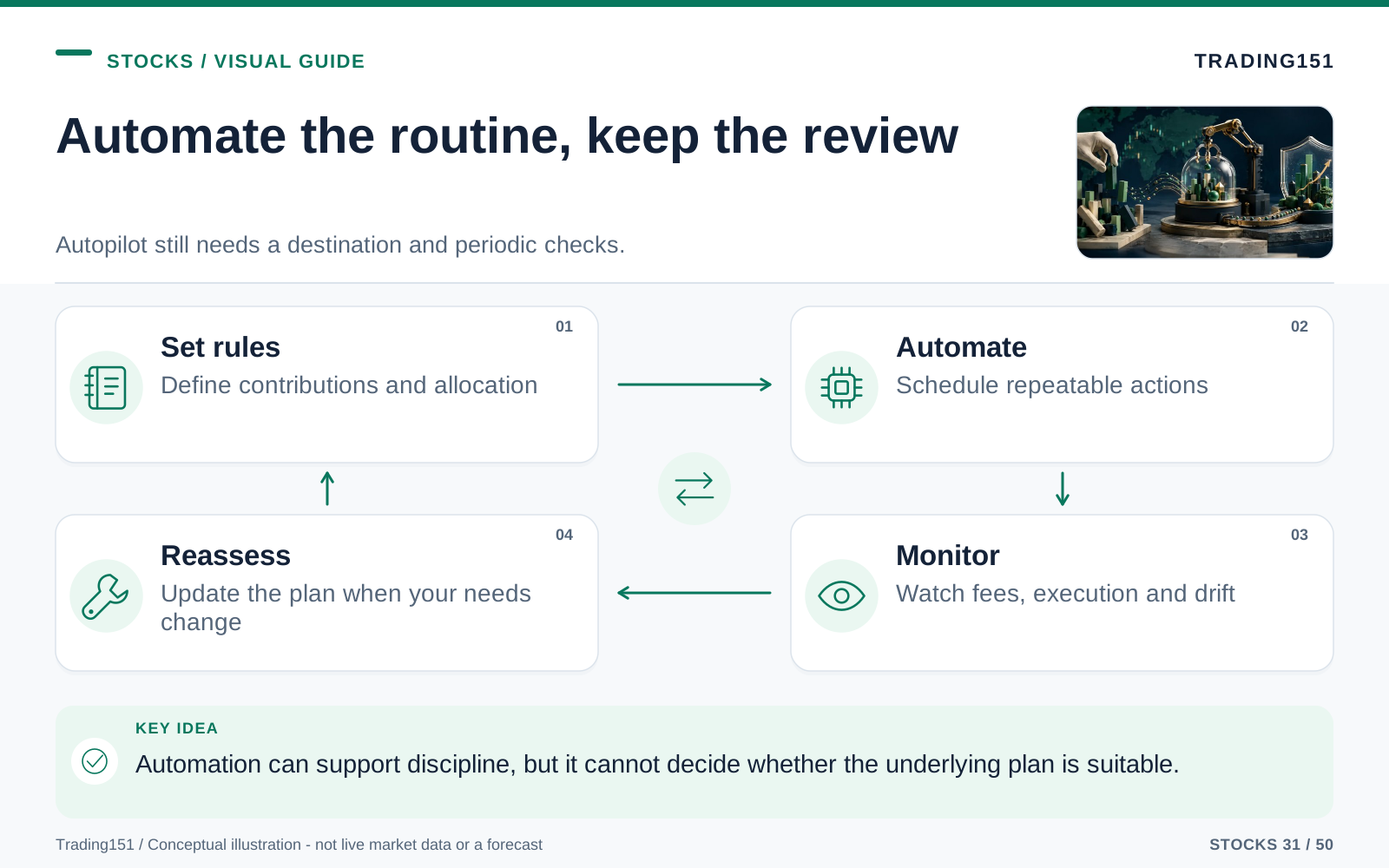
Read this diagram as text
- Set rules
- Define contributions and allocation
- Automate
- Schedule repeatable actions
- Monitor
- Watch fees, execution and drift
- Reassess
- Update the plan when your needs change
What Portfolio Automation Means
At its core, portfolio automation simply means using technology to handle the routine mechanics of investing. Instead of logging in every month to figure out how much to transfer, what to buy, and whether your asset mix is out of whack, you set the rules once and let the platform do the heavy lifting.
It can be as basic as a recurring monthly transfer from your checking account that automatically buys an S&P 500 index fund. Or, it can be more complex, involving robo-advisors, automatic rebalancing, fractional shares, and tax-loss harvesting.
But here’s the key takeaway: automation isn’t an investment strategy in itself. It’s just the operating system that runs whatever strategy you’ve chosen.
You can automate a substantially aggressive tech-heavy portfolio, or a super-safe bond-heavy retirement account. The automation doesn’t decide your risk level—you do.
That distinction is huge. A good automated system shouldn’t make your money feel like a black box. It should make your investing feel deeply intentional. You decide how much risk you want, what you want to own, and how much you can afford to invest. Once that's settled, the system takes over the boring stuff without the daily drama.
Why Automation Works: It Protects the Plan From the Investor
The best thing about an automated portfolio isn’t that computers are smarter than people. Half the time, they aren't. The real magic is that computers don't have feelings.
Your automated system doesn’t wake up sweating about inflation. It doesn’t panic-sell because the Dow dropped 800 points. It doesn’t chase a hyped-up stock because someone on Reddit posted a screenshot of their large gains. It never gets bored, greedy, embarrassed, or distracted.
It just follows the damn rules.
Sure, that sounds dull. But dull is exactly what you want when building wealth. The worst financial mistakes usually happen when we're either terrified or substantially excited. By automating things, you drastically reduce the number of times you have to physically push a button—which means fewer chances to accidentally sabotage yourself.
That’s why this approach can feel almost too easy. You aren’t trying to outsmart the market. You’re just building a machine that keeps humming along in the background, rain or shine. Some months you'll buy high. Some months you'll buy low. Some years your portfolio will look like pure genius, and other years it’ll test your patience. The goal isn’t to dodge volatility; it’s to ride it out without turning every price swing into a stressful decision.
The Core Parts of an Automated Portfolio
A fully automated setup usually relies on a few simple gears. None of them are particularly sexy, but together, they’re powerful.
1. Automatic Contributions
This is the absolute foundation. Automatic contributions act as a pipeline moving cash from your paycheck straight into your investments—no daily willpower required. The trick is to schedule these transfers right after you get paid, making sure to leave enough of a buffer in your checking account so you don't overdraw when bills hit. (If your income fluctuates, you can automate a safe baseline amount and manually invest any leftover bonuses later.)
For most of us, the sweet spot is moving the money a day or two after payday. If you're paid on the 1st and 15th, set your investment transfers for the 3rd and 17th. This gives the deposit time to clear, but it snatches the money away before it quietly vanishes into takeout, Amazon Prime impulses, and random subscriptions.
This flips the script on how most people handle money. Instead of investing whatever happens to be left at the end of the month, you invest first and spend what remains.
And don't stress if the amount feels small at first. A strong $100 a month beats an ambitious $1,000-a-month plan that you cancel after two weeks. Build a habit you can comfortably sustain, rather than trying to look like a hero on a spreadsheet.
2. Dollar-Cost Averaging
When you automate your contributions, you naturally start doing something called dollar-cost averaging. That’s just a fancy way of saying you buy a fixed dollar amount of an investment on a regular schedule, totally ignoring what the market is doing.
Will this mathematically beat dropping a large lump sum into the market at the exact perfect bottom? No. But since nobody has a crystal ball to find that perfect bottom, dollar-cost averaging is the next best thing.
When the market is booming and prices are high, your fixed contribution automatically buys fewer shares. When everything crashes and stocks go on sale, your money scoops up more shares. You never have to hype yourself up to buy the dip; the system just does it. You never have to agonize over whether the market is “too expensive” right now; you just follow the schedule.
The psychological relief is even better than the math. It turns investing from an anxiety-inducing event into a background habit.
3. Automatic Investment Selection
Just moving money into a brokerage account isn't enough—cash sitting idle in a settlement fund isn't doing you any good. Your automation needs to know exactly what to buy. You could use a target-date fund or an all-in-one ETF, which are brilliant for their simplicity. Or you might use a robo-advisor that spreads your money across multiple funds based on your profile.
Some platforms let you pick a few ETFs and set percentage rules so every dollar is instantly routed to the right place. In a 401(k), a target-date fund makes this effortless. In a standard brokerage account, you might just set up a recurring buy for a broad index fund.
Which one is best? That depends on how much of a control freak you are. If you want zero maintenance, go with a robo-advisor or target-date fund. If you like holding the reins a bit more, set up recurring ETF trades in a standard brokerage. Either way, the goal is the same: making sure your money gets invested the second it hits the account.
4. Dividend Reinvestment
Dividends are great, but if you're still in the wealth-building phase of your life, you probably shouldn't be cashing them out to buy groceries. A DRIP (Dividend Reinvestment Plan) automatically takes those cash payouts and uses them to buy more shares—or even fractions of shares—of the asset that paid them.
If you don't turn this on, those dividends will just pile up as cash. You might forget about them, accidentally spend them, or tell yourself you're waiting for the “perfect time” to reinvest.
DRIP is the quiet, unsung hero of compound interest. Your shares spit out dividends, those dividends buy more shares, and those new shares generate even more dividends down the road. It looks like pennies at first, but give it a decade or two, and it snowballs into something large.
5. Automatic Rebalancing
Over time, every portfolio wanders off course.
Let's say you built an 80% stock and 20% bond portfolio. If stocks have a killer year, you might suddenly find yourself holding 90% stocks. It feels great when the market is up, but it means you're taking on way more risk than you originally signed up for. The reverse happens in a crash, leaving you stuck in too many conservative assets right when stocks are cheap.
Rebalancing forces your portfolio back to its target weights. Doing this manually is a pain—it requires math, trading fees, tax considerations, and the sheer willpower to sell your winners and buy your losers.
Automation makes this frictionless. Depending on where you invest, the platform might rebalance on a set calendar date, or whenever your percentages drift too far out of whack. Sometimes it simply uses your new monthly deposits to buy whichever asset is lagging behind.
The goal here isn't to squeeze out every possible penny of return. It's to stop your portfolio from quietly morphing into something you never intended to own.
6. Tax-Aware Automation
If you’re investing outside of a retirement account, taxes complicate things. Selling winners triggers capital gains. Selling losers can offset those gains, but the rules are notoriously tricky. Even reinvesting dividends creates a tax paper trail.
Many robo-advisors offer tax-loss harvesting. This feature automatically scans for investments that have dropped in value, sells them to lock in a tax deduction, and immediately swaps them for something similar so you don't miss a market rebound. It’s a neat trick, but it’s not magic. You have to watch out for wash-sale rules, and it gets messy if you're holding similar funds in other accounts, like your spouse's IRA.
The real benefit of tax automation is that it stops you from being lazy. It keeps your tax records clean and minimizes idle cash. Just make sure you understand the feature before toggling it on—just because it sounds sophisticated doesn't mean you necessarily need it.
Who Benefits Most From Portfolio Automation?
A lot of people assume automation is just “investing with training wheels” for beginners. That couldn’t be further from the truth. Often, veteran investors benefit the most, simply because they’ve been around long enough to know how much damage a string of bad, emotional decisions can do.
The Busy Professional
If your day job already drains your mental battery, managing your portfolio shouldn't feel like a second shift. Whether you're a doctor, a contractor, a small business owner, or just a deeply tired parent, you probably don't have the bandwidth to monitor asset allocations on a Tuesday night.
Automation keeps your wealth growing while you focus on your actual life. Remember, the best financial plan isn't the one that gets you the highest theoretical returns. It's the one you can stick to when life gets chaotic.
The Emotional Investor
We all know someone (maybe it's you) who understands the math perfectly but completely falls apart under pressure. They check their portfolio app four times a day. They panic when the market dips. They constantly tweak their strategy based on the latest scary headline. They don't need more market research; they need a barrier between their anxiety and their money.
For this kind of investor, automation is a lifesaver. It creates a firewall between your feelings and your sell button. You can still check in on your money occasionally, but you're no longer forced to make a conscious choice every time the market twitches.
The High Earner Who Has Not Built Wealth Yet
This is surprisingly common: you make great money, but you have very little to show for it. The cash flows in, and your lifestyle just effortlessly absorbs it. Raises turn into nicer cars, better vacations, and more expensive dinners.
Automating your investments fixes this by paying your future self before your current self gets a chance to spend it. Over time, this transforms a high salary into actual, tangible wealth, instead of just a trail of receipts.
The Experienced Investor Who Wants a Cleaner System
Putting things on autopilot isn't an admission of defeat. Sometimes it just means you're wise enough to simplify.
Plenty of seasoned investors automate their boring “core” retirement accounts and use a smaller, separate brokerage account for stock picking and riskier bets. It keeps the foundation strong while still letting you scratch the itch to trade.
The “Core and Explore” Approach
A lot of people hate the idea of automation because, frankly, they like investing. They enjoy diving into balance sheets, tracking emerging tech, and placing bets on individual companies. That’s perfectly fine! The danger only starts when you gamble your entire retirement on those bets.
The “core and explore” strategy is the perfect middle ground.
Your core is your serious money—the funds you’re depending on to retire, buy a house, or achieve financial freedom. This chunk should be highly diversified, totally automated, and painfully boring. Depending on your risk appetite, this should be 80% to 95% of your total net worth.
The explore chunk is your play money. This is where you can buy individual stocks, chase a trend, or test your gut feelings. If you knock it out of the park, great! You boosted your returns. If your picks tank, it stings, but it doesn’t ruin your life.
This setup respects both realities: the market is fun to play, but your future shouldn't depend on your ability to outsmart Wall Street.
The Trade-Offs Nobody Should Ignore
Let's be clear: automation is fantastic, but it’s not a cheat code. Anyone who promises you effortless, risk-free wealth is selling a fantasy. A well-automated portfolio will still take a beating during a recession. It can lose money, it can be set up poorly, and it can carry fees.
The first thing you give up is control. By design, you are telling a computer to follow the rules, even when every bone in your body wants to do the opposite. When the market is in free-fall, your system will cheerfully keep buying stocks. When tech is booming, it might trim your winning tech holdings to buy boring bonds. It’s the smart move, but man, it can feel frustrating in the moment.
The second trade-off is the cost. Setting up recurring buys at a standard brokerage is usually free. But if you use a robo-advisor, you’re going to pay an advisory fee on top of the fund costs. If that fee prevents you from panic-selling, it's worth every penny. If you have a dead-simple portfolio and the discipline of a monk, you might be overpaying.
The third issue is customization. A robo-advisor built your portfolio based on a short questionnaire. It doesn't know about your spouse's pension, the rental property you just inherited, or the stock options sitting in your company account. The more complicated your life gets, the more you need to make sure your automated system still fits your actual reality.
Finally, there’s complacency. "Set it and forget it" is a catchy phrase, but you shouldn't forget it. You still need to log in occasionally to make sure your deposits aren't failing, your fees haven't skyrocketed, and your beneficiaries are up to date.
How to Build an Automated Portfolio
Getting this up and running is pretty straightforward. The best setup is always the one you understand well enough to leave alone.
Step 1: Define the Purpose of the Account
Before you buy a single stock, figure out what this money is for. Saving for retirement in 30 years requires a completely different strategy than saving for a house down payment in four years. An emergency fund shouldn't be invested in the same way as your wealth-building account.
Your goal dictates your timeline, and your timeline dictates your risk. If you skip this step, you're just automating a bad idea.
Step 2: Choose the Account Type
Start with the low-hanging fruit: tax-advantaged accounts. If your employer offers a 401(k) match, take it. Max out an IRA if you can. These accounts give you tax breaks that are almost impossible to beat on the open market. Once you've squeezed all the juice out of those, you can open a standard taxable brokerage account.
The right account depends entirely on your income, tax bracket, and when you'll need the cash. Automation will happily fund whatever account you tell it to, but you have to pick the right bucket first.
Step 3: Select a Platform That Matches Your Desired Level of Involvement
You basically have three options here:
- Robo-advisors: They do it all—build the portfolio, rebalance it, and manage the taxes. Perfect for people who want zero homework and don't mind paying a small management fee.
- Traditional brokerages with recurring investments: Most major brokers now let you automatically buy fractional shares on a set schedule. You have to pick the ETFs yourself, but it’s cheaper and gives you more control.
- Workplace retirement plans: Your 401(k) is the original automated portfolio. Your money is pulled directly from your paycheck before you even see it, usually straight into a target-date fund. It doesn't get easier than that.
None of these are "wrong." Just pick the one that gets you investing consistently without causing a headache.
Step 4: Pick an Allocation You Can Live With
Your asset allocation is simply the recipe of your portfolio—how much stock, how much bond, how much cash. It’s the single biggest factor in how much money you’ll make, and how substantially your balance will swing.
Going heavily into stocks sounds awesome when everything is going up. But the real test is whether you can stomach looking at your account when it’s down 40%. A conservative portfolio might feel like a warm blanket in a recession, but it won't grow fast enough to fund a beach retirement. The perfect allocation isn't the one that looks best on paper; it's the one you can cling to when the sky is falling.
Be painfully honest with yourself here. If a steep market crash would cause you to panic and sell everything, build a safer portfolio from day one.
Step 5: Automate Contributions Around Your Pay Schedule
Once the accounts and funds are ready, sync your deposits to your paychecks. Start small—pick a number you won't even notice is missing. You can always bump it up later once you pay off a credit card or get a raise.
Better yet, try to automate your future behavior. Some platforms let you auto-increase your contributions by 1% every year. It’s a brilliant way to trick yourself into saving more without ever feeling a pinch in your lifestyle.
Step 6: Turn On Dividend Reinvestment
Unless you are living off your dividend checks, go into your settings and turn on DRIP. It stops cash from gathering dust in your account and supercharges your compound interest.
Just double-check that it’s turned on for all your holdings, as some brokerages handle this differently and might require you to opt-in manually.
Step 7: Set a Review Schedule
Again, automation doesn't mean abandonment. You just want to stop obsessing. It’s best to review your portfolio based on life events rather than calendar days. Getting married, having a kid, buying a house, or getting a large promotion—these are reasons to check your portfolio and maybe adjust your risk.
Otherwise, a quick check-in once or twice a year is plenty. When you look, don't worry about what the market did last week. Ask yourself: Are my deposits still going through? Are my fees acceptable? Does my risk level still match my timeline? Do my beneficiaries need updating?
That kind of maintenance is valuable. Staring at a red ticker symbol at 2 PM on a Tuesday is not.
Common Mistakes to Avoid
Automation is a superpower, but only if you keep it simple. If you use it to try and juggle a million things at once, it falls apart.
Automating Before Building a Cash Buffer
Investing is crucial, but keeping cash on hand is mandatory. If you have to liquidate stocks every time your car needs new brakes, your automated engine will never gain momentum. Build a solid emergency fund first, so your investments can stay invested.
Choosing Too Many Investments
Some people mistake clutter for diversification. They set up recurring buys for a dozen different ETFs, a handful of tech stocks, some dividend funds, and a gold ETF. That’s not a strategy; that’s a mess.
A world-class portfolio can consist of just two or three broad index funds. Every asset you add should have to fight for its place. If you can't clearly explain why you own it, get rid of it.
Changing the Rules Too Often
The whole point of this system is to stop making emotional choices. If you overhaul your automated settings every time a financial guru predicts a crash, you haven't automated your wealth. You've just automated your panic.
Change your strategy when your life changes—not because the market had a bad month.
Ignoring Fees
Paying a small fee for a service that keeps you disciplined and handles your taxes can be totally worth it. But fees compound just like interest does. Keep an eye on expense ratios and management fees. Don’t pay a premium just because an app has a slick interface.
Assuming Automation Removes the Need for Judgment
Algorithms are amazing at following instructions, but they have absolutely zero common sense. If you're approaching retirement, selling a business, or dealing with a messy inheritance, you need a human brain to look at the big picture and make sure your automated rules still make sense.
What Automation Gives Back
The practical perks of portfolio automation are obvious. The money moves. The dividends reinvest. The balance grows. Your financial life doesn't stall just because you're busy.
But the greatest benefit is the mental space it frees up.
You only have so much attention to give. Every hour you spend obsessing over stock charts is an hour you could have spent advancing your career, playing with your kids, hitting the gym, or enjoying the life you’re trying to fund. Every time you stress out over a market dip, you’re burning energy that could be used for anything else.
This isn't an excuse to be careless with your money. It’s about being careful where it counts. Being careful means designing a robust system, keeping fees low, and staying consistent. It doesn't mean letting a fluctuating number on a screen ruin your morning.
Automate the routine, keep the exceptions visible
Begin with the funding route. Confirm when cash leaves the bank, when it becomes available to invest, and what happens if the balance is insufficient. A recurring purchase that repeatedly fails or triggers an overdraft has not simplified the plan. Leave enough flexibility for bills and irregular expenses rather than assuming each month will look the same.
Read the investment rules as carefully as the app's interface. A service may rebalance only after a threshold is crossed, direct new contributions toward underweight holdings, or sell existing positions. Those methods can have different costs and tax consequences. A label such as "automatic optimization" is not a substitute for understanding which transactions may occur.
Set alerts for failures and exceptions rather than for every price movement. A rejected contribution, changed fund, expired payment authorization, or unexpected sale deserves attention. A routine market fluctuation may not. The point is to make important departures from the plan visible while leaving ordinary noise alone.
Schedule a periodic review and another after a material life change. Check the goal, time horizon, cash needs, fees, and account tax treatment. A previously suitable allocation can become unsuitable even while the software follows its instructions perfectly. The plan remains your decision; the automation is simply a way to carry out parts of it consistently.
Decide who owns an exception
Automated investing still needs a person responsible for failures. A bank transfer may be rejected, an account may lack cash, an order may remain pending, or a service may change its supported instruments. Decide who checks those exceptions and how often.
A recurring instruction should also be reviewed when circumstances change. An old contribution amount can become inappropriate after a loss of income, while an outdated allocation may persist simply because the process keeps running. Automation is most useful when it removes repetitive work without hiding decisions that still need judgment. The system should make exceptions visible rather than quietly treating every failed instruction as though it succeeded. 1, 2, 3
Automate the Habit, Keep Ownership of the Plan
Portfolio automation isn’t a magic wand that excuses you from learning the basics of finance. It’s simply a tool that makes good behavior effortless.
You still have to decide on a sound strategy. You still have to make sure you're only investing money you can afford to lock away for years. You still have to understand what you're buying. But once you make those heavy choices, automation takes over the daily grind without the emotional baggage.
And that’s the real win. It transforms investing from a daily source of stress into a silent, humming machine in the background of your life. It shifts your focus away from what the market is doing today, and forces you to look at what your wealth will do decades from now.
A truly great automated plan is one you barely notice. The money is pulled, the shares are bought, and your portfolio stays perfectly balanced, all without you lifting a finger or checking a chart.
Do your routine maintenance once or twice a year to ensure your goals, accounts, and security settings are still aligned. But beyond that? Let the system do its job.
Automation gives you your time back, but you still own the outcome. Build a system robust enough to survive both your busiest work weeks and the scariest market crashes—and then go live your life.
Sources and further reading
Editorial revision: 7 October 2026. Numerical scenarios are hypothetical unless identified as historical. References support the added explanations and selected corrections; rules and product terms should be checked again before acting.