
Stock-market recoveries are often discussed as though every loss follows the same path back to a previous high. That is not true for every market, currency, or individual company. Even a broad index's recovery can look different after inflation, dividends, or withdrawals are considered. Historical examples are useful for perspective, but they do not supply a guaranteed timetable for money that will be needed soon.
The Anatomy of a Crash: When Confidence Breaks
We tend to talk about the stock market like it’s a giant, emotionless machine running on pure math and logic. And sure, part of it is. Prices go up and down based on interest rates, company earnings, and changing expectations. But peel back the layers, and the market is really just a large, real-time gauge of human emotion. When people buy on borrowed money—or leverage—it usually makes a bad situation worse. If prices drop, lenders demand their money back, which forces traders to sell, driving prices even lower. It’s a vicious cycle that can temporarily detach stock prices from reality. It’s also why totally unrelated investments can suddenly plummet at the same time; people aren't selling because every business is failing, they're selling because they desperately need cash.
On any given Tuesday, the market is a chaotic mix of greed, fear, hope, and ambition. Usually, all those feelings balance out. Some companies soar, others stumble, investors bicker over valuations, and the broader market chugs along looking surprisingly calm. But then, something happens that hits hard enough to shatter the crowd's confidence.
Sometimes you can see it coming from a mile away. A substantially speculative bubble finally pops. A banking system buckles under the weight of terrible loans. Or a global pandemic shuts down offices, flights, and everyday life in a matter of days.
Other times, the trigger is a lot quieter. Maybe stock prices just drifted a little too high. Debt quietly piled up in the background. A couple of shaky companies go under, or inflation hangs around longer than anyone wanted. Investors who were totally fine paying top dollar for stocks yesterday suddenly start wondering if they overpaid. A few people decide to sell, and selling has a funny way of creating its own momentum.
When you're caught in the middle of it, a crash rarely feels organized. One person sells to pay a bill. Another sells because they’re convinced prices will keep dropping. A large mutual fund sells because its internal rules say it has to. A computer algorithm sells because a line of code triggered it. Prices fall, which scares more people, which triggers more selling. What starts as mild concern morphs into urgency, and urgency eventually boils over into flat-out panic.
And the financial media loves to throw gasoline on that fire. It’s not that journalists are making things up; it’s just that fear glues our eyes to the screen. Red ticker tape, ominous music, "BREAKING NEWS" banners, and experts predicting doom all fight for your attention. When the market is in free-fall, everyone wants to explain why it's going to get even worse. If you watch enough of it, doing nothing starts to feel irresponsible.
That’s the real danger of a crash. It’s not just the temporary dip in your net worth. It’s the creeping feeling that this drop is uncovering a permanent, grim reality about the future. A normal market dip says, "Hey, prices are a bit lower today." A crash whispers, "The future you were saving for might not happen."
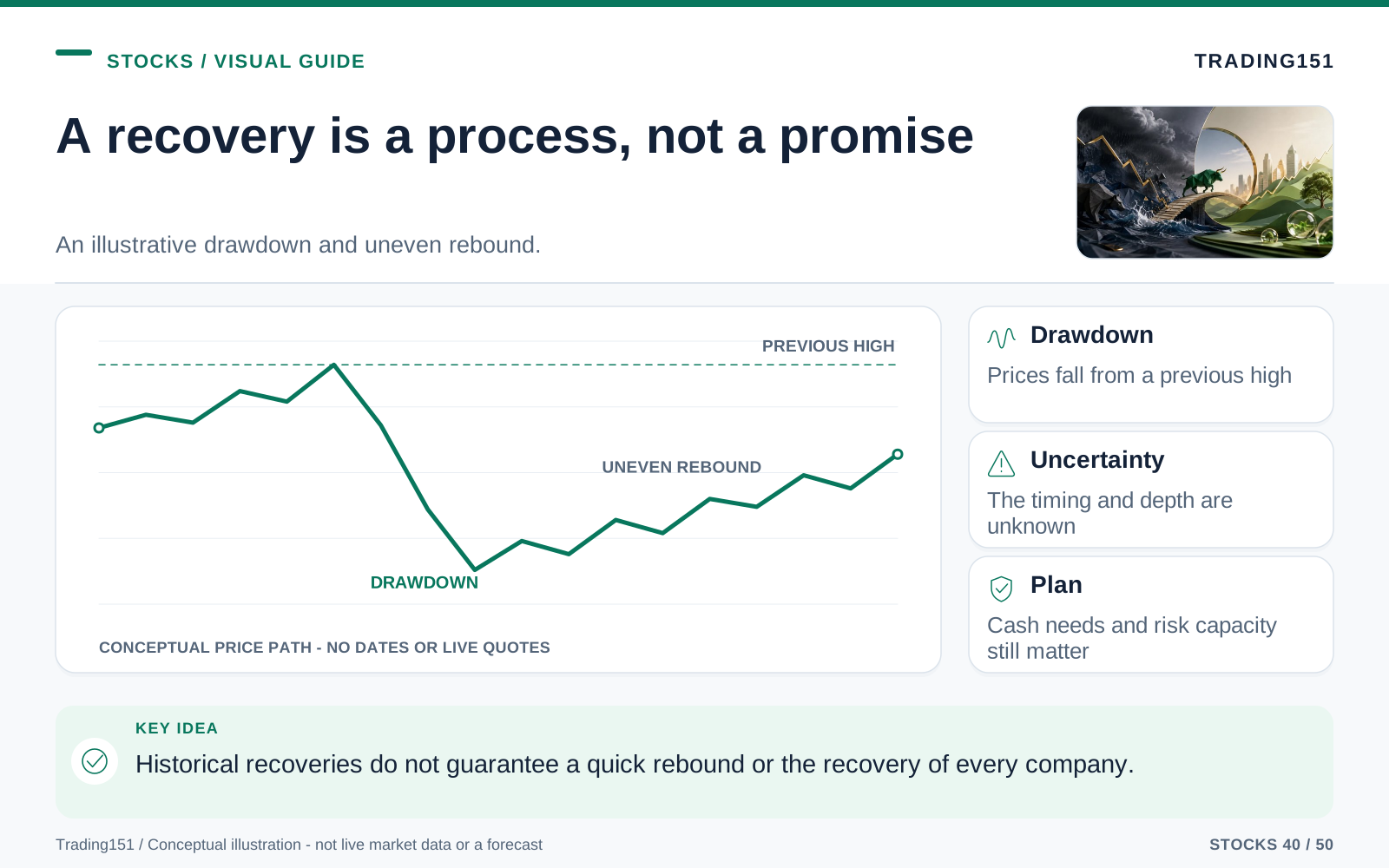
Read this diagram as text
- Drawdown
- Prices fall from a previous high
- Uncertainty
- The timing and depth are unknown
- Plan
- Cash needs and risk capacity still matter
Why Every Crash Feels Like the First One
One of the weirdest things about financial history is that it constantly repeats itself, but always shows up wearing a different disguise. You can study market crashes for years and still feel totally blindsided when the next one hits. The specific details are always just new enough to make old lessons feel irrelevant.
Take 1929. That crash followed a roaring decade of insane confidence and borrowed money. The fallout was devastating, fundamentally changing the lives of everyday families, workers, and businesses. The Great Depression wasn’t just a financial hiccup; it was a trauma that defined a generation and permanently altered how millions of people viewed money and risk.
Then look at 1987. The shock there was purely about speed. "Black Monday" proved how terrifyingly fast panic could spread through a market newly connected by computers and automated trading. Losing more than twenty percent of the market's value in a single day sounded like fiction until it happened. People went to sleep in a booming bull market and woke up in a financial nightmare. Yet, the economy didn't collapse into a second Great Depression. The dust settled, the market adjusted, and it eventually climbed back up.
The dot-com bust of the early 2000s had a totally different flavor. It wasn’t a one-day heart attack; it was a slow, agonizing leak of a fantasy. Investors weren't wrong about the internet changing the world—they were absolutely right. They were just painfully wrong about how much a website with zero revenue was worth. When the hype evaporated, hundreds of companies vanished. But the ones that survived grew up to run the modern world.
Fast forward to 2008, and the vibe was different again. The financial crisis felt like a betrayal of trust. Housing, banking, and everyday jobs were tangled up in a web that very few people truly understood. When the housing market cracked, it felt like the entire global financial system didn't know what it was doing. Healing took a long time, and the emotional scars lingered even longer. But businesses adapted, banks cleaned up their acts, and investors who held on eventually saw their portfolios hit all-time highs.
And then there was 2020. The COVID-19 crash was concerning because the fear wasn't just about money. It was about our health, our families, and the fabric of society. You weren't just worried about your retirement account; you were worried about whether it was safe to go to the grocery store. The market bounced back fast, but the pure emotional shock of those early weeks is something none of us will easily forget.
If you lived through any of these, you know they didn't feel the same. Each had its own bad guys, unique charts, and specific late-night anxieties. But the underlying rhythm never really changed. Confidence broke. Prices tanked. Pundits confidently declared that "this time is different" and the old rules were dead. And then, slowly and messily, things started to recover well before the news headlines gave the all-clear.
The Psychology of Panic: The Investor’s Inner Weather
If we know the market has survived world wars, recessions, and global pandemics, why is it so hard to just stay calm? Simply put: your brain and your gut don't speak the same language.
Intellectually, you know market drops are part of the deal. You know the history. You might even know that panic-selling at the bottom is the single biggest regret most investors have. But absolutely none of that logic magically turns off the pit in your stomach when you look at a screen and see three years of hard-earned savings wiped out in a week.
Human beings are wired to hate losing more than we enjoy winning. Behavioral economists have endless studies on this, but you know it from real life. Finding a twenty-dollar bill in your coat pocket feels nice. Losing a twenty-dollar bill ruins your morning. The pain just stings more. When it comes to investing, this psychological quirk is a large liability. A market crash demands incredible emotional endurance right when every fiber of your being is screaming at you to run for the exits.
We also suffer from a desperate need to "do something." In almost every other part of life, taking action is the responsible move. If your kitchen pipe bursts, you don’t just sit on the couch and trust the process. If your car engine is smoking, you don't ignore it for the sake of your long-term commute. You fix it.
Investing flips this instinct completely upside down, which feels totally unnatural. During a market meltdown, the smartest move for most people is to rebalance, keep adding money, or just close the laptop and walk away. That can feel lazy or irresponsible, even though doing nothing takes a monumental amount of self-control. To the outside world, patience looks like you aren't paying attention. On the inside, it’s exhausting work.
The most catastrophic mistakes happen when we turn a temporary dip into a permanent loss. Seeing your portfolio's value drop on a screen sucks, but you haven't lost that money until you hit "sell." Once you sell and pull your cash out, the loss is locked in. And then you face an even harder problem: figuring out when to get back in. Most people wait until the world feels "safe" again. The severe irony? Markets usually start their recovery while the daily news is still concerning. By the time everything feels safe, prices have usually already shot back up.
That’s how perfectly smart people end up doing the exact opposite of what they should. They sell when they're terrified (and prices are cheap) and buy back when they feel comfortable (and prices are expensive). It’s an understandable, deeply human mistake. It’s also substantially expensive.
Recovery Usually Begins Before It Feels Like Recovery
One of the most annoying things about market recoveries is that they don’t announce themselves. Nobody rings a bell at the bottom. You won't wake up to a headline that says, "The worst is officially over; please resume investing." The stock market is a forward-looking beast. It usually turns a corner while layoffs are still happening, earnings reports are bleak, and the news is mostly terrible. By the time the economy feels good again, stock prices are already miles ahead. That doesn’t mean you should blindly throw money at every dip, but it does mean that waiting around until you feel emotionally comfortable is a terrible strategy for getting back into the market.
Recoveries usually start disguised as false hope. The first few days of green on the screen get brushed off as a "bear market bounce." Pundits will warn you that it’s a trap, the economy is still a mess, and another crash is right around the corner. And sometimes, they’re right. Markets can tease a recovery and then plunge again. Hitting the bottom is a messy, volatile process. But eventually, one of those fragile little rallies sticks. It becomes the start of a large upward run, and most of us don't even realize it until months later.
This timing gap is huge. If you wait for the all-clear, you’re going to miss a large chunk of the upside. Historically, some of the absolute best days in the market happen mere days after the absolute worst ones, right when fear is at its peak and nobody wants to buy. The market doesn't care if you're emotionally ready. It starts pricing in a brighter future long before that future shows up in our daily lives.
Why? Because the stock market isn't a scoreboard for how we feel today. It’s a prediction machine. It's constantly trying to guess what profits, risks, and opportunities will look like six to twelve months from now. When expectations hit rock bottom, even slightly less-terrible news can spark a large rally. A company doesn’t need a flawless quarter to see its stock rise; it just needs to be a little less awful than everyone assumed. The economy doesn't have to be booming; it just has to be stabilizing.
And let's not forget the sheer stubbornness of human beings. Even after large, world-altering shocks, people just keep figuring things out. Businesses trim the fat, invent new products, merge, and hire. New startups rise from the ashes of old companies. We adjust how we spend money. People learn new skills. Governments tweak policies. Families sit at the kitchen table and figure out how to make their budgets work.
This isn’t just feel-good optimism; it’s the actual engine of human progress. People hate recessions, so they fight back against them. They find cheaper ways to do things, build better software, invent new medicines, and create new ways to survive and thrive. The stock market's historical upward climb isn’t magic. It's just the combined result of millions of people waking up every day and trying to make things a little bit better.
The Long View: Why Time Changes the Shape of Risk
When you're standing in the middle of a market crash, it feels like the end of the world. On a chart that only shows the last month, a crash looks like a concerning cliff. Zoom out to a year, and it looks like a deep, ugly gash. But if you look at a fifty-year chart, that same heart-stopping crash is just a tiny little blip on a long road moving up and to the right.
That’s not to say crashes don’t cause real pain. They can ruin people who borrowed too much, expose corporate frauds, cause large layoffs, and force people to delay retirement. It would be foolish to pretend they are harmless. But it’s equally foolish to judge the entire concept of investing by its worst moments. A nasty thunderstorm doesn't define the climate. A market crash doesn't define the reality of owning stocks.
When you buy stocks, you are buying tiny pieces of real businesses. Are they perfect? No. They are vulnerable, make mistakes, and are sometimes run by terrible managers. But they also create products, offer services, hire people, build new tech, and fight for customers. Over a long enough timeline, the broader market reflects the success and growth of those businesses. That’s why time is your biggest asset.
If you need your money next month, putting it in the stock market is essentially gambling. But if you're investing for a retirement that is twenty or thirty years away, short-term chaos is just the entry fee you pay for long-term growth. The same investment can be reckless or smart, depending entirely on when you need the cash.
This is why having a solid financial plan beats having a clever market prediction every time. Nobody—not a single person on earth—knows when the next crash will happen, how deep it will go, or how long it will last. A good financial plan doesn't try to predict those things. Instead, it assumes bad things will happen eventually and builds a shock absorber for them ahead of time.
How to Survive the Storm Without Sabotaging Yourself
The toughest part of a market meltdown isn't understanding the theory of what you're supposed to do. It’s doing it when your brain is screaming in panic. To get through it, you need a plan that is sharply simple—something you can stick to when you're exhausted, stressed, and reading concerning news.
1. Zoom out before you react
When panic sets in, we develop tunnel vision. We obsess over the last three days of red arrows and completely forget the five years of steady gains that came before them. Before you make any drastic moves, force yourself to change the timeline. Pull up a ten-year chart. Remind yourself why you bought these investments in the first place. Ask yourself: Has my actual life goal changed, or am I just sick to my stomach looking at this screen?
Zooming out doesn't magically replace the money you lost, but it gives you back your perspective. A retirement account meant to feed you in 2045 shouldn't be gutted just because of a really bad Tuesday. If you have a long-term goal, make your decisions from that mindset, not based on your mood this morning.
2. Separate your portfolio from your emergency money
The absolute best way to stop yourself from panic-selling is to make sure your stock portfolio isn't the money you need to pay next month's rent. Cash in a savings account might be boring, and it certainly won't make you rich, but in a crisis, it’s a superpower: it prevents you from being forced to sell great investments at terrible prices. An emergency fund isn't just about covering bills. It protects your ability to think long-term. Without it, a temporary market dip can ruin you simply because you had to cash out to buy groceries. How much cash you need depends entirely on your own life—your expenses, how secure your job is, and what kind of safety net you need to sleep at night.
Having an emergency fund buys you breathing room. It covers the broken transmission, the medical bill, or a gap in employment without you ever having to touch your investments. That breathing room is psychological magic. It lets you look at a crashing market and say, "Well, this sucks, but I don't need to touch that money today."
3. Turn down the volume on panic
You don't need to read every market update to be a good investor. Actually, during a crash, bingeing financial news is essentially self-harm. Refreshing your account balance ten times a day isn't going to make the numbers go up. Watching two talking heads debate the collapse of the economy won't give you any control over the situation. It’s just going to spike your cortisol.
Find a calmer rhythm. Read thoughtful, big-picture analysis instead of live-tweeting the panic. Check your balances once a month instead of once an hour. Give yourself permission to just tune it out. The market is going to do what it's going to do whether you stare at it or not. Your peace of mind is worth protecting.
4. Know the difference between a broken plan and an uncomfortable plan
Sometimes, a crash shines a light on a real problem. Maybe you were taking way more risk than you could stomach. Maybe half your net worth was tied up in one trendy tech stock. Maybe you invested money you were going to need for a house down payment in six months. Those aren't just emotional overreactions; those are legitimate structural flaws in your plan that you need to carefully fix.
But feeling uncomfortable doesn't necessarily mean your plan is broken. If you have a well-diversified, long-term portfolio, it is absolutely going to lose value during a global market crash. That isn't a glitch; it’s a feature. The main question shouldn't be, "Am I stressed out right now?" The better question is, "Does this strategy still make sense for my long-term goals and my timeline?"
5. Reframe lower prices as future opportunity
If you're still working and regularly saving money, a crashing market is a bizarre mix of painful and helpful. It’s a weird emotional space to live in. Obviously, nobody likes watching their current wealth shrink. But if you’re still putting money into your 401(k) or investment accounts every month, you are quietly buying stocks while they are on clearance. If a stock you liked at $100 is now selling for $60, and the underlying business is still solid, that’s a gift. Over time, broad market funds weed out the losers and replace them with winners. Just be careful with individual stocks—a single company dropping 50% might be a bargain, or it might be going bankrupt. But when the entire market is down because everyone is terrified, patient investors are getting the chance to buy future profits at a large discount.
6. Make fewer decisions when you’re scared
Fear has a purpose: it makes you pay attention. But it’s totally useless when it makes you act impulsively. During a crash, try to build in a little "friction" before you make any major financial moves. Force yourself to wait 24 hours. Write down exactly why you want to sell. Ask yourself if you'd be making this exact same move if the market was green today. Compare your urge to sell against your original financial plan. If it’s a big chunk of money, talk it over with a financial advisor first.
The goal isn't to pretend you aren't scared. The goal is just to stop your fear from driving the car and making a permanent mistake.
What Crashes Can Teach Us
Market crashes are harsh teachers, but the lessons they hand out are invaluable. They quickly expose who was taking ridiculous risks, who was swimming in debt, who mistook a lucky bull market for their own financial genius, and who was just blindly hoping stocks would go up forever. On the flip side, they also highlight the quiet resilience of investors who planned ahead and didn't have to scramble when things got ugly.
A crash forces humility on all of us. It reminds us that nobody can predict the future, and confidence can vanish in an afternoon. It teaches us patience, mostly because recoveries almost never happen as fast as we’d like. It hammers home the importance of spreading your money around (diversification) because betting everything on one horse is a recipe for disaster. And it gives you a deep appreciation for cash—not because cash will make you wealthy, but because it acts as a bodyguard, protecting your investments from being sold off in a panic.
But the biggest lesson of all is understanding the difference between short-term volatility and permanent loss. Volatility is just the market substantially fluctuating; it’s annoying, but normal. Permanent loss is what happens when you either buy into a terrible company that goes bust, or you let panic take over and sell your solid investments at rock-bottom prices. Once you truly internalize that difference, the next market dip won't feel nearly as concerning.
Recovery is different for an index, a company, and a household
A company can fail even while the broader market eventually recovers. An index can replace declining constituents under its methodology, whereas an investor holding one failed business does not automatically receive the replacement. This is one reason the history of a broad index should not be used to justify indefinite confidence in every individual stock.
Define what recovered means. A price index returning to its previous level is different from a total-return measure that includes reinvested dividends. Both differ from a result adjusted for inflation or translated into another currency. Pick the measure relevant to the investor rather than selecting whichever date creates the most reassuring story.
Withdrawals change the experience further. Someone who must sell holdings during a downturn may own fewer shares when prices rise again. The market's eventual return to an old level does not automatically restore that household's account. This makes cash reserves and the timing of spending needs central to risk management.
A useful preparation is to test the plan against a substantial decline lasting longer than expected. Identify which expenses remain funded, whether contributions are sustainable, and whether the portfolio depends on a single company or market. The objective is not to predict the next crash. It is to avoid building a plan that works only when recoveries are quick and the investor never needs to sell.
An index recovery does not restore every investor
A market index can regain an earlier high while a particular household remains below its starting position. The investor may have held different securities, paid fees and taxes, withdrawn money during the decline, or needed the funds before the recovery. Individual companies can also fail or be removed from an index while the surviving market rises.
This is why a crash plan should focus on the actual portfolio and liabilities. Ask which expenses must be met during a downturn, which assets could be sold without creating an unacceptable loss, and whether income might weaken at the same time. A theoretical ability to wait decades is not helpful when the money is needed next year.
Historical recoveries can provide context without becoming a promise. They show how particular markets behaved under particular conditions. They do not establish a deadline for future recovery or guarantee that every security will participate. A resilient plan leaves room for an unfavorable sequence of returns rather than requiring the next episode to resemble the most reassuring example from the past. 1, 2, 3
Preparation Is What Makes Patience Possible
We tend to dress up investing in complicated jargon: asset allocation, risk tolerance, compounding returns, diversification. All of that stuff matters. But underneath the math, investing is an human endeavor. When you invest, you are essentially betting that the future is going to be better than the present. You’re putting your faith in the fact that people will keep innovating, building businesses, solving problems, and trying to improve their lives.
That faith is going to get tested. A lot. Markets will plunge for brand-new, concerning reasons. Your net worth will take a hit. The daily news will make you feel like an absolute idiot for leaving your money in the market. Friends, coworkers, and strangers on the internet will swear up and down that this time the economy is truly doomed.
Knowing that the market has always bounced back doesn't make a crash perfectly painless. People lose jobs, specific companies go under, and folks without a cash cushion are forced to make severe financial choices. Looking at history shouldn't make you complacent; it should motivate you to prepare.
When the panic hits and the sky feels like it's falling, keep your world small. Double-check your emergency fund, make sure your investment mix still makes sense for your age, and strictly avoid making dramatic life choices based on whatever the news anchors are yelling about today. When your nerves are frayed, the best thing you can do is make fewer, smarter decisions.
Being a long-term optimist isn't free. The toll you pay is enduring those agonizing stretches where staying invested feels like a terrible mistake and the future looks bleak. Only invest money that you can afford to leave alone during those dark times. The market will likely start bouncing back long before you feel brave again—and if you’ve planned well, you won't need courage. You’ll just need to sit tight.
Sources and further reading
Editorial revision: 7 October 2026. Numerical scenarios are hypothetical unless identified as historical. References support the added explanations and selected corrections; rules and product terms should be checked again before acting.