
Portfolio rebalancing brings holdings back toward a chosen allocation after prices, contributions, or withdrawals have changed their weights. Its purpose is usually to maintain the intended level of exposure, not to identify which asset will perform best next. The method should account for trading costs, taxes, and the reason the target was chosen. A target that no longer fits the investor needs a review, not automatic restoration.
The Quiet Problem of Portfolio Drift
When you first start investing, you usually pick a target mix. Even if you don't use fancy terms like "asset allocation," you decide how much risk you can stomach. Maybe that looks like 70% stocks and 30% bonds. Maybe it’s 80/20, or a more complex mix involving real estate and international funds. But drift doesn't just happen between stocks and bonds; it happens within them. Your 70% stock slice might stay at 70%, but suddenly it’s entirely dominated by just three large tech companies. You have to look under the hood. Rebalancing just your stock-to-bond ratio can completely miss a large shift in the actual risks you're taking.
You chose that original mix for a reason. It reflected your age, your goals, how stable your paycheck is, and how much of a market drop you could handle without panicking.
Take a 70/30 portfolio, for instance. It's a classic compromise. The stocks are your growth engine—they’re volatile, but they build wealth over time. The bonds are your shock absorbers. They might pay some interest, but their real job is psychological. They soften the blow when the stock market throws a tantrum, giving you a steady bucket of money to draw from so you don't have to sell your stocks at a loss.
Now, picture what happens during a large, multi-year bull market. Stocks are flying high. Your bonds are just inching along—not because they're failing, but because they aren't built for speed.
Fast forward a few years, and you aren't holding a 70/30 portfolio anymore. You’re at 78/22. Then 82/18. Left alone long enough, you could end up with an 85/15 mix without ever making a conscious choice to change a thing.
At first, you probably won't complain. Your account balance is up! The fun part of your portfolio is crushing it, and you might feel like a genius for just letting it ride.
The catch? Your risk level just skyrocketed while you weren't looking.
You didn’t sit down, look at your life, and rationally decide to take on way more risk. The market made that call for you. If a recession hits, that aggressive portfolio is going to drop a lot harder and faster than you signed up for.
This is the real reason we rebalance. It’s not that a 70/30 mix is morally superior to an 85/15 mix. It’s that 70/30 is what you wanted. Rebalancing prevents your portfolio from turning into a stranger.
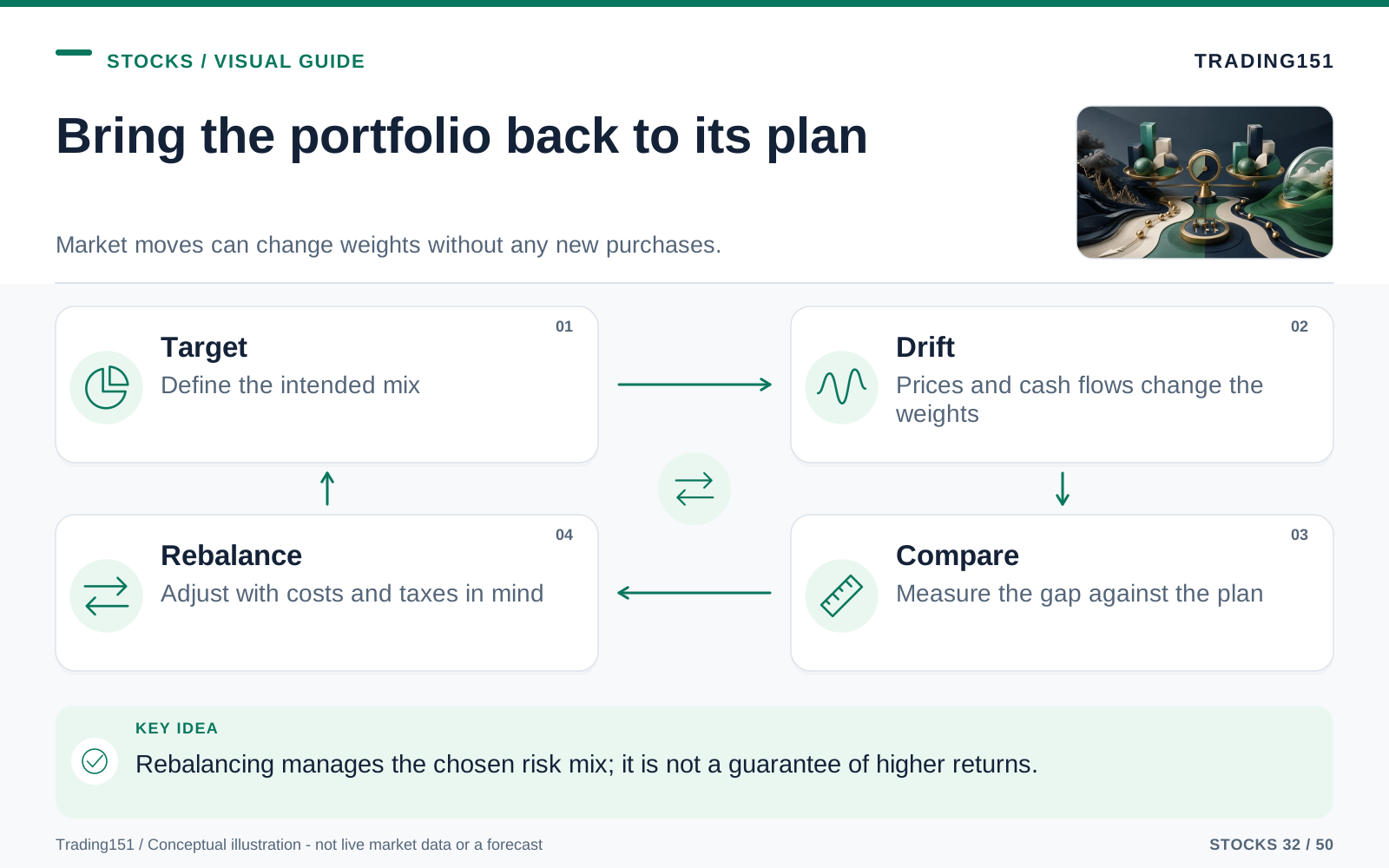
Read this diagram as text
- Target
- Define the intended mix
- Drift
- Prices and cash flows change the weights
- Compare
- Measure the gap against the plan
- Rebalance
- Adjust with costs and taxes in mind
Why Doing Nothing Is Still a Decision
People often think that leaving their investments alone means they aren't making a choice. That couldn't be further from the truth. Inaction is a large decision.
By not rebalancing, you are actively choosing to let your winners dictate more and more of your financial future. Sure, concentration can feel fantastic during a hot streak. You feel untouchable. But it also means a huge chunk of your financial security is suddenly riding on one specific corner of the market.
This happens all the time with tech stocks, crypto, real estate, or even company stock. You wake up one morning and realize half your net worth is banking on a single industry continuing to have a flawless run.
Does that mean you need to liquidate everything? No. But it does mean you need to pay attention.
A portfolio is really just a web of dependencies. Rebalancing forces you to step back and ask, What exactly is my financial future depending on right now? If the honest answer is a lot more of one thing than I originally planned, it’s probably time to trim the hedges.
The Psychological War: Why Rebalancing Feels So Wrong
Here’s the funny thing about rebalancing: it sounds totally rational until you’re the one who has to click "sell."
The mechanics couldn't be easier. You sell a bit of what’s bloated and use that cash to buy what’s trailing behind. But emotionally? It feels deeply wrong. You are selling off the absolute best performers in your account to buy the duds. You're hacking away at your thriving plants to water the dead-looking ones.
When a stock has doubled in value, your brain desperately wants to hold onto it. You start imagining it doubling again. Hitting the sell button on even a fraction of it feels like a betrayal.
And buying the laggards doesn't feel much better. If international stocks have been flat for half a decade, or small-cap stocks keep losing money, dumping fresh cash into them feels like you're rewarding a loser. Nobody likes feeding the part of their portfolio that makes them groan.
This is exactly where investing stops being about how smart you are and starts being about how disciplined you are.
We are wired for recency bias. We assume whatever happened yesterday will happen tomorrow. If stocks are surging, we think they'll never fall. If bonds are slumping, we think they're dead forever. Rebalancing is the circuit breaker for that kind of thinking.
It doesn’t ask you to have a crystal ball. Actually, it relies on the fact that you don't have one. You aren’t saying, This tech stock is definitely going to crash today, or These bonds are going to rally tomorrow. You are just quietly admitting, I don’t want my entire retirement resting on this one streak lasting forever.
That is what mature, seasoned investing looks like—even when it makes you squirm.
Rebalancing Is Not About Chasing the Highest Return
We need to clear up a large misconception: rebalancing is not a hack to get better returns.
In fact, during a raging bull market, a lazy, un-rebalanced portfolio will often beat a disciplined one. If stocks just go up, up, and up, the guy who let his portfolio drift to 90% stocks is going to look like a rockstar compared to the person who responsibly trimmed back to 70%.
But that comparison ignores the flip side of the coin. The lazy investor is taking on huge, unchecked risk. Sure, they make more if the party keeps going, but they are going to get absolutely crushed when the music stops. They didn't find a cheat code for better returns; they just pushed all their chips to the middle of the table.
Think of rebalancing strictly as a risk-management tool. Will it sometimes boost your returns in a choppy market by forcing you to buy the dips and sell the peaks? Yes. But its true superpower is control.
It stops your portfolio from turning into an accidental casino trip. It keeps you humble after a good decade. Most importantly, it gives you a concrete set of rules to lean on when the market goes crazy and your emotions are screaming at you to do the wrong thing.
That doesn't sound very glamorous, but over an investing lifetime, avoiding a couple of large, panic-induced mistakes will do way more for your wealth than squeezing out an extra half-percent during the good years.
The “When”: How Often Should You Rebalance?
There is no mathematically perfect schedule for this. Do it too often, and you'll drown in tax bills, trading fees, and mental fatigue. Do it too rarely, and your portfolio will drift into dangerous territory. The goal is to find a rhythm you can stick to.
Most people rely on a calendar, a set of percentage bands, or a mix of the two.
The Calendar Method
This is exactly what it sounds like. You pick a date—maybe your birthday, the end of the year, or tax season—and you check your accounts. If things are out of whack, you fix them. Then you close your laptop and don't think about it for another year.
The beauty of this is how little mental energy it takes. You aren't obsessing over daily market drops. You aren't panic-selling because a headline scared you. It’s just routine maintenance.
The downside? Markets don't care about your calendar. A large crash could happen a week after your annual review, leaving your portfolio totally out of balance for the next 11 months. If you're highly patient, that's fine. If you aren't, it might feel pretty limiting.
The Tolerance-Band Method
This approach is a bit more dynamic. Instead of picking a date, you set boundaries. Let’s say your goal is 70% stocks. You might tell yourself, "I'll only rebalance if stocks drop below 65% or climb above 75%." You want these bands wide enough that you aren't reacting to every little market hiccup, but tight enough to stop real drift. Some folks use a flat 5% rule; others base it on a percentage of the target weight. The best setup really just depends on your account size and tax situation.
It makes a lot of logical sense. You ignore the daily noise but spring into action when it matters.
The catch is that you have to watch your portfolio closely enough to know when you've hit those boundaries. For some investors, checking in regularly is harmless. For others, it’s a slippery slope into chronic account-checking and stressful tinkering.
The Hybrid Approach
For most of us, blending both methods is the sweet spot. You check your portfolio on a set schedule—say, every January and July—but you only rebalance if things have drifted past your preset bands.
So, you log in on January 1st. Your target is 70% stocks. You see they are at 72%. You do nothing. If they’re at 77%, you trim them back. If a bear market has dragged them down to 63%, you buy more to restore the balance.
It’s a wonderfully boring way to handle your money. It gives you structure, keeps you from over-trading, and respects your time and taxes. Most importantly, it makes the decision for you before your emotions can get involved.
The “How”: Rebalancing Without Creating Unnecessary Taxes
Okay, so you know your portfolio is out of balance. How do you fix it? The gut reaction is to just sell what’s bloated and buy what’s starving. Sometimes that’s the right move. But if you’re doing this in a taxable account, selling investments that have gone up means paying capital gains taxes. And money sent to the IRS is money that's no longer compounding for you.
Now, don't let the tax tail wag the investing dog. If your portfolio is dangerously concentrated, paying the tax bill to fix it is absolutely worth it. But generally, you want to be smart about how you rebalance so you don't trigger unnecessary hits.
1. Use New Contributions First
The absolute cleanest way to rebalance is with fresh cash. If you are still putting money into your accounts regularly, just aim those new dollars at whatever is lagging behind.
If your stocks have gone on a run and your bonds are looking thin, don't sell your stocks. Just funnel your next few months of contributions entirely into bonds until things even out. If your international funds are trailing, send your cash there. Rebuild your cash reserves before feeding the assets that have already won.
This is an elegant strategy because nobody has to sell anything, which usually means zero capital gains taxes. It turns rebalancing into an ongoing, painless habit rather than a large annual event.
2. Redirect Dividends and Interest
Most portfolios kick off cash in the form of dividends or interest. Instead of putting those on autopilot to reinvest right back into the fund that paid them, you can route that cash into a holding pool. Then, use it to manually buy whatever part of your portfolio is underweight.
This is helpful for larger taxable accounts. You’re using the portfolio’s own natural cash flow to steer it back on track. It might not fix a large imbalance all by itself, but it significantly cuts down on how much you need to sell.
3. Rebalance Inside Retirement Accounts
If you have both regular brokerage accounts and tax-advantaged retirement accounts (like a 401(k) or IRA), try to do your messy rebalancing inside the retirement accounts. You can buy and sell all day long inside an IRA without triggering a dime of current capital gains taxes.
This makes them the perfect workshop for rebalancing. You can heavily trim an overweight stock fund and buy bonds inside your 401(k), completely leaving your highly taxed brokerage account alone.
This is why looking at your whole financial picture matters. Don't look at your IRA and your brokerage account as completely isolated islands; treat them as one giant, combined system.
4. Pair Gains With Losses When Appropriate
If you absolutely have to sell in a taxable account, look around to see if you can pair a winner with a loser. Selling an investment that’s down can offset the taxes you owe on the one that went up (a strategy known as tax-loss harvesting).
You have to be a little careful here because the IRS has specific rules about buying back similar assets too quickly, but when done right, harvesting losses takes a lot of the sting out of rebalancing.
Again, the goal isn't to obsess over taxes to the point of paralysis. It’s just about not tipping the IRS more than you have to for a fix you could have made efficiently.
Rebalancing Across Multiple Accounts
Very few people have all their money in one neat little account. You’ve probably got a 401(k), an IRA, a regular brokerage account, maybe an HSA, and some random retirement account from a job you left years ago. Trying to rebalance all of them individually will drive you crazy, because each screen shows a different mix.
The secret? Zoom out. Look at the household level.
The stock fund in your spouse's 401(k), the bonds in your IRA, and the ETFs in your joint brokerage account are all part of one big pie, even if they live on different websites. You could have an account that is 100% stocks and another that is 100% bonds, but when you zoom out, your overall wealth is perfectly balanced. Looking at just one account will panic you for no reason.
This is where a basic spreadsheet or a free portfolio tracking app is a lifesaver. List out the accounts, what’s inside them, and add it all up. Compare that grand total to your target.
Once you know how much your overall wealth has drifted, you can make the fix in the account where it’s easiest and cheapest (usually the tax-free retirement ones!).
What Rebalancing Looks Like in Real Life
It really helps to mentally rehearse what rebalancing feels like in different market climates, because your emotional reaction will swing substantially depending on what the news is doing.
In a bull market: Stocks have been tearing it up for years. Your net worth looks fantastic. The news is practically cheering, and everyone seems to know exactly why the good times will last forever. Your target was 70% stocks, but the rally has pushed them up to 80%.
Rebalancing right now means selling off the exact things that are making you feel successful. It means buying bonds or cash when they look boring by comparison. It feels like you’re deliberately hitting the brakes while everyone else is speeding ahead.
But what you’re really doing is securing your bag. You’re recognizing that on-paper gains don't mean anything if they vanish before you can spend them. You’re refusing to let euphoria rewrite your financial plan.
In a bear market: The market is bleeding. Your balance is dropping every time you log in. The headlines are concerning, and every sensible instinct is screaming at you to move to safety. Your 70% stock target has cratered to 58% because equities are getting hammered.
Rebalancing now feels physically nauseating. You have to sell your safe, comforting assets and use that cash to buy more stocks while the market is seemingly in freefall. It feels reckless. It feels like throwing money into a fire.
Yet, this is exactly when rebalancing shows its worth. Your pre-set rules tell you what to do so your panicked brain doesn't have to. You aren’t buying because you magically know the market has hit bottom; you’re buying because your patient plan dictates that stocks are on sale, and they no longer make up the slice of the pie they are supposed to.
In a sideways market: Not every year is a rollercoaster. Sometimes the market just grinds sideways. Stocks bump around a little, bonds inch forward, and nothing feels particularly urgent. Rebalancing here might mean moving a tiny bit of money, or doing nothing at all. And that’s perfectly fine. Good investing is supposed to be boring.
Sometimes the smartest thing you can do is log in, confirm everything looks fine, and go outside.
Common Rebalancing Mistakes
It’s a simple concept, but we investors are gifted at overcomplicating it.
Tinkering too much. Your portfolio does not need to perfectly match your target spreadsheet down to the decimal point every day. Trying to maintain a flawless allocation will drown you in stress and trading fees. A little drift is totally normal.
Forgetting about taxes. In an IRA, trade away. But in a regular taxable account, hitting "sell" has consequences. Always check if you can solve your imbalance by just directing new cash to the underdogs before you start selling off your big winners.
Moving the goalposts. Rebalancing is useless if you constantly change your target based on the market. If you decide you want 80% stocks because the market is up, and drop it to 50% stocks when the market crashes, you aren't rebalancing. You are just performance-chasing with a fancy label.
Judging the players by the wrong metrics. Bonds will sometimes look useless. International stocks will have years where they lag. Cash feels like a waste when the market is hot. But you didn't put them in your portfolio to win a sprint; you put them there for balance. Don't rip an asset out of your portfolio just because it didn't win this year's popularity contest.
When You Should Not Rebalance Automatically
Rules are fantastic, but you shouldn't follow them blindly. There are a few scenarios where traditional rebalancing needs a pause. If your actual life has changed—your goals, your income, your timeline—your portfolio might need to change with it. That’s not rebalancing; that’s writing a completely new plan. Just be honest with yourself: are you changing your plan because your life changed, or because the market scared you?
If you just retired, bought a house, inherited money, or got a serious medical diagnosis, your capacity for risk has fundamentally shifted. You don't want to stubbornly rebalance back to an old target that no longer fits your new reality.
Large taxable gains also require a delicate touch. If one stock you bought a decade ago has absolutely exploded, selling it all on a Tuesday morning might trigger a horrific tax bill. You might need to slowly unwind that position over a few years instead of one dramatic trade.
Finally, emotional or restricted assets need careful handling. If you hold a lot of company stock, inherited property, or founder shares, there are usually tax hurdles and emotional strings attached. Rebalancing is still the goal, but how you get there matters. In these complicated cases, paying a good CPA or financial advisor is usually worth every penny.
The Lazy Investor’s Way Out
If reading all of this makes you want to take a nap, don't worry. You aren't doomed to a chaotic financial life. One of the smartest things you can do is build a system that embraces your actual personality.
Some of us love spreadsheets, allocation bands, and annual reviews. Others would rather get a root canal. There is no virtue in building a complex system you know you're going to abandon.
Target-Date Funds
These are a godsend for hands-off investors. You just pick a fund with a year close to when you want to retire, and the fund handles everything. It picks the stocks and bonds, it rebalances constantly behind the scenes, and it automatically gets more conservative as you get older.
Are they flawless? No. They all have slightly different fees and strategies, and two funds with the same year can behave differently. But for a set-it-and-forget-it workplace retirement account, they are tough to beat.
Robo-Advisors
Robo-advisors are another brilliant tool for the truly hands-off. You answer a few questions about your goals and risk tolerance, and the algorithm builds a balanced portfolio for you. When it drifts, the software automatically rebalances it. Many of them even handle the complicated tax-loss harvesting for you.
Yes, you pay a small fee for the service. But if that fee prevents you from procrastinating, panicking, or completely ignoring your portfolio, it’s money well spent.
All-in-One Funds
You can also look into standard balanced funds. A traditional "60/40" fund just holds a fixed mix of stocks and bonds and rebalances internally forever. It’s a great way to get built-in discipline without tying yourself to a specific retirement year.
The takeaway here is simple: the best rebalancing strategy isn't the fanciest one. It’s the one you'll stick to when the market gets loud.
A Simple Rebalancing Routine
If you just want a practical, no-nonsense way to get started, keep it basic.
First, write your target allocation down. Put it on a sticky note or in a digital document. Don't leave it floating in your head where your memory can conveniently change it later.
Next, pick your review days. Once or twice a year is plenty for most patient investors. Tie it to something you won't forget.
Then, set your boundaries. Decide how far you'll let things drift before you step in. A 5% drift from your target is a great rule of thumb for major asset classes, though you can adjust this based on your own preferences and account size.
When it's time to fix things, take the path of least resistance. Use your new cash contributions first. Redirect your dividends. Do the heavy selling inside your tax-free retirement accounts to shield yourself from the IRS, and only sell in taxable accounts when the benefit outweighs the cost.
Lastly, write down what you did and why. A quick two-sentence note to yourself is remarkably powerful. Next year, when the market is chaotic and you're terrified, seeing a calm note from your past self is a great reminder that there was always a plan.
Rebalancing controls exposure; it does not predict the winner
Imagine a $100,000 portfolio with a 60% stock target. After market moves, stocks represent $70,000 of a portfolio still worth $100,000. Restoring the original target would require shifting $10,000 out of stocks, ignoring costs and taxes. That transaction reduces stock exposure; it does not establish that stocks are about to fall.
New contributions can sometimes do part of the work without selling. Directing cash toward underweight assets may reduce transaction costs or taxable gains, although it may be too slow when the imbalance is large. Withdrawals can also be taken with the allocation in mind. Evaluate the whole cash-flow plan rather than treating rebalancing as a separate trading ritual.
Choose either a review schedule, a deviation threshold, or a clearly defined combination. Very frequent small adjustments can add friction, while an extremely wide threshold may allow the portfolio to drift far from its intended risk. There is no universally optimal interval independent of the assets, account, and investor's needs.
Document why the target exists. A market decline may make the chosen allocation emotionally uncomfortable without changing its underlying suitability. A shortened time horizon or new spending obligation is different and may justify a new target. Keeping those two situations separate helps prevent rebalancing from becoming either a disguised market forecast or a refusal to acknowledge a genuine change in circumstances.
Rebalancing can use new money
Selling an appreciated holding is not the only way to move a portfolio toward its target allocation. New contributions or cash distributions can sometimes be directed toward underweight assets. That may reduce transactions and taxable sales, although it may be too slow when the deviation is large.
Choose a method that fits the account, costs, tax position, and urgency of the risk adjustment. Rebalancing is not a promise to buy at the bottom or sell at the top. It restores a chosen exposure. The target itself should be reviewed when the investment goal changes, rather than preserved mechanically after its original rationale no longer applies. 1, 2, 3
Maintenance Keeps Success From Becoming Concentration
Investing is not a "set it and forget it forever" event. It’s a lot like owning a house or a garden. Living, growing things require occasional maintenance. Your portfolio needs a tune-up every now and then, not because you did something wrong, but because healthy things grow at different speeds.
Will rebalancing make you substantially rich by next week? No. Will it guarantee you beat the stock market, or make volatility magically disappear? Absolutely not.
What it will do is restore the risk level you calmly decided on before the market started messing with your head. It’s a maintenance routine, not a crystal ball prediction about what asset is going to pop next. Understanding that makes it so much easier to swallow the bitter pill of selling your biggest winners.
Be gentle with your portfolio. Nudge it back into place with new cash, use your retirement accounts to hide from taxes, and only sell when you really need to. Perfection is rarely necessary here.
A good rebalancing routine is quiet and boring. You check in a couple of times a year, make a few minor tweaks, jot down a note, and get back to living your life. Eventually, your portfolio will drift again. That’s not a failure of the system—that’s exactly why the system exists.
Sources and further reading
- Investor.gov: Asset Allocation
- IRS Publication 550: Investment Income and Expenses
- Investor.gov: Index Funds
Editorial revision: 7 October 2026. Numerical scenarios are hypothetical unless identified as historical. References support the added explanations and selected corrections; rules and product terms should be checked again before acting.