
An initial public offering brings shares to public investors under a defined offering process. The price paid by investors receiving an allocation can differ sharply from the price available once exchange trading begins. That distinction matters when reading reports of a spectacular first-day return. Before buying an IPO, examine the business, the offering terms, and whose shares or financing needs the transaction actually serves.
What an IPO Means
At its core, an IPO is exactly what it sounds like: the first time a private business offers its shares to the general public. Before this, ownership is a closed club—mostly founders, early staff, and deep-pocketed venture capitalists. Once the IPO happens, anyone with a brokerage account can buy in. The shares being sold might be brand new (which puts cash directly into the company's bank account but waters down existing shares), or they might be old shares sold by insiders (where the money goes straight into their pockets, not the business). Figuring out exactly whose shares are on the block is crucial if you want to know whether you're funding the company's future or just paying for an early investor's exit.
Basically, the company is finally unlocking its doors and saying, “You can now own a piece of this business too.”
It sounds simple enough, but going public completely rewrites how a company operates. It’s no longer just accountable to a few boardroom insiders. Now, it has to bare its soul (and its spreadsheets) to the world every three months. Analysts dissect every move. The media is waiting for a slip-up. The days of pitching a grand vision behind closed doors are over; now, the company has to prove itself in the public arena, quarter after relentless quarter.
Why do companies do this? Usually, it comes down to cash. A fast-growing business needs money to build factories, hire talent, launch new products, or pay off debt. Selling shares to the public brings in a large influx of capital without the crushing interest payments of a traditional bank loan.
But it’s not all about funding growth. It’s also about liquidity—a dry finance term that simply means turning paper wealth into actual cash. Think about the early investors or the founders who have poured their lives into the business. An IPO is often their first real chance to sell some of their stake and reap the rewards of their risk.
That isn't necessarily a bad thing. People who take early risks deserve to get paid. But as a new investor, you need to know where your money is going. Are you handing the company the fuel it needs to reach the next level, or are you just holding the door open while the early guys make their exit?
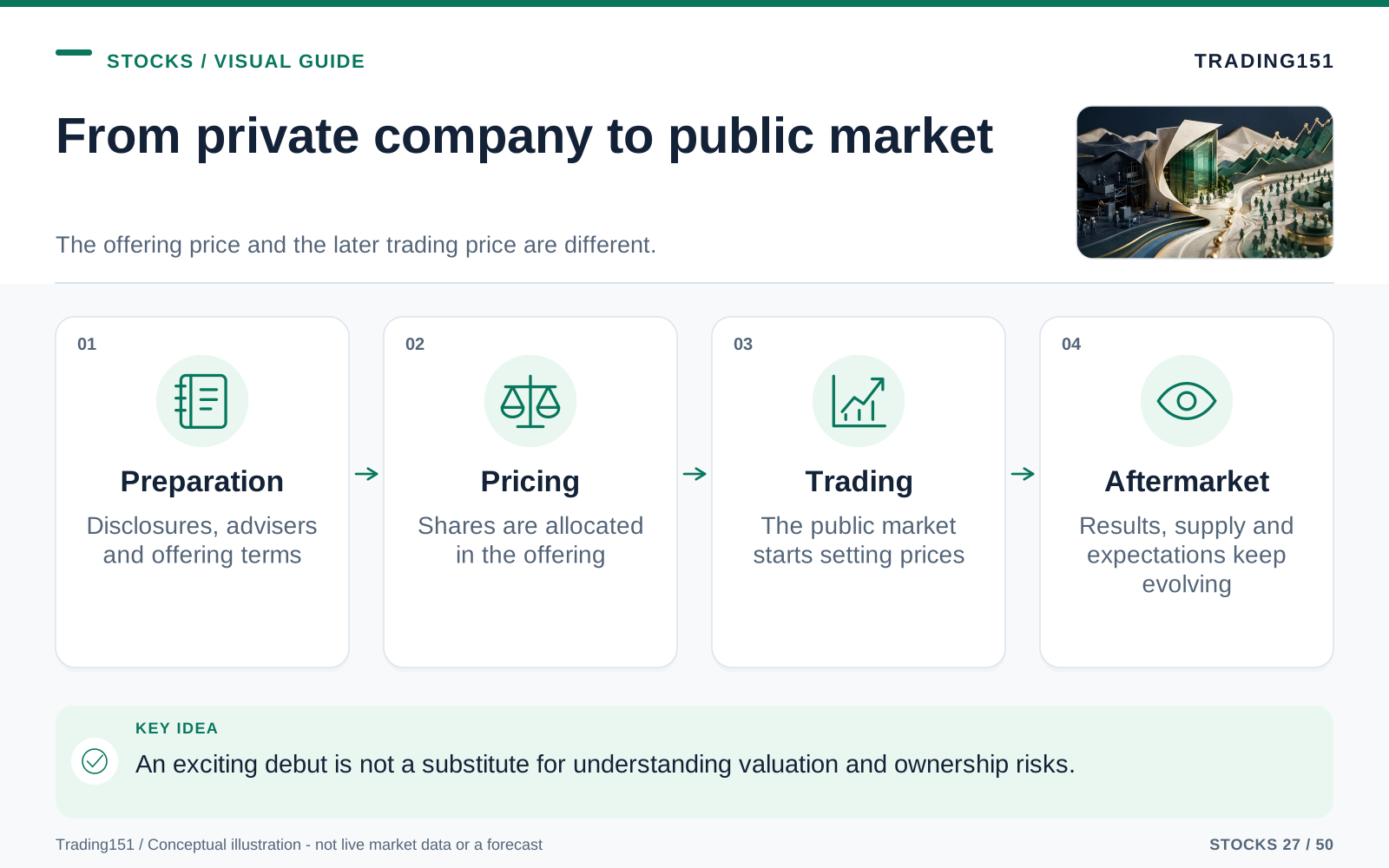
Read this diagram as text
- Preparation
- Disclosures, advisers and offering terms
- Pricing
- Shares are allocated in the offering
- Trading
- The public market starts setting prices
- Aftermarket
- Results, supply and expectations keep evolving
Why IPOs Feel So Irresistible
There's a reason IPOs make people lose their minds a little bit. They hit every emotional trigger: scarcity, urgency, and a large dose of FOMO (fear of missing out). The story is fresh, the brand is buzzing, and no one wants to be the person who passed on the next Amazon or Nvidia when it was practically being handed to them.
That’s the dream, right? Getting in early.
The problem is that "early" is relative. If you’re a regular investor buying on day one of the IPO, it feels like the starting line. But to the venture capitalist who bought in five years ago for pennies on the dollar, the IPO is the victory lap.
By the time a hyped company finally hits the stock market, the easy money is often long gone. The brand has been sanitized, the pitch has been perfected, and the price tag has been heavily negotiated by Wall Street bankers who know exactly how to squeeze every dime out of the deal.
This doesn't mean the stock is doomed. Plenty of companies go on to substantially succeed post-IPO. But it does mean you aren't stumbling onto some hidden gem. You are buying in after the expectations are already sky-high.
This is where the psychology of investing trips people up. You aren't just trying to figure out if the company is good; you're battling the emotional tide of the market. When an IPO is hot, everyone acts like hesitating is a mistake. In the real world, hesitation is often your best defense.
How the IPO Process Works Behind the Scenes
From the outside, an IPO looks like a spontaneous party. The bell rings, confetti falls, and the stock starts moving. But behind the curtain, it’s a grueling, months-long marathon of legal paperwork, financial audits, and slick marketing campaigns.
1. The Company Chooses Its Underwriters
A company can't just list itself on the stock exchange on a whim. They hire investment banks—known as underwriters—to run the show. These bankers manage the paperwork, gauge how much interest there is, set the initial price, and sell the shares to their big clients.
Keep in mind, these bankers aren't neutral referees. They are highly paid salespeople. Their goal is to make the company happy, sell all the shares, and take care of their biggest institutional clients. An IPO is as much a sales pitch as it is a financial milestone.
2. The Company Files Its Prospectus
Before selling a single share in the U.S., a company has to file a large document with the SEC, usually called an S-1. (Other countries have similar rules.) This document lays out the company's financials, its ownership structure, and what it plans to do with the money. Pay close attention to the fine print—especially the "non-GAAP" metrics. Startups love to highlight adjusted numbers that conveniently ignore things like large stock payouts to executives. You also want to look closely at the total number of shares that will exist after the dust settles, because the headline price can easily obscure how much the entire company is being valued at.
I won't lie to you: a prospectus is a severe read. It’s long, dry, and packed with legalese. But it is absolute gold for an investor. It tells you exactly how the business makes money, how much it’s losing, and how much control the founders are keeping for themselves.
Strangely enough, the best part of the document is the "Risk Factors" section. By law, companies have to confess everything that could possibly ruin them. While a lot of it is standard boilerplate, you'll sometimes find glaring red flags—like discovering the company gets 80% of its revenue from a single client, or that its entire business model relies on a temporary legal loophole.
3. The Roadshow Builds Demand
Next comes the roadshow. This is where executives and bankers hype up the stock to large institutional investors. It used to involve flying all over the country; now it’s mostly done over video calls. The goal? Whip up excitement and see who is willing to buy in.
The big funds ask questions, and the bankers watch their reactions closely. If everyone is clamoring for a piece, the bankers will crank up the IPO price. If the room is crickets, they might drop the price, offer fewer shares, or pull the plug entirely.
By the time you, the regular investor, hear the final IPO price on the news, a heavy negotiation has already taken place behind closed doors.
4. The IPO Price Is Set
The official IPO price is usually locked in the night before the big debut. But here is the catch: that price is only for the insiders and the elite clients of the underwriting banks.
This is what frustrates everyday investors. The "IPO price" is almost never the price you get. If the hype is loud enough, a stock priced at $25 might start trading on the open market at $45. When that happens, the early pop mostly benefits the people who got in at the initial price, not the retail buyer left holding the bag at a large premium.
The First-Day Pop Is Not Always Your Friend
We’ve all seen the headlines: a stock prices at $20, opens at $40, and the media calls it a large triumph. It looks like free money. And for the favored clients who got shares at the IPO price, it absolutely is. But that "pop" means the company underpriced its stock and left millions of dollars on the table just to guarantee a flashy debut. If you're a regular buyer jumping in after the surge, you don't get any of that built-in discount. You just get all the risk.
If you buy in after the pop, you are playing a totally different game.
Imagine that same $20 IPO. Demand is frantic, so the first public trades hit $36. You panic, worried you'll miss out, and smash the buy button at $36. For about ten minutes, you feel like a genius. But then the early buyers start cashing out to take their profits. The stock drifts down and closes the day at $28. The media still calls the IPO a "huge success"—but your portfolio is already bleeding.
Opening day is pure theater. A company can be phenomenal, and its long-term future can be bright, but its day-one stock price is almost always driven by raw, unhinged emotion.
Good investing requires finding a great business and paying a reasonable price for it. IPOs make that difficult because you're trying to figure out what a company is worth while thousands of other people are screaming their bids at the same time.
The Biggest Risks IPO Investors Should Understand
Every stock has risks, but newly public companies are a different beast. They are usually young, aggressively priced, and heavily traded by speculators. It’s a recipe for whiplash.
1. Volatility Can Be Severe
New stocks swing substantially because no one really knows what they're worth yet. There's no long-term chart to look at, and opinions are sharply divided. A single bad interview or a lukewarm analyst report can send the stock into a tailspin.
Volatility is fun when the arrow is green. It is deeply unpleasant when you lose 20% of your money in a week and nothing about the actual business has changed.
2. The Business May Not Be Ready for Public Scrutiny
Some businesses thrive in private but completely stumble in public. Private venture capitalists will gladly tolerate years of burning cash if the growth story sounds cool. Public markets are way less forgiving, especially when the economy tightens up.
Once a company goes public, there is nowhere to hide. Every metric—revenue, margins, customer churn, debt—is put under a microscope. A startup that looked invincible during an invite-only presentation can suddenly look remarkably fragile when it misses its very first quarterly earnings target.
3. The Valuation May Already Assume Perfection
IPOs are almost always priced on potential. That’s fine; you want a company to grow. But if the stock price is already factoring in ten years of flawless, uninterrupted growth, there is absolutely zero room for error.
You can love a company’s product and still lose your shirt buying its stock if the price is too high. A lot of investors learn this the hard way when an IPO company does exactly what it promised, but the stock still tanks because it didn't grow fast enough to justify its insane day-one valuation.
4. Lock-Up Expirations Can Pressure the Stock
To prevent founders and early investors from dumping all their shares on day one and crashing the price, Wall Street uses "lock-up periods." For usually three to six months, insiders aren't allowed to sell. But once that lock-up expires, millions of shares suddenly become available to trade. It doesn't mean a crash is guaranteed, but the sudden flood of supply can seriously weigh down the stock price. You have to mark that date on your calendar and watch how the market handles the new shares.
While not every insider will sell the second they're allowed to, the market knows the floodgates are opening. If investors get spooked that insiders are cashing out en masse, the price can drop fast.
If you have patience, the lock-up expiration is your friend. Often, the best time to buy a recent IPO isn't during the launch-week circus, but months later, after the insiders have sold and the dust has settled.
5. The Financial Picture Can Be Hard to Judge
A large company like Apple or Microsoft has decades of public data you can dig through. An IPO company gives you a tiny, highly curated window into its past—and those numbers were specifically dressed up for the big sale.
The numbers aren't fake, but they do have makeup on. You have to look closely. Are they losing more money every year? Is their revenue overly dependent on one big customer? Are they paying their executives absurd amounts of stock? Look for the cracks in the facade.
How Regular Investors Can Buy IPOs
If you're dead set on buying into an IPO, you have a few options. None of them are perfect, and all of them come with strings attached.
Route 1: Requesting Shares Before Trading Begins
Some brokers let you request shares at the official IPO price before trading starts. It sounds like the ultimate VIP pass.
But there's a catch. If the IPO is heavily hyped, you probably won't get all the shares you asked for, and you might get none at all. The big Wall Street fish still eat first. Plus, if you do get shares and immediately flip them for a quick profit, your broker might ban you from future IPOs.
It’s a nice perk if you can get it, but don't let the allure of VIP access blind you. You still have to ask yourself: would I want to own this stock at this price if nobody else was talking about it?
Route 2: Buying on the First Day of Public Trading
This is the route most people take. You wait for the ticker to show up on your brokerage app and you buy it just like any other stock.
It's easy, but the timing is severe. Opening day prices are chaotic. If you go this route, never, ever use a "market order" (which tells your broker to just buy the stock at whatever price it happens to be). In a wild IPO, a market order can get you filled at a horribly high price. Use a "limit order" instead, which lets you set a firm ceiling on exactly what you're willing to pay.
And honestly? There is zero shame in just sitting on your hands. Watching the first day from the sidelines is usually the best way to keep your money safe from the emotional frenzy.
Route 3: Waiting for the First Earnings Reports
This is the boring approach, which means it’s usually the smartest. Let the company trade for a few months. Wait for their first earnings report. See how the management handles real questions from severe analysts instead of softballs from friendly bankers.
Yes, waiting means you might miss a quick 20% rally. It also means you might avoid a crushing 40% drop. The goal of investing isn't to be the first one to the party. The goal is to buy companies you won't regret owning when the hangover hits.
Route 4: Buying an IPO-Focused ETF
If you love the idea of investing in fresh companies but don't want to bet the farm on one stock, look into an IPO-focused exchange-traded fund (ETF). These funds buy a basket of recently public companies for you.
You won't get the thrill of betting on a single winning horse, and your portfolio will still take a hit if the broader IPO market cools down. But if one specific company turns out to be a complete disaster, an ETF softens the blow immensely.
It’s a trade-off worth making. A basket of stocks is definitely less thrilling than a hot new ticker, but successful investing shouldn't feel like a trip to the casino anyway.
What to Read Before Buying an IPO
You don't need a finance degree to make smart choices about IPOs. You just need to know which questions to ask. Before you buy, figure out:
- How do they make money? If you can't explain their business model to a friend in one simple sentence, walk away. Complicated isn't always bad, but it's a terrible foundation for an investment.
- Are they buying their growth? Large revenue growth is great, but not if the company is burning piles of cash to get it. Growth at all costs looks awful when the market suddenly demands profits.
- Can they ever be profitable? Startups lose money—that's normal. But are they losing money because they are building factories and expanding, or are they losing money because the product costs more to make than people will ever pay for it?
- Who can crush them? A great product means nothing if Apple or Google can copy it, make it free, and bundle it into their existing software.
- Where is the cash going? Are they using the IPO funds to build the future of the company, or are they just using the money to pay off bad debt and buy out early insiders?
- Who is in charge? Many modern IPOs are structured so that the founders keep special voting shares, meaning they hold all the power no matter how much stock the public buys. You need to know if you're a true partner or just a passenger.
- When does the lock-up expire? Circle the date on your calendar. That’s when a large wave of new shares could flood the market.
- What is your exit plan? Before you buy a single share, decide exactly what would prove your investment thesis wrong. If you don't do this, it's dangerously easy to convince yourself that a crashing stock is "just a temporary dip."
Red Flags That Deserve Extra Caution
Some risk is totally normal for a young company. But there are a few glaring warning signs that should make you step back and keep your wallet shut.
First, run away if the prospectus is just a wall of buzzwords. If a company describes itself as an "AI-powered, disruptive ecosystem providing category-defining solutions," they are likely hiding something. Buzzwords don't pay the bills; revenues, margins, and cash flow do.
Be extremely wary if the company relies on just one major customer, a single supplier, or a temporary regulatory loophole. That kind of concentration is a ticking time bomb.
Watch out if the company's losses are growing faster than its revenue, especially if the CEO avoids talking about when they might turn a profit. Some businesses scale up to become cash machines. Others just scale up their losses.
Keep an eye on what the insiders are doing. It's totally fine for founders to sell some stock to buy a house or pay taxes. But if the people running the company are quietly heading for the exits while asking the public to buy in, pay attention.
Finally, if you feel a frantic urge to buy simply because "everyone on Twitter is talking about it," take a walk. You are reacting to marketing, not making a financial decision.
A More Practical Way to Think About IPOs
The best way to handle an IPO is to view it as the starting line for your research, not a deadline to buy.
When a company rings that bell, it simply becomes an option for your portfolio. That is it. You don't have to buy it on day one to prove you're smart. You don't have to turn a stock listing into a personal test of courage.
Historically, some of the best stocks in the world were cheaper a few months after their IPO, once the hype died down. On the flip side, some stocks looked completely unstoppable on day one and have done nothing but lose money ever since. The opening day price is not destiny.
Try this instead: build a watchlist. If an IPO catches your eye, read the paperwork, note the price, and watch how it handles its first earnings call. Write down the specific price you'd want to pay. Turn the spectacle into a methodical process.
Sounds boring, doesn't it? Good. In the stock market, boring is usually what makes you money.
Example: The Difference Between a Company and Its Stock
It takes new investors a long time to learn this hard truth: a fantastic company is not always a fantastic stock.
A business can have millions of rabid fans, amazing products, and a genius CEO. But if the IPO price assumes the company will conquer the universe in three years, the stock is going to struggle even if the business continues to do well. When you buy a stock, you aren't just buying the company as it exists today; you're paying for what everybody expects it to do tomorrow.
This is why price matters. If the bar is set unimaginably high, even great news won't move the needle. If expectations are reasonable, the company has room to surprise people and push the stock higher.
IPOs are sold purely on the promise of what could be. Possibility is intoxicating. But your actual returns will depend entirely on the gap between that possibility and the price you paid for it.
The offer price and your purchase price are different facts
Suppose shares are allocated in an offering at $20 and begin trading at $28. An allocated investor and a buyer at the opening price have different starting points. A later price of $25 represents a gain for the first investor and a loss for the second, before costs. A headline about the return from the offer price does not describe every public buyer's experience.
Read how the proceeds are divided. Newly issued shares may raise money for the company, while selling shareholders may receive proceeds from their own holdings. Both can appear in the same offering. Check dilution, the use of proceeds, and whether a large part of the transaction allows existing owners to reduce exposure.
Share structure deserves equal attention. Dual-class arrangements can leave founders with voting control even after outside investors buy a substantial economic interest. Lockup agreements can restrict certain holders for a period, but their terms and exceptions differ; an eventual expiry is not a guaranteed price event. Use the prospectus rather than a standard assumption about how every IPO works.
There is no requirement to buy during the opening excitement. Waiting allows time to read subsequent reports and observe how the public company communicates, although it can also mean paying a different price later. The decision should rest on the business and valuation at the price actually available to you, not on the desire to participate in an event.
Read who is selling
An IPO can include newly issued shares that raise money for the company, existing shares sold by current holders, or both. Those arrangements have different implications for where the proceeds go. Read the offering documents rather than assuming every dollar raised will fund expansion. Also distinguish the offer price from the price available to a retail buyer once trading begins; the investment decision must be evaluated at the price actually paid. 1, 2
The Opening Bell Is Not a Deadline
Investing in IPOs is a rush because it feels like buying a front-row ticket to the future. And sometimes, it is. Plenty of companies go public and grow into world-changing titans, rewarding investors who were patient enough to hold on through the inevitable bumps.
But never forget that the IPO machine is designed to generate hype. The company wants cash. The early investors want yachts. The bankers want their large fees. The financial networks want a juicy story. None of these people care about protecting your retirement account. That is your job.
In the IPO world, patience pays off a lot more often than urgency. The first few weeks of trading will show you how the market really feels once the initial buzz wears off. Waiting gives you the ultimate advantage: actual information.
If you really want to take the plunge, do the homework. Dig through the prospectus to see who holds the voting power, how much stock is about to dilute your shares, and where the money is going. Compare their price tag to similar, older companies that are already trading.
Ultimately, IPO day is just a financing event for the company—not a magical transformation of its business. Let them prove they can handle the public spotlight before you hand over your hard-earned money. Missing out on a flashy first-day surge is infinitely cheaper than buying into a fairy tale that leaves you holding the bag when reality sets in.
Sources and further reading
Editorial revision: 7 October 2026. Numerical scenarios are hypothetical unless identified as historical. References support the added explanations and selected corrections; rules and product terms should be checked again before acting.