
Inflation changes both business economics and the purchasing power of investment returns. Some companies can raise prices without losing much demand; others absorb higher costs or watch customers cut back. Stocks therefore are not a uniform inflation hedge. The task is to understand which businesses can protect cash generation, how much that protection costs to buy, and when the money will be needed.
Inflation Is Not Just Higher Prices. It Is Lower Purchasing Power.
People usually define inflation as simply "rising prices," but that makes it sound so distant and technical. A better way to wrap your head around it is this: every dollar in your wallet is slowly losing its muscle.
Imagine leaving $10,000 in a regular bank account. On January 1st, it’s $10,000. On December 31st, it’s still $10,000. Nothing looks wrong. You didn't spend it, no one stole it, and your investment didn't tank.
But if prices went up across the board that year, the real-world value of your money dropped anyway. That exact same $10,000 now buys fewer groceries, less gas, fewer home repairs, and maybe a shorter family vacation. The balance is identical, but what that balance can do for you definitely isn't.
That’s exactly why people call inflation a hidden tax. You don’t get a bill in the mail for it. Nobody sends a polite notice saying, "Hey, your savings are worth less today." It just happens quietly in the background, and you usually only notice it once the damage is done.
When inflation is barely there, we just absorb it. A small cost-of-living raise or a minor tweak to the monthly budget is usually enough to cover the gap. But when it runs hot, you feel the squeeze everywhere. Essentials cost more. Businesses jack up prices. Loans get expensive. And suddenly, anyone with savings starts wondering where to put their money so it doesn't just melt away.
This is where the stock market comes in. No, stocks aren't magic, and they certainly don't go straight up just because inflation is high. In fact, inflation can make the stock market messy in the short term. But if you zoom out, owning shares in strong businesses gives you something sitting in cash never will: a direct stake in companies that can adapt, raise their prices, earn real profits, and keep growing along with the economy.
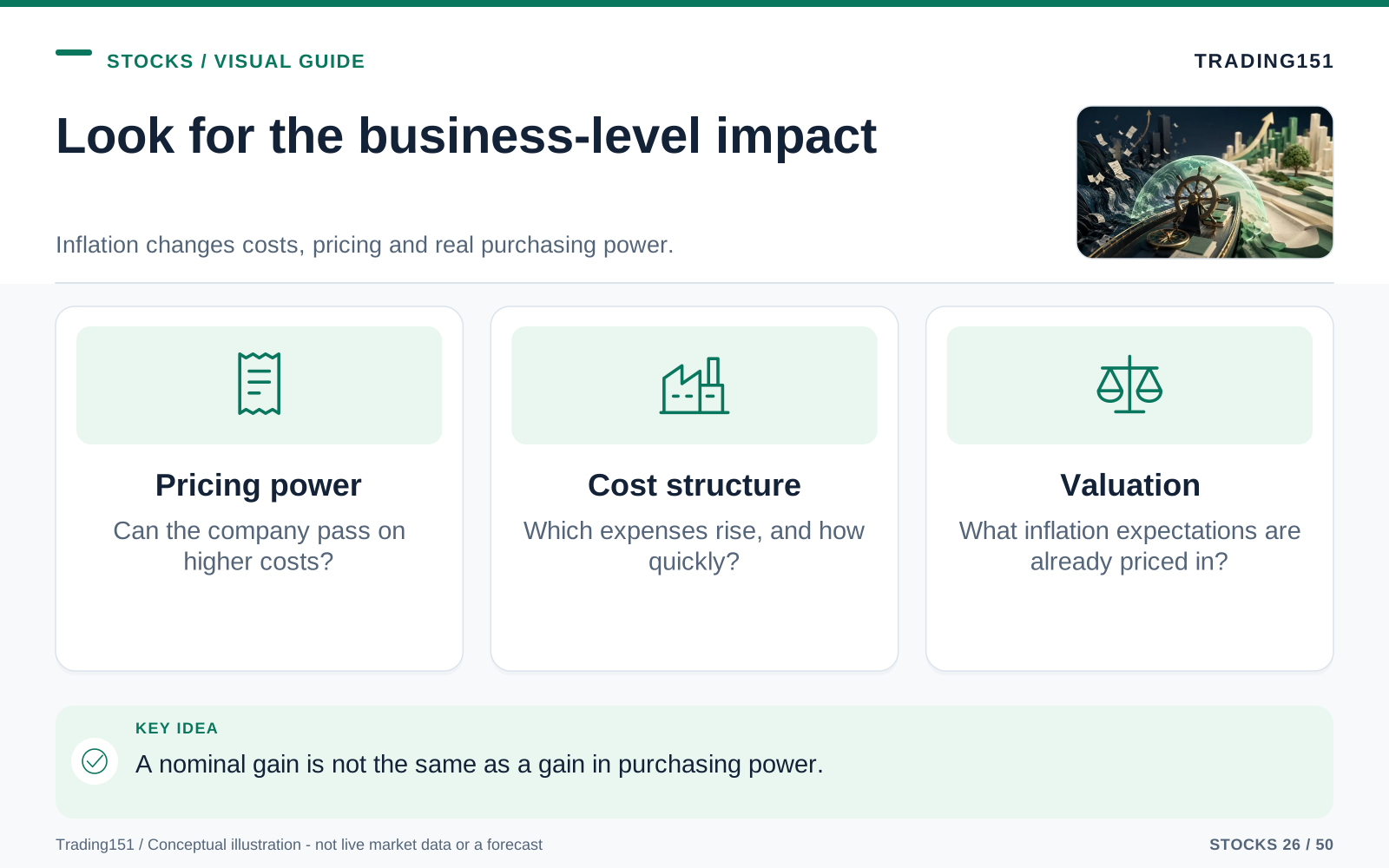
Read this diagram as text
- Pricing power
- Can the company pass on higher costs?
- Cost structure
- Which expenses rise, and how quickly?
- Valuation
- What inflation expectations are already priced in?
Why Stocks Can Help When Cash Starts Losing Ground
It’s easy to forget that a stock isn’t just a blinking ticker symbol on your phone. It’s a piece of a real-world business. Whether that company sells groceries, software, medicine, or electricity, you are buying into the systems and products that keep everyday life moving.
This matters because businesses aren’t just sitting ducks waiting for inflation to wipe them out. Good companies fight back. They adjust prices, squeeze better deals out of their suppliers, introduce new products, and cut waste. Some companies stumble through this. Others are good at it.
Think about your favorite local bakery. They have to buy flour, butter, eggs, and electricity. When inflation spikes, all those ingredients cost more. If the owner stubbornly refuses to raise prices, their profit margins will vanish. Eventually, something has to give.
So, they raise their prices. The sourdough costs a dollar more. The coffee-and-pastry combo gets a little steeper. Sure, a few customers might grumble, and some might stop coming as often. But if the bakery is truly great—if the location is convenient and people love the food—most customers will keep swiping their cards.
That’s the beauty of owning a productive asset. As prices rise across the entire economy, strong businesses can raise their prices right along with them. Their revenues climb. Their physical assets get more valuable. Over time, their profits recover and grow—and as a shareholder, you get to ride that wave.
Cash just can’t do that. A hundred-dollar bill can’t launch a new marketing campaign or renegotiate a lease. It just sits there, slowly losing the fight against inflation.
That’s why you’ll constantly hear people talk about stocks as a long-term inflation hedge. To be clear, not every stock will save you. But a carefully chosen mix of quality businesses can keep your net worth tied to the productive, growing side of the economy, rather than leaving it completely exposed to the fading power of cash.
The Kind of Companies That Tend to Hold Up Better
Inflation doesn't play fair. It hits some companies hard while others barely seem to notice. The ones that survive—and even thrive—usually share a few key traits: they sell things we need, they have strong balance sheets, and most importantly, they have the power to raise prices.
Pricing Power: The Quiet Superpower
Pricing power is exactly what it sounds like: a company’s ability to charge more without sending its customers running for the hills. It sounds basic, but when inflation hits, it is the ultimate survival tool. A company that hikes prices but sees its sales volume plummet is just protecting its short-term revenue by destroying its long-term brand. You want to see customers sticking around, demand staying steady, and profit margins bouncing back after a cost increase.
A business has real pricing power if people desperately need what it sells, heavily trust its brand, or simply don't have better options. Think about toothpaste, basic groceries, laundry detergent, medical supplies, and utilities. Buying them isn't exactly thrilling, but we buy them anyway because life doesn’t pause just because prices are up.
Luxury brands and convenience services can have pricing power, too, but it’s a lot more fragile. A die-hard fan of a premium brand might swallow a price hike, but if it's a completely forgettable product, they'll drop it in a heartbeat. When budgets get tight, consumers are ruthless about cutting the things they merely want so they can afford the things they need.
When you're looking at a stock during an inflationary period, just ask yourself one simple question: if this company raises its prices tomorrow, will its customers stay? If the answer is yes, you're probably looking at a winner. If the answer is no, stay away.
Essential Goods and Services
It’s no surprise that companies selling everyday necessities become Wall Street darlings when inflation rears its head. Sectors like consumer staples, healthcare, and utilities tend to shrug off wild economic mood swings because the demand is practically baked in.
People might swap their premium brand-name cereal for the store brand, but they’re still buying groceries. They might skip the summer vacation, but they’re absolutely going to fill their prescriptions and keep the lights on. That built-in, unshakeable demand keeps revenue flowing into these companies even when households are feeling the pinch.
Just remember that "defensive" doesn’t automatically mean "cheap." Even the best company on earth is a terrible investment if you pay too much for it. Still, during inflationary times, businesses tied to basic human needs deserve a prominent spot on your radar.
Real Assets and Hard Assets
When paper money loses value, investors naturally flock to things you can touch. We’re talking about real, hard assets with a limited supply and a direct link to the physical economy—things like energy, agriculture, metals, infrastructure, and real estate.
Energy companies, for example, often catch a tailwind when oil and natural gas prices soar. Mining stocks suddenly look great when industrial metals get more expensive. Real estate is another classic shield because property values and rent prices tend to drift up right alongside inflation.
If the idea of buying physical properties sounds exhausting, you can always look into Real Estate Investment Trusts, or REITs. These are companies that own and manage income-producing properties like apartment complexes, warehouses, hospitals, and data centers. As they raise rent, the good ones pass a chunk of that extra income right back to you in the form of dividends.
Of course, hard assets aren't a magical risk-free safe haven. Energy prices crash, real estate stalls when interest rates get too high, and commodity stocks can be a wild rollercoaster. You don't need to dump your life savings into copper and oil, but having a slice of your portfolio in physical assets makes a lot of sense.
Strong Balance Sheets
When inflation runs hot, central banks typically step in and raise interest rates to cool things down. Suddenly, borrowing money gets a lot more expensive for everyone—including big corporations. This is where a company's balance sheet gets put under a microscope. Fixed-rate debt that isn't due for a long time gets easier to pay off in real terms. But if a company has floating-rate loans or short-term debt that needs to be refinanced right now, they're in for a world of pain.
A business with low debt and plenty of cash flow has the freedom to maneuver. It can keep paying its dividend, invest in new projects, buy inventory, weather a tough quarter, and avoid begging the banks for expensive new loans.
A company drowning in debt doesn't have that luxury. If they're forced to refinance at sky-high interest rates, those payments will eat their profits alive. If consumer demand drops at the same time, things can spiral fast. Too much debt can easily turn a temporary economic headwind into a permanent disaster for shareholders.
Look past the flashy headlines. A company might have a charismatic CEO and a revolutionary product, but if it relies on a constant IV drip of cheap borrowed money to survive, inflation will tear it apart.
Dividends That Are Funded by Real Cash
Dividends are your best friend during inflation. They pay you hard cash while you sit back and wait for the market to figure itself out. A steady dividend payout makes the severe, choppy days in the stock market a lot easier to stomach.
But don't just chase a high yield blindly. For a dividend to protect your purchasing power, it needs to grow—or at least hold steady—as costs go up. If a company is struggling to generate cash and takes out loans just to keep paying its dividend, that's a large red flag. You want to see real dividend growth backed by actual free cash flow.
Reliability is everything here. Sometimes a stock boasts a large yield just because the stock price recently crashed, and the market fully expects the company to slash the payout. Look for companies that consistently make more cash than they need, have a long history of taking care of their shareholders, and don't play reckless games with debt.
Dividend growth is where the real magic happens. If a company bumps up its payout every year, your income can keep pace with inflation. And if you reinvest those dividends while the market is down, you’re buying more shares at a discount. Over a decade or two, that compounding effect is powerful.
Where Investors Should Be More Careful
Inflation doesn't just highlight the strong companies; it ruthlessly exposes the weak ones. A lot of businesses look like rockstars when money is cheap and consumers feel rich. But the second costs spike and loans get expensive, the market stops being so forgiving.
Businesses Built on Discretionary Spending
Discretionary spending is just a fancy term for "stuff people can live without." Think luxury handbags, high-end electronics, fancy restaurant dinners, expensive vacations, and large home renovations.
These aren't necessarily bad companies. In a booming economy, they're substantially profitable. But when inflation bites, households go into defense mode. If rent, groceries, gas, and car insurance are eating up a bigger chunk of a family's paycheck, they get deeply selective about everything else.
That shift in behavior is severe for companies that rely on consumers having plenty of spare cash and high confidence. Sales dry up, they have to run steep discounts to get people in the door, and their profit margins shrink. Be very cautious with these kinds of stocks, especially if they’re already trading at a premium.
Unprofitable Growth Companies
Growth stocks are exciting. They sell a vision of a large, substantially profitable future, and sometimes they deliver. But when inflation hits and interest rates rise, investors suddenly lose their appetite for promises.
When interest rates are practically zero, Wall Street is perfectly happy to pay top dollar today for a company that might make a profit ten years from now. But when rates jump, cash in hand today becomes a lot more attractive than a hypothetical profit in the distant future. That’s why cash-burning, hyper-valued growth stocks often get crushed during inflationary cycles.
The problem isn’t that they're growing; the problem is that they're growing without financial discipline. A business that grows fast and prints cash is a powerhouse. A business that grows fast but bleeds money every quarter—and relies on constant rounds of funding to survive—is a large liability.
Companies With Weak Margins
Your profit margin is simply what's left over after you pay all your bills. Inflation attacks those margins from every possible angle at once: employee wages go up, raw materials get pricier, shipping costs skyrocket, and rent gets bumped.
If a company can't raise its own prices enough to outrun those rising costs, its profits will shrink even if it's selling just as much product as before. You can’t just look at whether a company’s sales are growing; you have to look at whether they’re keeping any of that money.
A business that moves a large amount of product but only makes pennies on the dollar is vulnerable. Inflation loves to punish companies that are highly active but barely profitable.
Funds Can Be Smarter Than Stock Picking
It’s totally normal to think that surviving inflation means you need to hunt down five or six "perfect" stocks. But most of us are way better off using diversified funds. A broad index fund, a dividend ETF, or a value-oriented mutual fund can spread your risk across hundreds or even thousands of different companies.
Going broad means you don't have to be a psychic. You don't have to perfectly guess which specific sector will handle the economy best. Sure, you can tilt your portfolio a little bit toward natural resources, real estate, or infrastructure, but going all-in on one specific inflation strategy is a large gamble. A solid, diversified core portfolio prevents your life savings from becoming a coin flip based on what the economy does next.
Diversification is your safety net because even the best stock pick can blow up in your face. A company with amazing pricing power might hire a terrible CEO. A fortress-like balance sheet can't always save a company if its entire industry slows down. Owning a big basket of stocks means one single disaster won't sink your financial ship.
A really grounded approach is to keep the bulk of your money in broad market funds, and then maybe sprinkle in some smaller positions in areas that handle inflation well—like dividend growers, healthcare, consumer staples, or energy. The exact recipe depends entirely on your age, your stomach for risk, and when you need the money.
The "best" portfolio isn't the most complicated one. It’s the one you can stick with when the market is bleeding. A slightly boring, highly diversified plan that you leave alone is infinitely better than a brilliant-looking strategy that you panic-sell at the first sign of trouble.
The Psychology of Investing When Everything Feels Expensive
The absolute hardest part about investing during inflation has nothing to do with reading balance sheets or understanding financial jargon. It’s about keeping your head on straight when your real life and your portfolio are both taking a beating at the same time.
Inflation messes with your head. When your daily expenses are climbing, watching your investment account dip feels intensely personal. It’s a lot easier to brush off a bad day in the stock market when groceries are cheap and life feels affordable. It’s deeply stressful when your rent is up, your gas bill is up, and every news anchor is reporting on a recession.
That’s exactly why mental preparation is just as important as picking the right investments. You need ground rules established before the panic sets in. Otherwise, every time the market dips, you'll feel like your entire financial future is falling apart.
Keep an Emergency Fund Before You Invest Aggressively
Emergency funds are boring, but they are the bedrock of any sane investment strategy. Having a pile of cash safely set aside for disasters means you won't be forced to sell your stocks at the worst possible moment.
The classic rule of thumb is to keep three to six months' worth of living expenses in a savings account. Some folks need more—especially if you freelance, work in a volatile industry, or have a lot of dependents. The point of this money isn't to get a large return. The point is to buy yourself breathing room.
Without that buffer, inflation can force you into terrible decisions. A blown transmission, an unexpected medical bill, or a sudden job loss could push you to liquidate your investments right in the middle of a market crash. With a cash buffer, you give your portfolio the time it needs to recover.
Use Dollar-Cost Averaging to Remove the Drama
Dollar-cost averaging is just a fancy way of saying "investing a set amount of money on a set schedule, no matter what." Maybe it’s every time you get paid, or on the first of every month.
The beauty of this is that it completely removes the pressure to time the market perfectly. When the market is expensive, your money automatically buys fewer shares. When everything crashes and stocks go on sale, that exact same amount of cash scoops up a lot more shares. Over time, it naturally smooths out the bumps in the road.
Even better, it turns investing into an automatic background habit rather than a high-stakes emotional event. You don’t have to obsessively check stock charts or wait for the perfect economic headline. You just trust the system and stick to the routine.
Zoom Out When the Headlines Get Loud
The stock market has survived world wars, devastating recessions, oil shocks, housing crashes, pandemics, and wild political chaos. None of it felt easy at the time. When you're standing in the middle of a crisis, it always feels like the end of the world.
But if you look at the long game, the story of investing is tied to a much bigger truth: humans wake up, go to work, solve problems, invent new things, and build businesses. It’s never a smooth ride, and the wealth isn't shared evenly, but productive companies have an absolutely incredible ability to adapt and survive.
Zooming out doesn’t mean you stick your head in the sand and ignore risks. It just means you refuse to let today's concerning headline ruin your long-term perspective. If you don't need this money for years or decades, today’s market panic is ultimately just going to be a tiny blip on a much longer chart.
A Practical Inflation-Resistant Investing Checklist
Before you add a new stock or fund to your portfolio during an inflationary spike, take a breath and run it through a few common-sense questions.
Does this company sell something people still desperately need when their budgets are tight? Can they raise their prices without scaring off all their customers? Are their profit margins holding steady? Is their debt manageable? Do they make real cash, or are they constantly taking out loans to keep the lights on? And finally, is the price of the stock reasonable, or are people paying completely irrational prices just because it's a hot name?
If you’re looking at a dividend stock, make sure the dividend is backed up by real earnings. If you’re checking out a REIT, look closely at their debt and whether they can realistically keep raising rent. If you’re tempted by an energy or commodity stock, just remember that those industries are highly cyclical—they aren't guaranteed winners forever.
If you're buying a fund, peek under the hood. Just because a fund has "Inflation Protection" in its name doesn't mean it's magic. Look at what it owns, how high the fees are, and whether it fits into your overall plan rather than just duplicating things you already have.
And the most important question of all: can you emotionally handle holding this investment through a severe year? If the honest answer is no, then it’s way too risky for you, regardless of how good the math looks on paper.
What Not to Do During Inflation
Sometimes, the smartest investing moves are simply the bad decisions you manage to avoid.
First, don’t panic-sell just because you see red in your portfolio. Hitting the "sell" button during a market freakout might give you a fleeting sense of control, but all you're really doing is locking in your losses. Then you're stuck holding cash while the market eventually recovers without you.
Second, stop chasing whatever was hot last month. Inflation can cause violent spikes in energy, commodities, and defensive stocks. By the time you hear about a trendy investment idea from your neighbor or on social media, the easy money has already been made.
Third, don’t ignore your actual day-to-day budget. No investment strategy on earth can save you if you're consistently spending more than you make. When inflation hits, tightening up your spending, trying to boost your income, and aggressively avoiding high-interest credit card debt will do a lot more for your financial health than picking the perfect stock.
Finally, don't confuse being optimistic with having a high risk tolerance. It is ridiculously easy to call yourself a patient, long-term investor when the market is calm. The real test is who you are when your portfolio is down and the news is concerning. Build an investment plan for the emotional human you are, not the perfectly rational robot you wish you were.
Ask who can pass higher costs to whom
Pricing power needs evidence. Compare selling-price increases with sales volumes, margins, and customer retention. Revenue can rise because prices increased even while the company sells fewer units. If costs rise faster, nominal growth may conceal weakening economics. Management's claim that demand is resilient deserves a check against those operating numbers.
Capital needs matter too. Replacing machinery, carrying inventory, or financing receivables can become more expensive during inflation. A business may report higher profit while consuming more cash simply to maintain its existing operation. This is one reason cash flow and investment requirements belong beside the income statement.
Keep nominal and real returns distinct. If an investment gains 6% over a period when consumer prices rise 4%, the approximate gain in purchasing power is not the full 6%. The exact before-tax real return is 1.06 divided by 1.04, minus one, or about 1.92%. Your own spending basket and tax position can change the practical outcome further.
Avoid turning a broad economic concern into a concentrated bet on one supposedly inflation-proof sector. Commodity producers, property businesses, and consumer brands each carry different operating and valuation risks. A diversified plan can acknowledge inflation without depending on a single prediction about its duration or the next policy response. The goal is to protect the usefulness of the money, not merely to make the account balance look larger.
Pricing power must appear in the accounts
A company may say it can pass higher costs to customers, but the claim should be checked against volumes, margins, receivables, and customer retention. Raising prices while losing enough business can still weaken profit. Reported revenue growth may partly reflect inflation rather than an increase in the amount sold.
Compare several periods and ask where the pressure moved. Did suppliers absorb it? Did customers reduce purchases? Did the company accept lower margins to retain market share? The answers help distinguish durable pricing power from a temporary response that has not yet shown its full cost.
For the investor, nominal and real results also need to remain separate. A portfolio that rises in currency terms may still buy less after inflation and tax. That does not make every inflation-linked investment attractive; the purchase price and the structure of the exposure still matter. The goal is to evaluate purchasing power without turning a broad economic concern into an automatic instruction to buy one sector or asset. 1, 2
Protect Purchasing Power Without Chasing a Theme
Inflation is deeply exhausting because it makes you feel like you’re sprinting on a treadmill. You work hard, you budget, you save, and somehow everything still feels more expensive. That frustration is totally valid, and it shouldn't be brushed off.
But inflation doesn't mean you're powerless. You fight back by being intentional with your cash, highly selective with your investments, and patient with the market's mood swings. You build that cash buffer, you knock out the bad debt, you invest on a schedule, and you focus on owning businesses that are tough enough to adapt.
Will stocks shield you perfectly every month? No. There will be wild volatility. Some of the companies you pick will stumble. Certain sectors will boom and bust. But over the long run, owning a piece of productive, real-world businesses gives you a seat at the table in the very same economy that’s driving prices up.
Use inflation as an excuse to clean house. Look at the quality of the companies you own, but don't throw your diversification out the window. No single sector is bulletproof, and the assets that saved you during the last inflation spike might be way too expensive to save you during the next one.
Keep an eye on real earnings, manageable debt, and the pure power to raise prices without alienating customers. Keep a close watch on your own household budget, too. If rising rent and grocery bills are eating into your investing money, having a solid cash reserve and automatic investments will serve you way better than trying to make a heroic, once-in-a-lifetime market prediction.
Owning adaptable, cash-producing businesses will always do a better job of protecting your purchasing power than a stack of idle cash. The road will be bumpy, especially when the central banks hike rates to cool things down. Just make sure your portfolio—and your mindset—is built to handle both the slow drain of inflation and the wild swings of the market.
Sources and further reading
Editorial revision: 7 October 2026. Numerical scenarios are hypothetical unless identified as historical. References support the added explanations and selected corrections; rules and product terms should be checked again before acting.