
A recession can threaten income at the same time that it unsettles markets. That makes the investing decision more personal than a debate about whether stocks have reached the bottom. Money needed soon may belong outside equities, while a diversified portfolio for a distant goal may call for patience rather than a dramatic change. The starting point is financial resilience, not a prediction of the next rebound.
First, Understand What a Recession Really Changes
By definition, a recession just means the economy is shrinking. People are spending less, businesses are pulling back, and hiring freezes are everywhere. It’s scary because it affects real life, not just numbers on a screen. And the pain isn't spread evenly. Companies that sell things people want but don't strictly need—like luxury goods or expensive vacations—get hit hard and fast. Meanwhile, the companies selling everyday basics tend to hold up better. Just remember: even a "safe" stock can be a bad buy if everyone else is hiding in it and driving the price way up. You always have to separate a stable business from an overpriced stock.
But let's take a step back. Recessions are a completely normal part of the economic cycle. They suck, but they aren't anomalies. Good times make people confident, too much confidence leads to reckless risks, and eventually, the whole system needs to cool off. It’s painful, but it resets the market and brings expectations back to reality.
The trickiest part? The stock market doesn't wait for the real world to catch up. Markets are always looking ahead. Stocks usually tank well before the economic data officially says we are in a recession, and they almost always start bouncing back while the daily news is still doom and gloom. By the time everyone feels safe again, a large chunk of the recovery has already happened.
That’s why waiting for the all-clear is an expensive mistake. If you sit on cash until inflation is dead, unemployment is low, and every talking head agrees the worst is over, you’re going to be buying at high prices again. Great opportunities rarely feel like opportunities in the moment. They usually just feel like stomach aches.
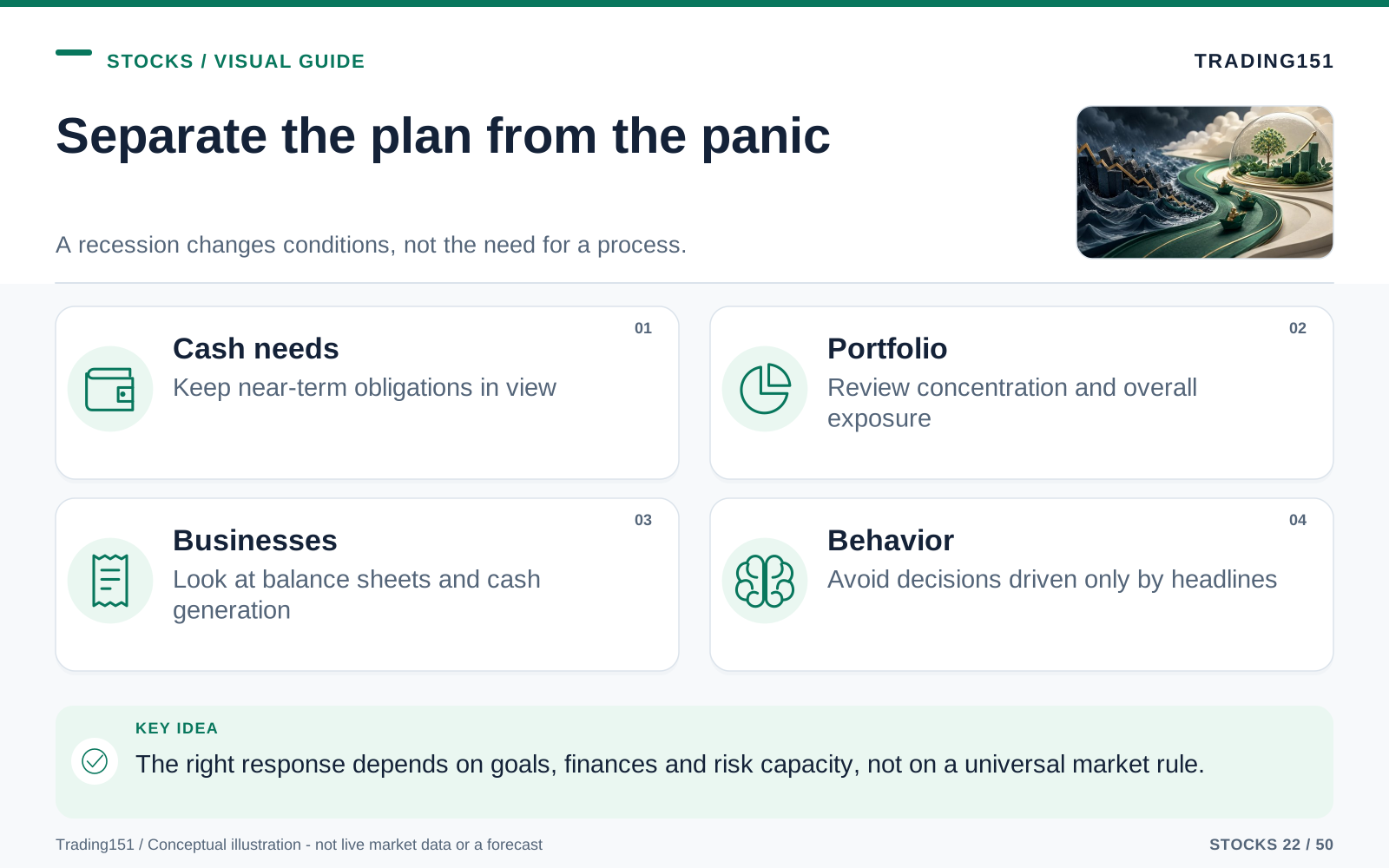
Read this diagram as text
- Cash needs
- Keep near-term obligations in view
- Portfolio
- Review concentration and overall exposure
- Businesses
- Look at balance sheets and cash generation
- Behavior
- Avoid decisions driven only by headlines
Step 1: Do Not Let Panic Make the First Move
Before we even talk about what to buy, we need to address the hardest part of all this: your own brain.
When you log in and see a sea of red in your portfolio, your brain goes into survival mode. It doesn’t see unrealized market volatility. It sees a threat to your safety and your future. That’s why the urge to hit "sell everything" and sit in cash until things calm down is so overwhelmingly strong.
It sounds like a logical plan, but it’s a trap. To pull that off, you have to be right twice: you have to sell before things hit rock bottom, and you have to buy back in before the rebound happens. Almost nobody gets this right. People usually panic-sell after the worst damage is already done, and then they sit on the sidelines paralyzed while the market shoots back up.
Here’s a frustrating quirk of the stock market: the best days almost always happen right next to the worst days. If you're hiding in cash and miss those few large rebound days, your long-term returns will be crippled. Panic selling makes you feel like you're in control for about five minutes, but it quietly ruins your future wealth.
A good rule of thumb? Never make a large financial decision on a day you feel terrified. Close your laptop. Go for a walk. Sleep on it for a few days. If checking your portfolio every morning is ruining your mood, delete the app from your phone for a while. You don't need a daily reminder that the market is struggling.
Step 2: Protect Your Cash Before You Buy the Dip
There is a very fine line between being a brave investor and being completely reckless. Throwing money at discounted stocks is a smart move, but only if your own house is in order first. If your paycheck relies on commissions, you work in a vulnerable industry, or both you and your partner work in the same field, you need a bigger safety net. Don't rely on credit cards or home equity lines, either—banks love to slash credit limits right when the economy tanks. Cash might not earn huge returns, but its real value is giving you options when everything else is falling apart.
Never invest money you're going to need in the near future. If you’re saving for rent, a mortgage, medical bills, tuition, or fixing your car, keep that money far away from the stock market. Short-term cash needs to be safe. Period.
Before you even think about buying stocks on sale, take a hard look at your emergency fund. For most people, having three to six months of basic living expenses sitting in a savings account is the sweet spot. If your job is shaky or people rely on you financially, you might want an even bigger cushion.
Think of your cash reserve as your investing armor. It’s what prevents you from having to sell your investments at the absolute worst possible time just to survive. A healthy emergency fund changes your mindset from "I have to sell because I need the money next week" to "The market is down, but I don't need that money right now anyway."
Also, kill any high-interest debt you have. If you’re carrying an expensive credit card balance, paying that off is basically a guaranteed return. You aren't going to beat that in a recessionary stock market. Don’t try to build a risky portfolio on top of fragile personal finances.
Step 3: Use Dollar-Cost Averaging Instead of Guessing the Bottom
Everyone dreams of buying exactly at the bottom. But honestly? No one knows where the bottom is until it's already in the rearview mirror. This is why dollar-cost averaging is your best friend right now.
Dollar-cost averaging is just a fancy term for putting your investing on autopilot. You invest a set amount of money on a regular schedule, totally ignoring what the market is doing. You might throw in money every week, every paycheck, or every month. The amount doesn’t matter nearly as much as the habit.
Let’s say you decide to invest $500 on the first day of every month into a basic index fund.
- When the market is booming, your $500 buys fewer shares.
- When prices crash, that exact same $500 suddenly buys a lot more shares.
- When things eventually recover, all those cheap shares you scooped up start pulling their weight.
This strategy takes all the emotion and guesswork out of it. You don’t have to obsess over Federal Reserve meetings or guess when other investors will stop panicking. You aren't trying to be the hero who perfectly times the market. You’re just quietly accumulating great assets while they're on clearance.
It also protects you from the ultimate investor sickness: regret. If you dump your entire savings into the market today and it drops another 20% next week, you’re going to be absolutely miserable. Dripping your money in slowly gives you peace of mind.
Step 4: Choose Quality Over Excitement
When the economy is booming, investors throw money at anything with a cool story. We see unprofitable companies, futuristic concepts, and flashy disruptors skyrocket because money is cheap and everyone is feeling greedy. But quality in a recession is about cold, hard survival. You want companies with positive cash flow, manageable costs, and customers who aren't going anywhere. If a company has to issue new shares just to keep the lights on, it might survive, but its original shareholders will get completely washed out.
Recessions are severe reality checks. When cash gets tight and people close their wallets, weak business models are exposed fast. Companies drowning in debt, burning through cash reserves, or constantly needing bailouts are going to struggle immediately.
In a downturn, boring is beautiful. You want businesses with strong cash flow, manageable debt, and a track record of surviving tough times. A company doesn't need to be glamorous to make you money. In fact, the absolute best recession investments are usually the ones that put you to sleep.
Think about human behavior when money is tight. People will definitely cancel their tropical vacations, hold off on kitchen renovations, and stop buying new cars. But they aren't going to stop buying toothpaste, groceries, electricity, or their daily medications.
This is why "defensive" sectors usually get so much attention when the economy drops:
- Consumer staples: The companies that make the basic food, cleaning supplies, and hygiene products we use every day.
- Utilities: The unglamorous businesses keeping the lights on, the gas pumping, and the water running.
- Healthcare: People get sick and need care regardless of what the stock market is doing.
Defensive stocks aren't magic forcefields. They can still drop in value, and sometimes they get overpriced. But because they sell necessities, their actual business operations tend to survive the storm better than the rest of the market.
Step 5: Be Careful With Individual Stocks
During a market crash, looking at stock prices can feel like walking through a candy store. Everything looks cheap. But you have to slow down. A stock that is down 70% isn't automatically a bargain. It might be a steal, or it might be a large warning sign. That super low price means absolutely nothing if the business itself is going bankrupt.
Before you even think about buying a single company's stock right now, you need to ask some hard questions. Is this company turning a real profit? Can they easily pay the interest on their debt? Will their customers stick around if the economy gets even worse? Does their leadership team know what they're doing? Is their product something competitors can't easily rip off?
If you don't know how to answer those questions, don't feel bad. Analyzing balance sheets is exhausting work. Most smart investors just skip the headache and buy diversified funds instead. There is zero shame in admitting that owning a tiny slice of the entire market is way easier than trying to pick the few winners in advance.
Step 6: Use Index Funds and ETFs as Your Core
For the vast majority of us, broad index funds and ETFs are the ultimate cheat code for surviving a recession. Instead of betting your life savings on one horse, you buy the whole racetrack. An S&P 500 fund lets you own a piece of the largest companies in America. A total stock market fund spreads your money out even further.
The beauty here is diversification. If one CEO makes a terrible decision, or one specific industry collapses, you're fine. The rest of the companies in your fund will balance it out. You aren't resting your entire financial future on a single business.
When you buy an index fund during a bad economy, you aren't betting that every company will make it. You’re simply betting that, over time, humans will keep innovating, businesses will adapt, customers will return, and the economy will eventually recover. Historically, that has been an reliable bet, even if the ride gets painfully bumpy along the way.
Index funds also completely eliminate the stress of stock picking. You don’t have to agonize over which tech company is going to lead the next bull market. You just own a large chunk of the economy and let time do the heavy lifting for you.
Step 7: Treat Dividends as a Bonus, Not a Promise
Dividend stocks feel like a warm hug during a recession. Even if the stock price is dropping, seeing that cash hit your account is reassuring. And if you automatically reinvest your dividends, those lower stock prices mean your payouts are buying even more shares, which turbocharges your compounding over time.
But you have to be careful with dividends right now. A large dividend yield isn't always a sign of a generous company; often, it’s a giant red flag that the stock price has fallen off a cliff. If a company is bleeding profits or drowning in debt, that juicy dividend is the very first thing they're going to cut.
Instead of chasing the absolute highest payout, look for reliability. Has the company kept paying its dividend through past recessions? Are they making enough actual profit to comfortably cover the payout? Are they still investing in their own growth, or are they bankrupting themselves just to keep current shareholders from selling?
This is why people love "Dividend Aristocrats"—companies in the S&P 500 that have raised their payouts for at least 25 years in a row. A track record like that usually points to a tough, durable business. But even then, don’t buy them blindly. The price of the stock, the health of the business, and keeping your portfolio diversified still matter.
Step 8: Rebalance Instead of Reacting
A wild market will quickly mess up the balance of your portfolio. Stocks generally drop way faster than bonds or cash. Before you know it, the mix of investments you carefully planned out looks completely different. Rebalancing is your built-in rulebook for buying the dip without making a large, all-or-nothing gamble. If your stocks fall below your target mix, you simply move a little money from your safer assets, or direct your new cash, into stocks. It’s a process that acknowledges things might keep dropping, but it keeps you buying methodically rather than betting the farm on a single day.
Basically, rebalancing just means shifting your money back to your original game plan. If you wanted a portfolio that was 80% stocks and 20% bonds, but a market crash drags you down to 70% stocks and 30% bonds, rebalancing means you sell a few bonds to buy more stocks and get back to 80/20.
Psychologically, this feels awful. It goes against every human instinct to sell the one thing that is holding its value to buy the exact thing that is currently bleeding cash. But that’s the genius of it. It forces you to buy low and sell high in a systematic, emotionless way, rather than chasing whatever feels safe in the moment.
You don't need to obsess over this. Checking in once or twice a year is plenty. You aren't trying to constantly tinker with your money; you're just keeping your risk levels exactly where you want them.
What Not to Do During a Recession
Sometimes, winning at investing is mostly about avoiding stupid mistakes. A single panicked decision can wipe out years of disciplined saving.
- Don’t invest money you need soon. The market can stay depressed for years. Keep your short-term cash safe and easily accessible.
- Don’t use margin to buy the dip. Borrowing money to invest is how people go bankrupt. It magnifies your losses and gives your broker the power to force you to sell at the worst possible time.
- Don’t chase every beaten-down stock. Some companies are cheap because people are scared. Others are cheap because the business is dying.
- Don’t abandon diversification. Going all-in on one stock, one sector, or one new trend is risky when the economy is fragile.
- Don’t let news headlines dictate your strategy. Financial news is designed to grab your attention and make you panic. It is not designed to help you build a solid retirement plan.
A Simple Recession Investing Plan
When the markets feel like total chaos, cut through the noise and stick to a basic checklist.
- Keep your emergency fund fully stocked for near-term needs.
- Knock out any toxic, high-interest debt before taking on market risk.
- Keep putting money into your accounts on a regular schedule if you can afford it.
- Make boring, broad index funds or ETFs the absolute core of your portfolio.
- Only play with individual stocks if you understand the business.
- Stick to companies with real cash flow and low debt over hyped-up stories.
- Check your overall allocation once in a while, but stop agonizing over daily price swings.
Following a plan like this won't make watching a market crash fun. You're still going to lose money on paper, and it will probably still stress you out. But it gives you solid ground to stand on when everyone else is losing their minds.
Protect the contribution schedule before predicting the recovery
Consider two investors holding similar portfolios. One has stable income and accessible reserves; the other expects a job loss and needs the account for living costs. The same market decline creates different practical problems. Advice to keep buying without examining those circumstances can mistake a cash-flow constraint for a lack of courage.
Revisit the spending plan first. Identify the money needed for essential expenses and known commitments, then decide what contribution is still affordable. Temporarily reducing new investments may be preferable to borrowing for routine bills or selling stocks at an inconvenient time. This is a household funding decision, not necessarily an opinion about market value.
Within the portfolio, inspect concentration and debt exposure. A company described as defensive can still be vulnerable if it carries heavy obligations or depends on customers cutting discretionary spending. Likewise, a low share price after a large fall does not establish that the business is cheap. The relevant question is what cash the company can reasonably generate and how much uncertainty surrounds that estimate.
Set review dates rather than reacting to every announcement. A recovery may begin before economic data look encouraging, but there is no reliable timetable for any particular market or security. The goal is a plan that does not require perfect timing: suitable reserves, diversified exposure where appropriate, and an investment horizon that genuinely matches the money's purpose.
Match the reserve to the household risk
The appropriate cash reserve depends on more than a general rule of thumb. Income stability, insurance, debt payments, dependents, and access to support all affect the amount of disruption a household can withstand. Consider those factors before increasing investment risk during an uncertain period. The reserve's purpose is to meet obligations and avoid forced decisions, not to outperform the stock market. 1, 2, 3
Keep the Plan Flexible Enough to Survive Real Life
During a recession, the pessimists always sound like the smartest people in the room. It’s easy to point out everything that could go wrong. And they aren't totally wrong. Businesses really do go under. People really do lose their jobs. The market can totally plunge another 10% right after you swore it had hit rock bottom.
But successful long-term investing requires a stubborn sense of optimism. Not the blind, naive kind that ignores reality, but a quiet trust in human progress. You have to believe that people will keep waking up and building things, companies will figure out how to adapt, customers will keep needing basic services, and the economy will eventually grind its way forward again.
A recession doesn't happen in a day, and it doesn't end in a day. The market and the real economy move at completely different speeds. If you sit on your hands waiting for the news to announce that everything is perfect again, you’re almost guaranteed to miss the rebound entirely.
Your absolute first priority is protecting your real-world life. Keep yourself employable, keep your cash buffer healthy, and keep investing whatever you can safely afford. If you lose some hours at work and have to temporarily cut back on your investing, don't beat yourself up. Your portfolio exists to serve your life, not the other way around.
The biggest advantage you have as a regular investor isn't perfectly timing the bottom of the market. It’s simply having the patience to keep buying a diversified mix of assets, stay out of debt, and look past the current panic. Recessions always end, and the good habits you build while surviving them will serve you well for the rest of your life.
This article is for general educational purposes only and shouldn’t be treated as personal financial advice. Your best strategy depends on your income, savings, debt, goals, risk tolerance, and time horizon. When in doubt, speak with a qualified financial professional before making major investment decisions.
Sources and further reading
Editorial revision: 7 October 2026. Numerical scenarios are hypothetical unless identified as historical. References support the added explanations and selected corrections; rules and product terms should be checked again before acting.