
Interest rates influence forex through expected returns, funding costs, and the outlook for inflation and policy. A higher nominal rate does not automatically make a currency more attractive. Investors also care about the reasons for that rate, the risk of depreciation, and what changes were already expected. The relationship is important, but it is conditional rather than mechanical.
The Core Idea: Money Moves Toward Better Returns
To really get how interest rates and currencies interact, you have to stop thinking of money as this lazy, static thing. Money is always hunting for a better deal. It doesn’t care about borders, flags, or loyalty. It simply goes wherever the reward looks best compared to the risk.
Think about it. If you had a pile of cash and two safe places to stash it:
- Option A gives you a 1% annual return.
- Option B gives you a 5% annual return.
If both are equally safe, you're going with Option B. It's a no-brainer. It’s not an emotional choice; you just want your money to work harder.
Now, take that exact same logic and apply it to large pension funds, hedge funds, and multinational corporations. When a country's interest rates are relatively higher than its neighbors, it becomes a magnet for investors chasing better yields. But to buy that country’s government bonds or park cash in its banks, those investors need to buy that country’s currency first.
The Forex market is basically the highway for those transactions. If global investors want high-yielding US assets, they need US Dollars. If they want British assets, they need Pounds. All that buying pressure naturally pushes the currency’s value up.
That brings us to the golden rule of currency markets: all else being equal, higher interest rates usually lead to a stronger currency, while lower rates drag it down.
Of course, "all else being equal" is doing a lot of heavy lifting there. The real world is messy. Politics, wars, recessions, and sheer panic can easily flip the script. But as a baseline, the link between rates and currency demand is the most reliable compass traders have.
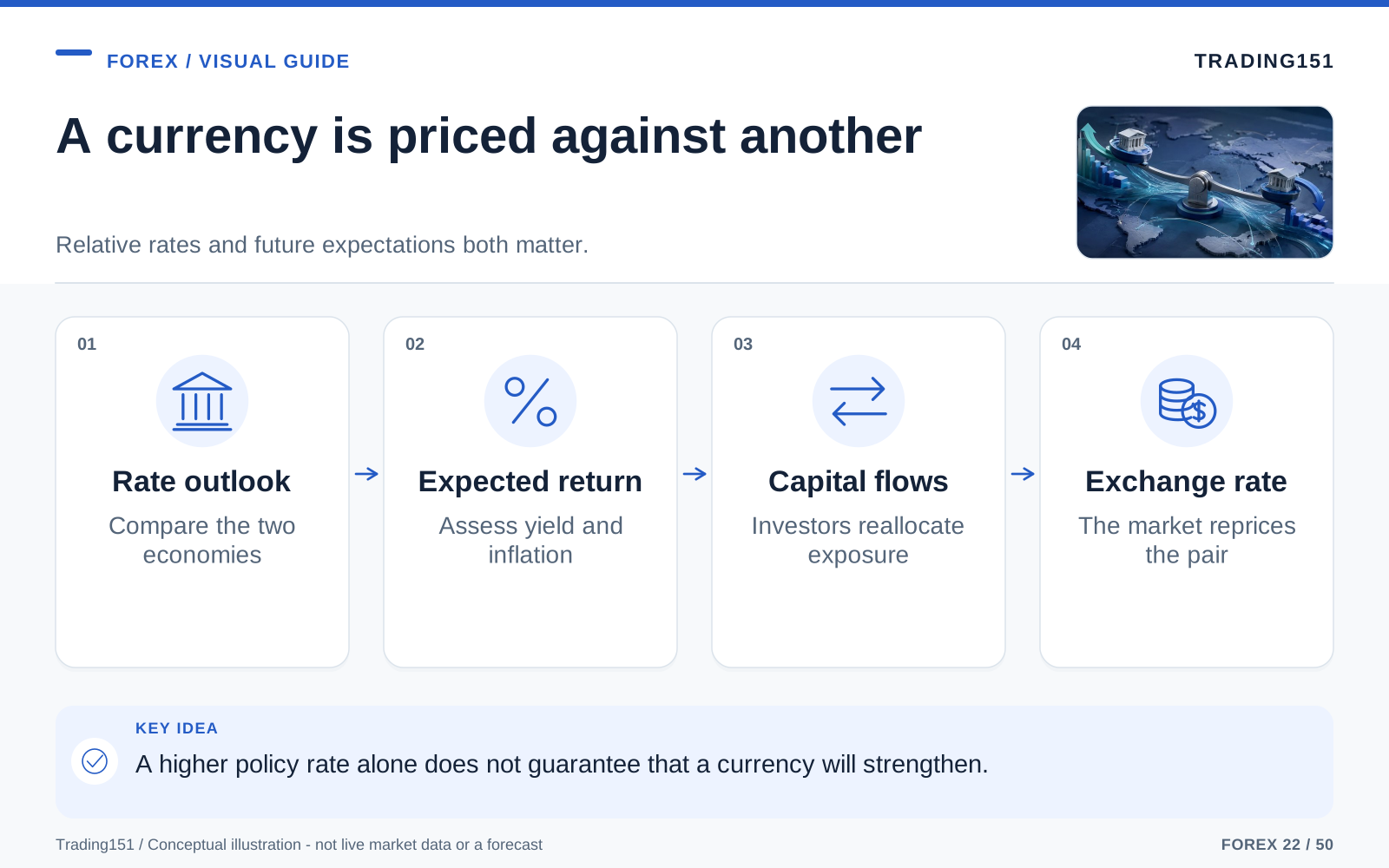
Read this diagram as text
- Rate outlook
- Compare the two economies
- Expected return
- Assess yield and inflation
- Capital flows
- Investors reallocate exposure
- Exchange rate
- The market reprices the pair
Why Central Banks Matter So Much
If interest rates are the engine driving currency prices, central banks are the ones behind the wheel.
Every major economy has one. The US has the Federal Reserve, the eurozone has the European Central Bank, and the UK has the Bank of England. These institutions don’t exist to make day traders rich or keep exchange rates looking pretty. Their actual job is way harder: keeping the economy from falling off a cliff.
Usually, that means walking a tightrope between two large risks. Lean one way, and you get inflation—where prices rise sharply and your money buys less. Lean the other way, and you face a stalling economy, lost jobs, and a potential recession. Central banks use interest rates as a tool to fight whichever threat is breathing down their neck.
Here's how it generally plays out:
- When a central bank lowers rates, they’re trying to make borrowing cheap so people and businesses spend more. It acts like a shot of adrenaline for the economy. But because the yield drops, that country’s currency suddenly looks a lot less appealing for investors to hold.
- When a central bank raises rates, they’re hitting the brakes. Borrowing gets expensive, spending cools off, and inflation hopefully chills out. At the same time, those juicy new rates attract foreign money, making the currency more valuable.
This is why a central bank meeting can send the Forex market into absolute chaos in a matter of seconds. Traders aren’t just looking at a percentage point. They’re reading the tea leaves—trying to figure out what that number says about the economy's future, and how it stacks up against what other countries are doing.
Because remember, currencies never move in a vacuum. It’s always a tug-of-war. A rate hike in one country is a huge deal if another country is just sitting on its hands or cutting rates.
It Isn’t Just the Rate Itself. It’s the Difference Between Rates
A rookie mistake is looking at a single interest rate and thinking you have the whole story. In Forex, what matters is the rate differential—the gap between two countries' rates. Traders are usually more obsessed with where that gap is going rather than where it is today. If one central bank is almost done raising rates but another is just getting started, the market will price that in way before any official announcement. That’s why a currency might rally for months, only to do absolutely nothing on the actual day the rate goes up. The market was already living in the future.
Say the Federal Reserve is sitting at 5% and the European Central Bank is at 3%. That 2% gap is everything. If investors think that gap is going to stick around—or get even wider—the US Dollar is going to look way more attractive than the Euro.
You’re never just buying a currency by itself; you're always buying one while selling another. So the question isn't, "Are US rates high?" The real question is, "Are US rates high compared to Europe, Japan, Britain, or whoever else is on the other side of the trade?"
It’s all relative. A country could be raising rates and still watch its currency completely tank if another country is raising them faster, looks more stable, or just has a better economic outlook.
Inflation: The Pressure Behind So Many Rate Moves
You can't talk about interest rates without talking about the elephant in the room: inflation.
Inflation sounds like a dry economic term until you’re at the grocery store wondering why a carton of eggs suddenly costs a fortune. Rent goes up, gas stings, and eating out becomes a luxury. When money loses its buying power, it’s not just annoying—it can break an economy if left unchecked.
When things run too hot, central banks usually step in and hike rates. The logic is pretty basic: make borrowing expensive, slow down spending, and hopefully, prices stop climbing. It’s a painful process, but it’s their best weapon.
Forex traders watch inflation reports like hawks because these numbers give away what the central bank is going to do next. If inflation comes in hotter than expected, traders immediately think, "The central bank is going to have to hike rates." And boom—the currency shoots up before the central bank has even scheduled a meeting.
The playbook usually looks like this:
- Fresh data drops. Inflation is way higher or lower than people thought.
- Expectations shift. Traders instantly rethink what the central bank's next move will be.
- Money moves. Investors scramble to buy or sell the currency based on this new guess.
- The currency shifts before the policy does. The market prices in tomorrow's news today.
That last step is huge. By the time a central bank finally gets around to officially raising rates, the currency might have already done all its moving. Traders aren't reacting to the hike itself—they're reacting to whether the hike was bigger, smaller, or more cautious than everyone expected.
Real Rates vs. Headline Rates
Here's where things get a bit deeper: not all high interest rates are good deals. Smart investors care about the real interest rate, which is just the interest rate minus inflation. It gets a bit tricky because traders might look at current inflation, future guesses, or market data to figure this out, but the main thing they care about is the trend. A high rate doesn't mean much if inflation is eating it alive.
Think about it. If a country boasts an 8% interest rate, but inflation is at 10%, you're losing money in real terms. Suddenly, that 8% doesn't look so hot.
On the flip side, a country offering just 4% interest, but with inflation serious at 2%, is a much safer bet. The headline number is lower, but you're making a profit, and the economy probably isn't on fire.
This is why you see struggling economies offering large, double-digit interest rates, yet their currencies are still falling apart. When inflation is out of control and politics are a mess, a sky-high interest rate isn't an opportunity—it's a giant red flag.
The Market Listens to Tone as Much as Policy
If you’ve ever scrolled through financial news after a central bank meeting, you’ve definitely seen the words hawkish and dovish. They sound like weird bird slang, but they just describe a central bank's mood.
What Hawkish Means
A hawkish central bank is out for blood when it comes to fighting inflation. They are willing to hike rates and slow down the economy if it means getting prices under control.
- Typical Forex reaction: Traders love a hawkish tone. It usually pumps up the currency because people expect better yields down the road.
What Dovish Means
A dovish central bank is more worried about keeping people employed and avoiding a recession. They prefer keeping rates low to keep the economic engine running smoothly.
- Typical Forex reaction: A dovish tone usually hurts the currency, as investors realize the big returns just aren't coming anytime soon.
The crazy part? The market often cares way more about how a central bank speaks than what they do. A central bank can leave rates exactly the same, but if they change one single word in their press release to sound slightly more cautious, the currency can nose-dive.
It’s all because traders are playing a guessing game. They don't care about what happened today; they want to know what's happening in six months. Expectations are everything.
Why Expectations Sometimes Matter More Than the Announcement
You’ll hear a cliché in trading: "buy the rumor, sell the news." It sounds a bit cheesy, but it’s true. When people say something is "priced in," they don't mean the market perfectly predicted the future. But if everyone expects a rate hike, the market adjusts before it happens. A decision can perfectly match expectations and still cause wild swings if the central bank drops a hint that changes the long-term outlook.
If the whole world knows a central bank is going to raise rates by 0.25%, and they do exactly that, the currency might not budge an inch. It might even drop. Why? Because the surprise is gone. The trade is already over.
But, if they hike rates and suddenly mention that things are looking shaky, the currency will drop like a rock. If they unexpectedly pause when everyone was bracing for a hike, total chaos ensues.
To an outsider, Forex can look completely unhinged. A country raises rates and its currency falls? It makes no sense—until you realize you have to look at what people expected, not just what happened.
The Carry Trade: When Yield Becomes a Strategy
Want to know how big players game the interest rate system? It's called the carry trade. The concept is beautifully simple: borrow money in a currency with a super low interest rate, and use it to buy a currency with a high interest rate. Keep in mind, this isn't risk-free. A few months of easy profits can vanish in a heartbeat if investors panic and dump the high-yield currency. It works great when markets are calm, but falls apart fast when things get scary.
Imagine you borrow cash from a country where rates are basically zero. You flip that money into a currency paying 5%, and just sit back. As long as the exchange rate doesn't go crazy, you're pocketing the difference.
When markets are quiet and rate gaps are wide, hedge funds absolutely love this strategy. It creates a large wave of people buying the high-rate currency and dumping the low-rate one.
But there is a large catch. The carry trade only works when people feel safe. The second the stock market crashes or global panic sets in, everyone rushes for the exit at the same time. They frantically buy back the cheap currency to pay off their loans, and the whole trade unwinds violently.
It’s like picking up pennies in front of a steamroller. The steady, easy income feels great, right up until a sudden swing wipes out a year's worth of profits in an afternoon.
When High Rates Don’t Help a Currency
By now, the rule seems pretty clear cut: high rates are good, low rates are bad. But the real world loves to throw curveballs.
Sometimes a country hikes rates out of pure desperation. Maybe inflation is spiraling out of control, or foreign investors are fleeing, or the government is in turmoil. Throwing a large interest rate at the problem doesn't look like a juicy investment to a trader; it looks like a sinking ship trying to bail out water.
Investors aren't just looking at the yield. They’re asking, "Am I going to get my money back? Is inflation going to eat my profits? Can I trust this government at all?"
If the answer to any of those is "no," it doesn't matter how high the interest rate is. Investors are staying far away.
The Safe-Haven Exception
Fear completely rewrites the rules.
When global panic hits, nobody cares about making an extra 2% in yield. They just want to survive. They flock to currencies that feel safe, liquid, and backed by strong economies—even if those currencies don't pay a great interest rate.
This is the safe-haven effect in action. It’s human psychology overriding math. When the sun is shining, traders chase profits. When a storm hits, they chase safety.
That’s why you’ll sometimes see the US Dollar, the Swiss Franc, or the Japanese Yen skyrocket during a crisis, even if their central banks are cutting rates. The mindset shifts from "Where can I get rich?" to "Where can I hide my money so it doesn't disappear?"
For anyone trading Forex, it’s a harsh reminder that interest rates aren't everything. The market is driven by math, yes, but also by pure emotion. If you ignore the fear factor, you're flying blind.
A Clear Example: Policy Divergence in Action
The easiest way to see all of this play out is when two major central banks move in opposite directions.
Imagine one central bank is hiking rates aggressively to fight inflation, while another is desperately keeping rates at zero to revive a dead economy. That creates a large gap in yields, and trust me, global money managers notice instantly.
Cash floods into the higher-yielding currency, while the low-yielding one gets dumped. When this gap persists, the exchange rate can go on an absolute tear.
This is why some Forex trends last for months or even years. It’s not just random speculation; it’s a fundamental shift in how money is being rewarded globally.
Once a trend like that gains momentum, it feeds itself. Trend traders pile in, big corporations hedge their bets, and what started as a simple rate difference turns into a large, unstoppable market narrative.
What Forex Traders Watch
Pros aren't just sitting around waiting for a rate number to pop up on a screen. They’re watching the entire ecosystem around it.
Here's what’s on their radar:
- Central bank press conferences: They dissect every word, pause, and tone of voice.
- Inflation reports: Because inflation dictates the next rate move.
- Jobs data: A booming job market means the central bank can afford to keep rates high.
- Bond yields: These often move early, giving a sneak peek into where the currency might go.
- Market pricing: Traders are always comparing what the bank says to what the market has already bet on.
The real money is made in the gap between what everyone expects and what happens. If the whole market is leaning left and the central bank slightly steps to the right, the reaction is explosive.
This is why the craziest market moves rarely happen after obvious news. They happen because of a subtle tweak in a press release, a slightly worse inflation forecast, or a single central banker sounding a little nervous.
What This Means Outside the Trading World
Even if you never open a trading app in your life, all of this still impacts you.
A strong currency means cheaper imported gadgets and cheaper European vacations. A weak currency means the exact opposite. Businesses buying supplies from overseas live and die by these exchange rates. So do tourists, international students, and anyone wiring money home.
Interest rates aren't just boring numbers debated by financial professionals on financial networks. They dictate how expensive your daily life feels, whether your country's businesses can compete, and how secure your money is.
That’s the beauty of Forex. It’s this large intersection of politics, human psychology, and everyday life. A decision made by twelve people in a quiet boardroom can ripple out and change the cost of a flight to Japan, the price of imported coffee, and the stock market all at once.
Forward prices are not a free forecast
A currency forward rate is often mistaken for the market's simple prediction of a future spot rate. In practice, the relationship between spot and forward prices is closely connected to the cost of financing the two currencies, subject to market frictions. Forward points can therefore reflect a rate differential without expressing a forecast that the spot market will move by that amount.
This is why a higher interest rate is not an automatic opportunity to earn extra return with no exchange-rate risk. Hedging the currency exposure can offset much of the apparent interest advantage through the forward price and costs. Leaving it unhedged preserves the possibility of a currency gain or loss that may dominate the interest earned.
The distinction between nominal and real returns also matters. A high quoted rate can coexist with high inflation or substantial perceived risk. Compare the return with a reasonable view of future inflation, not only the latest backward-looking number. The resulting estimate is still uncertain, because expected inflation and risk premiums are not directly fixed facts.
For research, keep three items separate: today's policy rate, the expected path of policy, and the financing terms available for the instrument you would actually trade. They are related but not identical. A view that explains only one of them may be too incomplete to support the position being proposed.
A forward rate is not a promised future spot rate
A quoted forward reflects the contract's terms and the pricing relationships relevant to its currencies and maturity. It should not be read as a guaranteed forecast of where the spot market will trade on that date. A hedge can provide certainty about a contractual exchange rate while producing a result that later looks better or worse than the spot alternative. Its purpose is to manage the exposure, not to win every hindsight comparison. 1, 2
So What’s the Big Takeaway?
When you strip away the confusing jargon and the chaotic charts, the core idea is deeply human. People—and large financial institutions—want to keep their money safe, but they also want it to grow. Interest rates are just the scoreboard showing which currencies offer the best balance of both.
When a country offers good returns and has a solid economy, people want its currency. When rates are trash, or inflation is eating away the value, people ditch it. Supply and demand take it from there.
But it’s never just a math equation. Fear matters. Trust matters. A central bank's tone can do more damage than their actual policies. Sometimes a high interest rate is a magnet; other times, it’s a warning sign. And when the world panics, safety suddenly matters way more than making a quick buck.
Interest rates won't explain every tick on a Forex chart, but they explain the big picture better than almost anything else. They are the clearest signal of how the world views an economy and where the big money is heading next.
If you want to crack the code of the currency markets, start there. Track the rates, keep an eye on inflation, listen to what the central banks are hinting at, and always ask: "Compared to what?" A great practical tip: keep a simple cheat sheet of two central banks you're trading. Note their current rates, when they meet next, and what everyone expects them to do. Update your bias when the actual facts change, not every time a 5-minute candle moves. Rates give you the big picture on value, but you still have to respect market mood, chart levels, and the simple fact that sometimes, the market has already made its move.
Sources and further reading
- CFTC: Eight things to know before trading forex
- BIS: April 2025 FX turnover, September 2025 preliminary release
Editorial revision: 7 October 2026. Numerical scenarios are hypothetical unless identified as historical. References support the added explanations and selected corrections; rules and product terms should be checked again before acting.