
Growth and value describe ways investors interpret a company's prospects and price, not permanent categories of good and bad businesses. Growth can be overpaid for, while a low valuation can reflect genuine trouble. The useful comparison asks how much cash the business can generate, what it must reinvest, and what price leaves a reasonable margin for error.
Part 1: Growth Stocks and the Price of Tomorrow
Think of a growth stock as the market’s version of a highly hyped rookie athlete, or a new restaurant that has a line around the block before it even officially opens. You aren’t buying in because the business is stable and boring. You’re buying because you see large, explosive potential. But remember, growth is only valuable if it eventually creates more cash per share. If a company is just funding its expansion by issuing a lot of new stock, buying up random competitors, or burning cash without generating a solid return, its revenue might look amazing while the actual shareholders get nowhere. Always keep an eye on the unit economics and share count to see if the growth is making the company more valuable, or just more expensive to run.
You usually spot these companies in fast-moving industries. We’re talking software, AI, biotech, electric vehicles, cloud computing—places where a fresh platform or product can catch fire overnight. They might be stealing customers from dinosaurs in their industry, inventing a totally new market, or building the digital plumbing that other businesses will soon rely on.
When you buy a growth stock, you are almost never getting a bargain in the traditional sense. You’re paying for the hype and the expectations. You’re buying into a story, hoping that future sales and market dominance will eventually justify the steep price tag you paid today.
What Growth Investors Are Really Looking For
It’s easy to think growth investing is just chasing whatever ticker symbol happens to be trending. But the pros are looking for evidence that a company can keep expanding for years, not just ride a lucky wave for a quarter or two.
1. Revenue that keeps climbing
Surging sales are usually the first big giveaway. If a company is growing revenue way faster than the general economy, it’s probably stealing market share, pushing into new countries, or riding a large shift in how people spend money. Revenue is huge because it proves people want what they’re selling. Profits can be figured out later if management is smart, but without that raw demand, the whole growth story falls flat.
2. A large market opportunity
Wall Street loves to throw around the phrase "total addressable market." It’s just a fancy way of asking, "How big could this thing realistically get?" A niche business might grow fast for a few years and then slam into a ceiling. But a company solving a headache for millions of consumers or thousands of enterprises has a much longer runway. Growth investors want businesses that can hunt for new customers for a long time before running out of room.
3. Reinvestment instead of dividends
Most growth companies won't pay you a dime in dividends, and that’s perfectly fine. They figure every dollar is better spent inside the business rather than sitting in your checking account. So instead of mailing out checks, they hire top-tier developers, build new warehouses, buy up smaller rivals, or blanket the internet with ads. The promise is simple: "Let us keep the money, and we’ll turn it into even more growth."
4. Expensive-looking valuation
If you look at the price-to-earnings or price-to-sales ratios of a growth stock, they’ll probably make a traditional value investor gag. To a growth investor, though, a sky-high valuation feels somewhat justified if the business is barely scratching the surface of its potential. The tough part is figuring out if the company is a once-in-a-generation winner, or just priced like one.
5. A story the market can believe in
It sounds unscientific, but the narrative really matters. Growth stocks usually ride on a killer story: a visionary founder, a product that feels like magic, or tech that seems like the inevitable future. A compelling narrative pulls in cash, top talent, and endless media hype. But you have to be careful—stories become dangerous the moment they detach from reality.
The Emotional Experience of Owning Growth Stocks
When it works, growth investing is an absolute thrill ride. If the market falls in love with a company's future, the stock can skyrocket. Seeing a business double its sales, widen its profit margins, and crush expectations quarter after quarter can hand you returns that look like a typo.
That large upside is the siren song of growth stocks. We’ve all heard the legends of people who bought early into tech giants and held on for dear life while compounding worked its magic. The temptation is real: find the next big thing, buy it early, and just ride out the bumps.
But those bumps can be severe. The same stocks that shoot to the moon can crash with concerning speed. Because their prices are already baked with so much optimism, growth stocks are sensitive to bad news. If sales just slow down a little, or a new competitor pops up, or interest rates climb, the market can punish the stock mercilessly. A company can still be growing nicely and see its stock price cut in half simply because investors expected a miracle.
That’s usually the toughest pill for new investors to swallow: a great company and a great stock are two completely different things. Even the best business in the world is a terrible investment if you pay a price that demands absolute perfection.
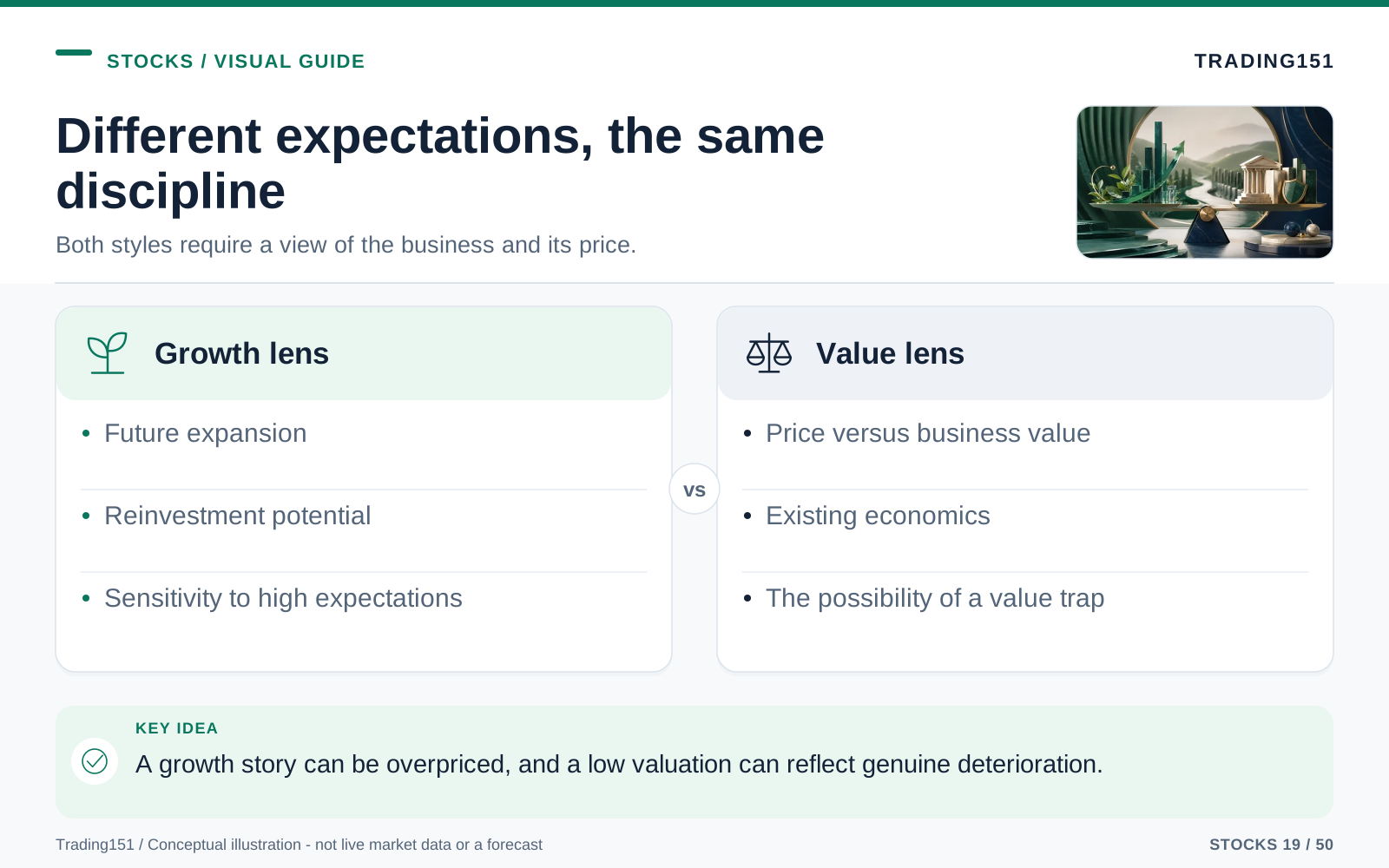
Read this diagram as text
- Growth lens
- Future expansion; Reinvestment potential; Sensitivity to high expectations
- Value lens
- Price versus business value; Existing economics; The possibility of a value trap
Part 2: Value Stocks and the Discipline of Buying What Others Ignore
If growth investing is about shelling out cash for tomorrow, value investing is about sniffing out what the market is ignoring today. A value investor looks at a stock and wonders, "Is this company worth more than the current price tag?" But to make it work, you need a catalyst—a solid reason why that price gap might eventually close. It doesn’t have to be a flashy event. It could be something as mundane as paying off debt, fixing profit margins, or management finally deciding to return cash to shareholders. Without that catalyst, a cheap stock might just stay cheap forever because the market is totally right to ignore a business that can't grow or protect its earnings.
Value investing goes all the way back to Benjamin Graham, the Columbia professor who famously mentored Warren Buffett. Graham’s philosophy was simple but mentally taxing: treat a stock like you're buying an actual piece of a real business, not just a blinking green or red light on your phone. Figure out what the business is worth, then wait until you can buy it for less than that. That buffer between the price and the real worth is your "margin of safety."
Value stocks are rarely glamorous. You’ll usually find them in the boring corners of the market that no one wants to talk about at dinner parties: regional banks, insurance companies, oil drillers, utilities, and grocery store chains. They aren't going to change the world. They just sell things people need, print cash, and trade at prices that look almost suspiciously low compared to what they earn.
What Value Investors Are Really Looking For
People love to call value investing "bargain hunting," but that makes it sound a bit too easy. Just being cheap isn’t enough. The real question is whether the stock is cheap compared to what the company can achieve in the real world.
1. A price below intrinsic value
Intrinsic value is basically an educated guess of what a company is truly worth, looking at its assets, cash flow, and market position. You won't find this number neatly stamped on a balance sheet. Two smart investors can look at the same data and come up with totally different valuations. But the goal is always the same: strike when the stock price falls noticeably below a realistic estimate of its true worth.
2. Low valuation ratios
Value stocks tend to sport price-to-earnings or price-to-book ratios well below the market average. These metrics aren’t foolproof, but they’re great starting points. A tiny P/E ratio usually means the market is pessimistic, bored, or outright panicked. Sometimes that panic is dead on. Other times, it’s just a large overreaction.
3. Real cash flow
Hardcore value investors obsess over cash. Accounting profits can be manipulated with clever math, but free cash flow tells you if real money is coming through the door. A business swimming in cash has choices: it can wipe out debt, buy back its own stock, pay out dividends, or just weather a severe recession without having to beg Wall Street for a lifeline.
4. Dividends and buybacks
Older, mature companies often share the wealth. Dividends are fantastic because they essentially pay you to wait while the market slowly wakes up to the company’s true value. Share buybacks are also great, provided management is buying back the stock when it’s undervalued. If they’re buying back shares at inflated prices, they’re just setting money on fire.
5. A believable reason the market is wrong
This is where value investing requires real brainpower. You need a specific thesis. Maybe the company had one terrible, highly publicized quarter. Maybe the whole sector is just deeply out of fashion. Or maybe there's a phenomenal core business buried underneath a messy corporate structure. You aren’t just looking at a screen and saying, "Oh, this is cheap." You’re saying, "This is cheap, and here is exactly why the rest of the market will eventually figure that out."
The Value Trap: When Cheap Is Not Cheap Enough
The absolute worst nightmare for a value investor is the dreaded "value trap." This is a stock that looks like a total steal, but only because the business is rotting from the inside out faster than anyone realizes.
Imagine a once-dominant mall retailer getting crushed by Amazon, a local newspaper bleeding ad revenue, or a tech hardware company whose flagship product is suddenly a dinosaur. Sure, the stock might be trading at three times last year’s earnings, but last year’s earnings are never coming back. What looks like a deep-value bargain is just a sinking ship.
This is why veteran value investors constantly ask themselves the hard, pessimistic questions. Is the balance sheet a disaster? Is the debt manageable? Are loyal customers jumping ship? Is the management team in denial? A cheap entry price gives you some cushion, but it won’t save you from a business that is fundamentally broken.
Part 3: Why the Economy Changes the Winner
Growth and value don't just exist in a vacuum. The overall economy plays a large role, and it can make one style look like sheer genius for a decade, only to flip the script and make those same investors look foolish. It’s not just about whether the economy is expanding. Things like inflation, interest rates, credit markets, and even just where the crowd is putting its money all tip the scales. Value stocks often thrive when the nuts-and-bolts economy is running hot, while growth stocks love a world with low interest rates. Of course, these are just general trends, not laws of physics—a truly exceptional company can buck the trend entirely.
Interest rates are the real wildcard here. When rates are sitting at rock bottom, investors are perfectly happy to wait around for profits that won't show up for another ten years. Money is cheap to borrow, companies can easily raise cash, and hyper-growth businesses can fund their grand plans without breaking a sweat. In that world, growth stocks are usually the stars of the show.
But when interest rates spike, the math gets ugly fast. A dollar of profit ten years from now isn't worth nearly as much today. Borrowing gets painfully expensive, and Wall Street loses its patience with companies that promise to be profitable "someday." Suddenly, businesses pulling in real cash right now with reasonable price tags start looking like the safest place to be. That’s usually when value stocks step back into the spotlight.
Inflation shuffles the deck, too. Certain value companies—like banks, oil drillers, or industrial manufacturers—do well when prices and rates are climbing. They have hard assets or the power to raise their own prices. Meanwhile, cash-burning growth companies tend to get punished when inflation runs hot.
Now, does this mean you can easily time the market? Not a chance. The stock market is famously forward-looking, meaning it usually starts reacting to economic shifts way before the official data confirms it. By the time the news anchors agree that "value is back," you’ve probably missed half the rally. But understanding this dynamic helps explain why a strategy that feels like a sure thing one year can feel completely broken the next.
Part 4: The Numbers That Matter, Without the Jargon
You really don’t need an MBA to get a grip on the core metrics investors use. Just understanding a few basic concepts makes the whole growth-versus-value conversation a lot less intimidating.
Price-to-earnings ratio is just how much you’re paying for a single dollar of a company's profit. A high P/E ratio usually screams high expectations. A dirt-cheap P/E could mean you’ve found a hidden gem, or it could mean the business is in serious trouble.
Price-to-sales ratio compares the company’s total market value to the revenue it brings in. This is super handy for early-stage growth companies that aren't turning a profit yet. But be careful—revenue is great, but if a company can never figure out how to turn those sales into actual earnings, the market will eventually lose patience.
Free cash flow is simply the money left over after a company pays all the bills required to keep the lights on and maintain its business. Investors love this metric because it shows cold, hard cash that the company can use to reward shareholders or fuel expansion.
Debt levels are important, no matter what kind of stock you're buying. Debt is great when it fuels expansion, but it turns into a total nightmare when the economy slows down or interest rates rise. If you find a stock that looks shockingly cheap, a mountain of debt is usually the reason why.
Return on invested capital sounds like Wall Street jargon, but it’s a beautiful, simple concept: how good is this company at turning money into more money? A business that can continually reinvest its cash and generate high returns for years is the ideal. Both growth and value investors would love to own a company like that.
These numbers won't hand you the perfect stock on a silver platter. But they are fantastic conversation starters. They force you to ask the right questions and keep you from buying a stock just because you saw a flashy headline.
Part 5: The Sleep Test
The best question to ask yourself isn't "Which of these strategies is mathematically superior?" It’s "Which of these strategies won't make me panic-sell when the market takes a dive?" Passing the sleep test is your best form of risk management. If a routine market dip has you staring at your portfolio at 2 a.m., your position is probably too big, or your belief in the stock is too weak. Selling down a bit so you can sleep isn't admitting defeat; it’s just making sure you stick around long enough to see if your thesis was right.
Everyone thinks they’re a long-term, patient investor when their portfolio is in the green. The real test is when a stock you love drops 30%, the headlines are reporting on a recession, and you feel sick every time you log into your brokerage account. That’s when the textbooks go out the window and investing becomes intensely personal.
You might be a natural growth investor if:
- You have a long runway ahead of you and don't mind waiting years for a story to unfold.
- You can watch a stock bounce up and down substantially without assuming the sky is falling.
- You geek out over tech trends, cultural shifts, and disruptive new industries.
- You care way more about multiplying your capital over a decade than getting a dividend check next month.
- You fully accept that some of your favorite picks will completely bomb, but you believe the large winners will more than make up for it.
You might be a natural value investor if:
- You’d much rather buy a solid business on sale than pay top dollar for a futuristic dream.
- You sleep better owning companies that have proven business models, real profits, and steady cash flows right now.
- You love the feeling of collecting dividends while you wait for the stock to appreciate.
- You possess the sheer stubbornness required to hold an unpopular stock for years.
- You’re naturally cynical about hype and refuse to buy unless the math backs up the story.
There are no wrong answers here. The only real mistake is copying someone else’s playbook when it totally clashes with your own personality. A growth investor who secretly hates volatility will inevitably panic and sell at the absolute bottom. A value investor who gets antsy after a few stagnant months will never give their thesis time to play out. The best strategy isn't the one with the best historical backtest. It’s the one you won't abandon when things get ugly.
Part 6: Why Most Investors Do Not Need to Pick a Side
Wall Street absolutely loves clean labels because they make for great TV debates. Growth vs. Value. Risk vs. Safety. But in the real world, the lines are completely blurred.
In fact, the greatest investments usually blend a bit of both. You can absolutely find a fast-growing company trading at a totally reasonable price. You can find an old-school, mature business that’s inexpensive but still has room to stretch its legs. A high-flying tech darling can crash and suddenly become a deep-value play. And a forgotten value stock can turn into a large growth story if a new CEO turns the ship around.
This is why sitting on the fence is sometimes the smartest move you can make.
Growth at a Reasonable Price
There’s a strategy called "Growth at a Reasonable Price," or GARP for short, that tries to live in the best of both worlds. The goal is to find companies that are consistently growing, but where you aren’t forced to pay a price that assumes absolute perfection. You aren't chasing the wildest rocket ship in the market, but you aren't digging through the clearance bin either. You’re just looking for excellent businesses priced with enough breathing room for things to occasionally go wrong.
It’s perfect for people who love the idea of compounding growth but still want a margin of safety. It won't give you bragging rights at a party, but its lack of drama is exactly why it works so beautifully.
The Core-and-Satellite Approach
Another great compromise is the core-and-satellite method. Imagine your portfolio is a solar system. The "core" is the sun—maybe a giant, boring index fund that holds both growth and value stocks. That takes care of the heavy lifting and keeps you broadly diversified without you having to overthink it.
Then, you use the "satellites"—smaller chunks of your money—to scratch your itch for individual stocks, risky tech bets, or high-yield dividend plays. It gives you the freedom to explore your highest-conviction ideas without risking your entire retirement on one bad guess.
Part 7: Common Mistakes on Both Sides
Growth and value camps love to take shots at each other, but the truth is, both sides have their own toxic habits.
Growth investors tend to get totally seduced by stories. A charismatic CEO and a world-changing vision are thrilling, but they don't pay the bills. Plenty of "revolutionary" companies sound amazing right up until the day they file for bankruptcy. A cool product isn't a business, and a great business isn't necessarily a smart investment if you overpay.
Value investors often refuse to accept permanent change. Buying a stock just because it’s cheap is a great way to catch a falling knife. Just because an industry was highly profitable ten years ago doesn't mean it ever will be again. Sometimes the market is pricing a stock for death because it's dying.
And both sides get way too arrogant. Growth junkies assume they can see the future. Value purists assume everyone else is an idiot. The reality is that the stock market is fiercely competitive, chaotic, and humbling. A little bit of self-doubt goes a long way. It forces you to double-check your logic before the market ruthlessly checks it for you.
Reinvestment matters more than the style label
Imagine two companies each increasing revenue by 15%. One needs substantial new equipment and working capital to support that growth; the other can expand with relatively little additional investment. The same sales growth can therefore produce different amounts of cash for shareholders. A growth rate without an explanation of the capital required is an incomplete description.
Now compare two low-multiple businesses. One is temporarily unpopular despite stable earning power. The other faces a lasting decline in demand and expensive obligations. Both may look like value stocks on a screen, but only detailed analysis can distinguish a discount from a warning. The multiple is a question to investigate, not the answer.
Use a range of scenarios rather than assuming the current category persists. What happens if a fast-growing business matures sooner than expected? What happens if a cheap cyclical business returns only to average profitability rather than to its strongest year? The investment case should show which assumptions drive the valuation.
A portfolio can contain both styles without resolving the debate in favor of one. What matters is whether the exposures are understood and the prices are defensible. Switching between growth and value after whichever has recently performed best is not the same as evaluating businesses; it may simply replace one form of performance chasing with another.
Growth and value can describe the same company
A business can have strong growth prospects and still be attractively priced, or modest growth and an excessive valuation. The labels are not opposite judgments about quality. They describe characteristics that need to be examined together.
Consider a fictional company whose earnings rise quickly because it is opening new locations. The growth looks appealing, but the economics depend on what each location costs and how much cash it eventually produces. Another company may show little revenue growth while steadily reducing debt and buying back shares at sensible prices. The headline category does not decide which offers the better return from today's price.
Compare the assumptions embedded in each case. How much growth is required? How long must it last? What happens if margins normalize or reinvestment costs rise? A valuation is more useful when the investor can explain what would make it wrong. Switching between growth and value because one label recently performed better is not the same as evaluating the businesses and prices underneath it. 1
Quality and Price Belong in the Same Conversation
People will be arguing about growth versus value until the end of time, and that’s what makes the stock market function. Two people can look at the same ticker symbol and see completely different things. One sees a delusional valuation; the other sees a company that will dominate the next decade. One sees a rare bargain; the other sees a dinosaur waiting for the meteor.
That disagreement is what makes a market.
Ultimately, this whole debate gets a lot more helpful when you stop treating it like a religion. Every investment boils down to the same mechanics: how much cash will this business generate, how sure am I about that, and what is it going to cost me today? Growth changes your estimate of the future; value keeps you disciplined on the price you pay right now.
Knowing your own personality is critical here because both styles can be excruciating to hold when they fall out of favor. Growth stocks can absolutely plummet the second interest rates tick up or expectations cool down. Value stocks can sit there doing absolutely nothing for years, testing your sanity. Any strategy is only useful if you can stomach holding it when everyone else thinks you're an idiot.
You don't need a crystal ball to predict whether growth or value will win next year. Just hold a rational mix of both. Refuse to pay absurd prices for a perfect future, and demand hard proof before buying a "cheap" company. The best investors don't pledge allegiance to a specific camp. They just realize that you can never separate how good a business is from the price you have to pay for it.
Sources and further reading
Editorial revision: 7 October 2026. Numerical scenarios are hypothetical unless identified as historical. References support the added explanations and selected corrections; rules and product terms should be checked again before acting.