
An earnings report changes the market's information about a company, but the headline profit figure rarely explains the whole reaction. Investors compare results with expectations, examine guidance, and reconsider the price they are willing to pay. A strong quarter can still disappoint if it reveals weaker cash generation or a less attractive outlook than the valuation assumed.
An Earnings Report Is a Corporate Report Card
In a nutshell, an earnings report is a company opening up its books to the public every three months. It’s a mix of a financial audit, a progress report, and a highly publicized performance review.
Calling it a school report card is a decent analogy, as long as we don't take it too literally. While a kid’s report card grades them on math and science, a corporate earnings report grades a business on sales, expenses, debt, cash flow, and a dozen other metrics that show where the foundation is strong—or where the cracks are starting to show.
When the numbers drop, most eyes dart straight to three main things.
Revenue is all the money coming through the front door before the bills get paid. If a clothing brand sells $5 billion worth of jeans and t-shirts, that’s their revenue. It definitely doesn't mean they kept that much money; it just means customers swiped their cards to that tune.
Net income is what’s left over after the dust settles and everyone gets paid—the employees, the landlord, the tax authorities, the suppliers, and the marketing team. When people casually ask, "Did the company make any money?", this is usually the number they're looking for.
Earnings per share, or EPS, just takes that bottom-line profit and chops it up by the number of shares out there. If a business clears $100 million in profit and has 100 million shares floating around, it made $1 per share. Investors love EPS because it makes it easy to map large corporate profits directly to the shares sitting in their own brokerage accounts.
But those three numbers barely scratch the surface. Serious investors dig into gross margins, free cash flow, inventory levels, customer churn, and whatever niche metrics matter for that specific industry.
You can't read a bank's earnings the same way you read a tech startup's. A young, explosive software company might get a free pass on burning money if their sales are going to the moon. But a legacy industrial company? If they miss a profit target, they’ll get punished, because investors are paying them for stability and cash, not wild growth. Context is everything.
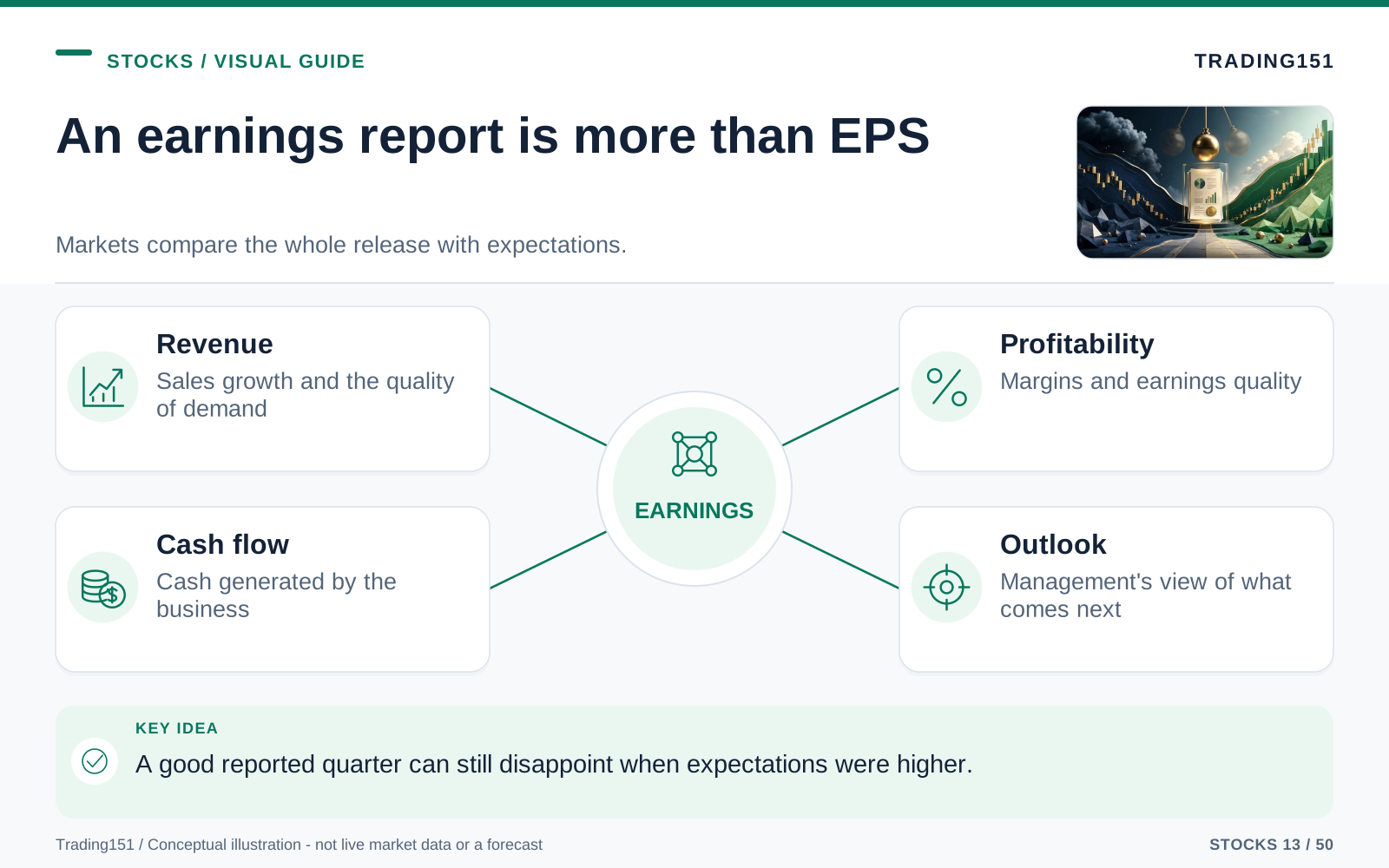
Read this diagram as text
- Revenue
- Sales growth and the quality of demand
- Profitability
- Margins and earnings quality
- Cash flow
- Cash generated by the business
- Outlook
- Management's view of what comes next
The Market Does Not Grade the Quarter. It Grades the Surprise.
One of the most frustrating things to wrap your head around is why a stock's reaction often seems completely disconnected from the actual numbers.
Picture two kids bringing home a B+ on a math test. One is a straight-A perfectionist whose parents expect nothing but the best. The other has been scraping by with D's and was fully expected to fail. The grade on the paper is exactly the same, but the vibe at the dinner table couldn't be more different. One house is dealing with a meltdown; the other is celebrating.
The stock market operates exactly like this.
Long before an earnings report hits the wire, Wall Street analysts have already guessed the revenue, the margins, and the EPS. Traders place their bets, and the stock price slowly molds itself around these assumptions. By the time the actual report comes out, the market isn't asking, "Was this a good quarter?" It’s asking, "Was this quarter better or worse than the one we already paid for?"
This is why a company making billions in profit can watch its stock plummet. If everyone expected a flawless quarter and the company delivered an merely "excellent" one, the stock falls. The business is doing great, but it didn't deliver the surprise the market demanded.
The flip side is just as true. A dying mall retailer might report falling sales and shrinking profits, yet the stock surges because everyone was bracing for bankruptcy. When the crowd prepares for an absolute disaster and only gets some mildly bad news, they treat it like a huge victory.
This is what financial types mean when they say something is "priced in." If everyone already knows a tech darling is going to grow fast, the stock is going to be expensive. Strong numbers aren't enough—they have to clear a ridiculously high bar to impress anyone. Meanwhile, a cheap, beaten-down stock has a bar so low it practically just has to prove it still has a pulse.
The Consensus Estimate Is Only the Public Target
You'll hear financial anchors obsess over whether a company "beat" or "missed" Wall Street estimates. It sounds simple enough, but there’s a large catch: the official, published estimate isn't always the number that matters. That "consensus" is just an average. A company might beat the official target, but still fall short of what the really heavy hitters—or the options market—were expecting behind the scenes.
Then there’s the notorious "whisper number." This is the unofficial, hush-hush expectation floating around trading desks and investor group chats. It shifts constantly based on how people are placing their bets in the days leading up to the report.
Let's say the official analysts predict $2.00 per share in profit. But over the last three weeks, the stock has been steadily climbing because everyone quietly assumes the real number will be $2.20. When the company announces $2.08, the news headlines will scream that it "beat expectations." Yet, you’ll watch the stock bleed red because it completely missed the whisper number.
It feels deeply unfair sometimes. A company does exactly what it promised to do, beats the analysts, and still gets clobbered. But if investors hyped themselves up into believing a miracle was coming, the reality check is going to hurt.
Earnings season isn't just a math test; it's a game of positioning. If too many people crowd onto the same side of a boat hoping for a great earnings report, even a solid update can cause a large sell-off. Traders cash out, short-term players get bored, and the stock drops—not because the business is failing, but because the trade just got too crowded.
Guidance Can Matter More Than the Quarter Itself
Here is the golden rule of earnings season: the report looks backward, but guidance looks forward. And the market always cares more about the future. Guidance comes in a lot of flavors. Some companies give you exact numerical targets, while others just vaguely discuss demand, supply chain costs, or customer backlogs. The trick is to compare how management talks today versus how they talked three months ago to see if their confidence is wavering.
A reported number just tells you what happened over the last 90 days. Guidance tells you what the CEO thinks will happen next quarter, next year, or beyond. Because stock prices are essentially just bets on future cash, guidance can entirely overshadow the actual quarter’s performance.
Think of it like driving a car. The earnings report is your rearview mirror—it shows you exactly where you just were. Guidance is the windshield, showing you what’s coming at you. You definitely need both, but you’re going to crash if you only stare at the mirror.
A company can post the best quarter in its history and still watch its stock crater if the CEO gets on the microphone and says demand is drying up, costs are spiking, or competitors are stealing their lunch. Nobody wants to pay top dollar for a business whose best days are in the rearview.
But, magically, a company can completely blow the quarter and still see its stock rally if management can convince everyone the pain is temporary. Maybe a factory was offline for two weeks, pushing sales into next month. Maybe they spent a lot of cash on a new warehouse, but early sales are sharply higher. If the market believes the future is bright, it will happily forgive a messy past.
This is why relying on stock market headlines is a trap. "Company X Beats Earnings" is only half the sentence. The real meat is in what they said about their pricing power, their competition, and the long road ahead.
Margins Tell You Whether Growth Is Healthy
Revenue growth gets all the limelight because it’s easy to grasp. More sales equals good, right? Not necessarily. Growth isn't automatically valuable. A company can easily boost sales while slowly bleeding out on the profit side, especially if they are slashing prices or spending a fortune on marketing just to get people in the door.
That’s why margins are so critical. They tell you if the growth is healthy.
Gross margin shows you what’s left after you subtract the raw cost of making the product. Operating margin takes it a step further, factoring in the day-to-day realities of running a business—salaries, office space, marketing, and R&D. If margins are widening, it generally means the business is getting more efficient or has the power to raise prices without losing customers. If they’re shrinking, you need to find out why immediately.
A software company that is growing its sales while simultaneously widening its margins is a beautiful thing. It means every new dollar coming in is more profitable than the last one. But a retailer growing its sales while its margins crash? That’s a large red flag. It usually means they're only moving inventory by desperately slapping "50% off" stickers on everything.
That subtle difference completely dictates how Wall Street reacts. Two competitors could both post 15% revenue growth, but the one holding onto its profits will get rewarded, while the one essentially buying its growth at any cost will get sharply punished.
Cash Flow Is Where the Story Gets Real
Profits are great, but cash flow is the ultimate truth-teller. Accounting rules are notoriously flexible, letting companies massage their earnings to look a little better (or worse) in the short term. But cash? You can’t fake cash. Now, quarterly cash flow can be bumpy. A company might stock up on inventory for a big holiday launch, or maybe a large client paid their invoice a few days late. That can skew the numbers for a few weeks without changing the actual health of the business. You have to look at the longer-term trends. But if a company keeps reporting record profits while its bank account stays completely empty, your alarm bells should be ringing.
Free cash flow is simply the money left over after a company pays for the basic upkeep and expansion of the business. It’s vital because cash buys freedom. A business throwing off plenty of free cash can pay off its debts, buy back its own stock, pay dividends to shareholders, or weather a severe recession without having to beg Wall Street for a bailout loan.
Investors get cynical when they see beautiful earnings paired with terrible cash flow. It usually means customers are dragging their feet on paying. Or unsold products are rotting in a warehouse. Or the company is claiming revenue today for cash it won't see for years. It doesn't always mean a scandal is brewing, but it absolutely demands your attention.
For established, older companies, a steady stream of cash matters way more than flashy growth metrics. A boring, sleepy business that prints cash year after year will always attract loyal investors. Meanwhile, a sexy, high-growth startup that burns through money every quarter will eventually find out that the market's patience has an expiration date.
The Earnings Call Is Where the Numbers Learn to Speak
Shortly after the press release drops, the company hosts an earnings call. This is where the top executives walk through the numbers, lay out their future guidance, and let Wall Street analysts grill them. It sounds like the most boring corporate ritual imaginable, but these calls can swing a company's market cap by billions in a matter of minutes.
The beginning of the call is usually heavily scripted and rehearsed. The real drama happens in the Q&A. Analysts will poke at the bruises. They want to know why European sales dipped, if customers are fighting back on price hikes, and why next quarter's forecast looks so gloomy.
Investors aren't just listening to the words; they're analyzing the music. Does the CEO sound confident, or just arrogant? When a tough question comes up, does the CFO answer it directly, or do they retreat into a word salad of corporate jargon? Small shifts in tone are heavily scrutinized by people trying to decide if the story still holds together.
Executives know they're under a microscope, so they prep for days. Even so, the mask slips sometimes. An unexpected pause, a heavy sigh, or a surprisingly blunt admission can tank the stock instantly. Sometimes, a perfectly fine earnings report is ruined by a management team that sounds panicked. Other times, a awful quarter gets a pass because the CEO calmly and clearly explains exactly how they're fixing it.
The numbers on the page spark the initial reaction. But the trust built on the call decides if that reaction sticks.
After-Hours Trading Makes Everything Look More Dramatic
The vast majority of earnings reports drop exactly when the regular market closes. This kicks off a bizarre, high-stakes after-hours trading session. The closing bell rings, the PDF hits the internet, and a stock might violently swing 10% before a normal person can even open the document. Because fewer people are trading after hours, the market is "thin." That lack of volume means automated algorithms trading purely on headline numbers can whip the price around substantially. The price you see at 4:15 PM is rarely the price you'll see the next morning once humans have digested the context. Think of that initial spike or plunge as a raw reflex, not a final verdict.
After-hours trading feels violent precisely because the adults have left the room. With less liquidity, it only takes a few large trades to aggressively move the price. Throw in high-frequency trading bots, hedge funds instantly rebalancing, and emotional retail traders mashing the sell button, and you get pure chaos.
And that first move is notorious for being a fake-out. A stock might rocket up on a great revenue number, only to collapse thirty minutes later when the CEO issues weak guidance. Or it might plunge on a missed profit target, then steadily climb back to green as the executives calm everyone down during the Q&A.
This is why reacting impulsively on earnings day is a great way to lose money. The immediate price action is just a knee-jerk reaction. The market needs a night to sleep on the data, digest the context, and figure out what it all means.
Valuation Decides How Much Forgiveness a Company Gets
You can take the same earnings report, hand it to two different companies, and watch their stocks move in entirely opposite directions based purely on valuation.
If a stock has been hyped to the moon and is trading at an astronomical multiple of its earnings, it is carrying the weight of large expectations. Investors have paid top dollar for future perfection. If a richly valued company stumbles even slightly, the market is ruthless. There is zero margin of safety.
On the flip side, a cheap, beaten-down stock has all kinds of room for pleasant surprises. If the market already hates a company and assumes it's heading for the graveyard, a mediocre earnings report can trigger a large rally. The company doesn't need to be incredible; it just needs to prove things aren't actively getting worse.
This dynamic is exactly where the phrase "great company, bad stock" comes from. A business can be world-class, but if the stock price is already priced for absolute perfection, you're probably going to be disappointed by the returns. Conversely, a deeply flawed business can be a fantastic investment if the stock is so absurdly cheap that any pulse at all drives the price higher.
Earnings reports just force the market to constantly calibrate the gap between the quality of the business and the price of the stock. When that gap gets too wide in either direction, the stock snaps back.
Why Stocks Sometimes Fall After Good News
It’s baffling when a company seemingly crushes it, yet the stock ends the day deeply in the red. But there’s usually a logical reason.
The results were good, but not magical. This is the classic expectations trap. Investors wanted perfection, and the company only delivered greatness. It simply wasn't enough.
The forecast was grim. They knocked the past quarter out of the park, but admitted the next three months look rough. Because the market only looks forward, the stock gets sold.
Margins are cracking. Sales went up, but profitability went down. Investors immediately start worrying that the company is spending way too much money just to attract customers.
The cash isn't there. The profit numbers on the income statement looked beautiful, but the actual cash flow didn't match up. People start digging for accounting tricks.
The stock already had its moment. Sometimes a stock rallies 20% in the weeks leading up to earnings because everyone assumes the news will be good. When the good news hits, traders sell to lock in their profits. This is the classic "buy the rumor, sell the news" phenomenon.
The executives sounded terrified. Even if the numbers were perfectly fine, a CEO who spends the entire call complaining about the economy will sink the stock with bad vibes.
None of these things necessarily mean the business is doomed, but they perfectly illustrate why a flashy headline never tells the whole story.
Why Stocks Sometimes Rise After Bad News
Seeing a stock soar after a terrible quarter is just as confusing. But it almost always happens for one reason: the market thought it was going to be an utter sharp sell-off.
Maybe investors were convinced the company was going to slash its dividend, and it didn't. Maybe they thought sales would fall off a cliff, but they only dipped slightly. Or maybe the CEO finally announced aggressive cost cuts, fired underperforming executives, or showed off a surprisingly strong balance sheet. When a stock has been relentlessly beaten down, a simple sigh of relief is enough to send it flying.
Short sellers also play a large role here. If half of Wall Street is betting against a stock, and the earnings report isn't quite as apocalyptic as they hoped, those traders have to rush in and buy shares to close out their negative bets. All that frantic buying pushes the price up, which terrifies other short sellers into doing the same, creating a violent upward spiral.
The market isn't interested in punishing a company for yesterday's sins. It only cares about tomorrow. If a terrible quarter convinces investors that the worst is finally over, the stock is going up.
How Everyday Investors Can Handle Earnings Season
If you're a long-term investor, earnings season shouldn't give you heartburn. The goal isn't to play the lottery and guess how a stock will react at 4:00 PM. No one can do that reliably. The real goal is to use these reports to verify that the reason you bought the stock in the first place is still valid.
Zoom out before you react. Three months is a blip in the lifespan of a business. Some companies have weird seasonal swings, one-off expenses, or delayed projects. A single ugly quarter is only a large deal if it confirms a long-term decline. If the grand thesis remains intact, don't panic over a 90-day hiccup.
Read beyond the headline. Ignoring the simple "beat or miss" takes discipline. Dive into the quality of the revenue, the direction of the margins, and the cash flow. The details that matter are usually buried a few paragraphs down.
Know what the market expected. If a stock has gone parabolic heading into earnings, ask yourself if the good news is already baked into the price. If it’s been dumped for six straight months, ask yourself if the negativity has gone too far.
Don’t treat earnings like a casino night. Buying an option a day before earnings hoping for a quick double might work once or twice, but it’s a great way to go broke long-term. Even if you accurately guess what the company will report, you might completely misjudge how the market will react to it.
Pay attention to the reason for the move. A stock dropping because a new factory was delayed by a week is radically different from a stock dropping because their main competitor just made their product obsolete. Context dictates whether a drop is a buying opportunity or a warning sign.
Keep position size sane. If one bad earnings report has the power to wreck your financial life, you own way too much of that stock. Earnings season will ruthlessly humble anyone who gets too arrogant.
The Best Use of Earnings Reports
The most successful investors don't view earnings reports as crystal balls. They treat them like routine health check-ups.
Are they still growing for the reasons you initially thought? Are customers staying loyal? Are margins stabilizing or expanding? Are the executives owning up to their mistakes? Is the balance sheet holding up? Are they generating real cash? Has the stock simply gotten too expensive to justify, or has a market overreaction handed you a gift?
Answering those questions is infinitely more profitable than trying to predict a coin-flip stock move the morning after earnings.
Over time, watching how the market reacts to these reports is an incredible education. It shows you what Wall Street truly values. Sometimes a stock crashes purely because of guidance. Other times, it moves solely based on a niche metric like subscriber growth or cloud revenue. If you pay attention, the market will eventually teach you exactly what drives a company's value.
Reconcile the earnings beat with the cash result
Suppose a fictional company beats an adjusted earnings forecast while operating cash flow falls. That is a reason to investigate, not immediate proof of poor accounting. Customers may be paying later, inventory may be building ahead of demand, or the timing of tax and supplier payments may have changed. The cash-flow statement and notes help distinguish a timing issue from a more persistent problem.
Follow the adjustments too. Removing a genuinely unusual item can help explain the underlying business. Repeatedly excluding costs that recur every year deserves more skepticism. Ask whether the same adjustment is made consistently when it helps and when it hurts the presentation, and whether per-share growth depends on a changing share count.
Compare management's current language with its previous guidance. A small change in expected margins, capital expenditure, or customer demand may matter more than a large change in one backward-looking number. Write down the change itself rather than relying on the overall upbeat or downbeat tone of the call.
The first market reaction is not a final assessment. Thin trading and rapidly changing interpretations can produce moves that later reverse. An investor who is not pursuing a short-term event strategy can often benefit from reading the filings before drawing a conclusion. The useful question is what the report changes about the business and valuation, not whether the initial price move agrees with the headline.
Read what changed in the outlook
An earnings release can contain strong results for the completed quarter and a weaker view of the months ahead. The reverse is also possible. Separate the reported period from management's guidance, then identify which assumptions changed: demand, pricing, margins, capital spending, or financing costs.
Avoid treating the first price reaction as a verdict on the quality of the business. A company can outperform its own earlier forecast while falling short of the market's expectations. The useful research question is what the new information changes in the investment case, not whether the opening trade was green or red. 1
Read the Change, Not Just the Headline
At their core, earnings reports move stock prices because they force everyone to reset their expectations. They hand investors concrete data about the past, breadcrumbs about the future, and an excuse to completely rethink what a business is worth.
Yes, the immediate aftermath can look irrational, especially when a great company craters or a dumpster fire of a business rallies. But beneath the noise, the market is just doing its job: constantly weighing reality against expectations. It’s always asking, "Is the story getting better, getting worse, or staying exactly the same?"
Don't treat a single earnings report like a final verdict on a company. Sure, one quarter can occasionally expose a large shift, but it can just as easily be skewed by weird weather, currency fluctuations, or one large client paying their bill a week late. You have to look at the trend over several quarters to see if the actual trajectory of the business has changed.
Unless you have a strict, risk-defined trading strategy, avoid gambling on the immediate release. After-hours price gaps can blast right past your stop-losses, options get expensive right before earnings, and the initial reaction frequently reverses entirely the next day. You'll make way more money building a long-term checklist than you will trying to day-trade the after-hours chaos.
Just use earnings season to update your mental model of the companies you own. Compare what management promised last year to what they delivered today. Keep an eye on the cash and the margins. The market might throw a tantrum for a night, but over the long haul, these quarterly check-ins will tell you if a business truly deserves the money you've trusted it with.
Sources and further reading
Editorial revision: 7 October 2026. Numerical scenarios are hypothetical unless identified as historical. References support the added explanations and selected corrections; rules and product terms should be checked again before acting.