
A demo account is useful for learning a platform and testing a routine. It cannot fully reproduce the execution, constraints, or emotional weight of trading real money. Moving to a live account is therefore not a graduation from risk. It is a new test with different conditions, best approached with modest expectations and clearly limited exposure.
What a Demo Account Is Really For
Think of a demo account as your sandbox. It pipes in live market data but gives you fake money so you can mess around without blowing up your bank account. It’s basically trading with training wheels, and everyone should start here.
When used right, a demo account builds the muscle memory you need before real money enters the chat. You need to know your platform inside and out. How do you place an order? What happens when you tweak a stop-loss, take partial profits, or hold through crazy news volatility? Getting your hands dirty with the mechanics matters way more than most rookies realize.
Plus, it lets you fail for free. You can accidentally buy instead of sell, put an extra zero on your lot size, or hold onto a terrible idea just to see what happens—all without hating yourself the next morning. You get the lesson without paying the tuition.
That freedom is a huge advantage when you're just starting out. Trading software can feel overwhelming at first, like looking at an airplane cockpit. Even basic stuff like calculating your position size takes brainpower early on. Demo trading buys you the time to slow down until all those clicks become second nature.
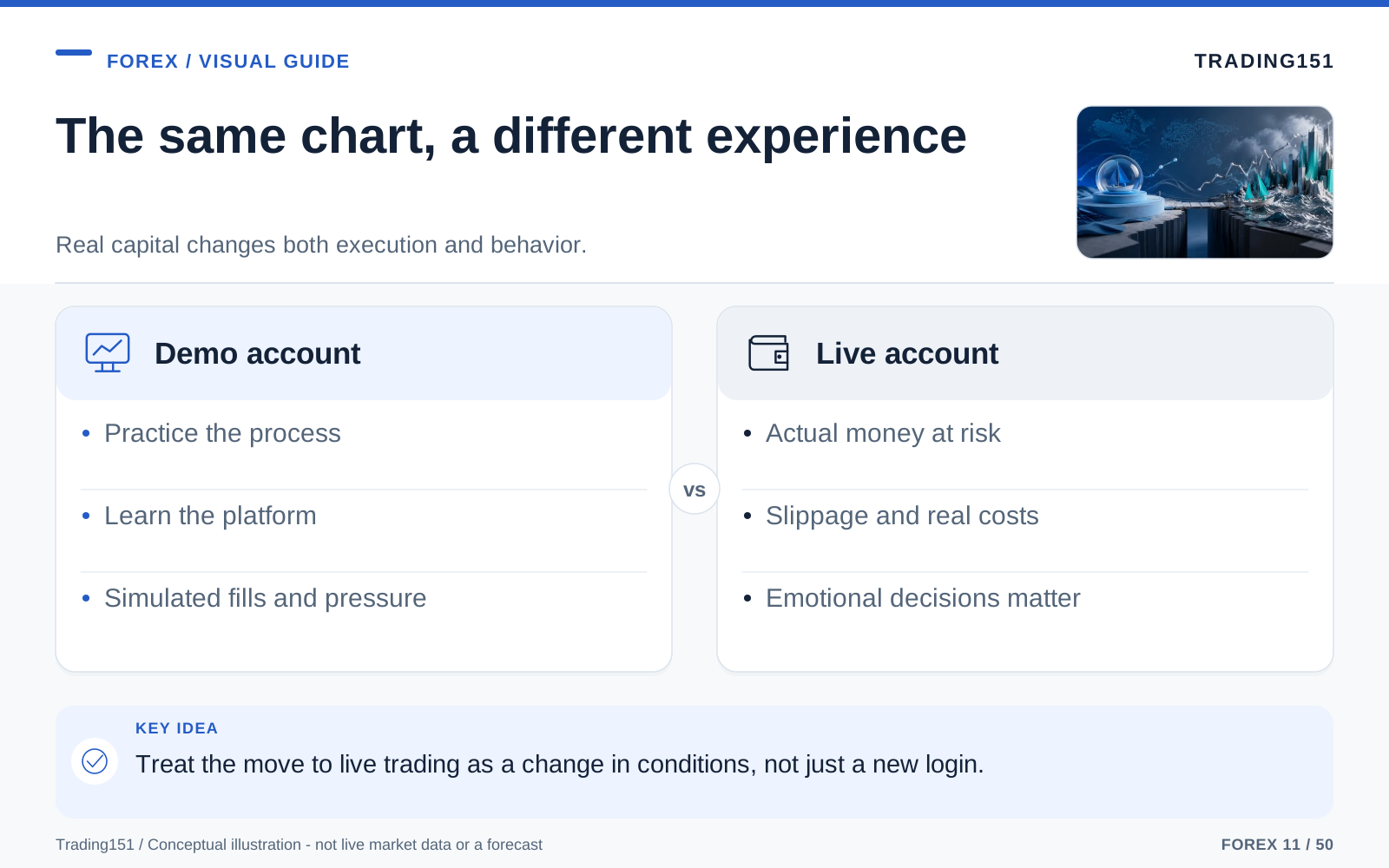
Read this diagram as text
- Demo account
- Practice the process; Learn the platform; Simulated fills and pressure
- Live account
- Actual money at risk; Slippage and real costs; Emotional decisions matter
Where Demo Trading Helps the Most
Learning the Platform Without Panic
Before you even think about making money, you just need to not break things. You need to know how fast orders go through, where to find your spread, and what your margin level means in practice. It’s not the sexy part of trading, but it’s vital. You'd be shocked how many early live-account losses happen just because a trader fumbled the platform, not because their market analysis was wrong.
Testing a Strategy in Real Market Conditions
This is the perfect place to put your ideas to the test. Want to trade London session breakouts? Test moving-average crossovers? Trade the news? A demo lets you gather real data instead of just crossing your fingers. Instead of guessing if an approach works, you can take a hundred trades and let the math speak for itself. But here's the catch: you have to treat it like a live account. Trade the same times, use the same position sizing, and don't hit the "reset balance" button just because you had a bad week. The closer your fake trading mimics your planned real trading, the better your data will be.
Trading isn't about finding a cool setup that works three times in a row. It’s about finding an edge and executing it like a machine. Demo accounts let you figure out if you have that edge without paying for every mistake.
Building Routine and Process
Good trading is honestly kind of boring. It’s built on routine: marking up your charts, waiting (and waiting) for a setup, checking your risk, logging the trade, and doing it all over again tomorrow. A demo account is where you build those habits. If you're sloppy and disorganized with fake money, you are going to be a disaster when real cash gets involved.
The Problem With Demo Success
For all its perks, demo trading has one fatal flaw: it lacks consequences. And when there are no consequences, human behavior changes.
This is why demo results are so dangerously misleading. Lots of people absolutely crush it on demo, but they do it in ways they’d never replicate in real life. They hold onto large losing trades without sweating because "who cares, it's fake." They take huge, irresponsible positions. They ignore stop-losses completely. Essentially, they get rewarded for terrible habits just because there’s no emotional or financial pain when things go wrong.
To put it bluntly, demo trading often rewards the exact behavior that will destroy a live account.
Does that mean demo trading is pointless? Not at all. You just have to be direct with yourself about why you're winning. A beautiful demo track record doesn't mean you're ready for Wall Street. It just means your strategy has potential and you know how to use your broker's software. That's a great start, but it's only half the battle.
What Changes the Moment You Go Live
Obviously, the money is real now. But the real shift is happening in your head.
On demo, a trade is just an idea. On a live account, it becomes deeply personal.
Suddenly, a small loss isn’t just a red number on a screen. Your brain starts doing the math—that was a tank of gas, a nice dinner out, or a chunk of your rent. A winning trade stops feeling like a routine outcome and starts feeling like something precious you need to lock in immediately, which is exactly how perfectly planned targets turn into panicked, early exits.
This is the exact moment most people realize trading was never really about drawing lines on a chart. It’s an exercise in emotional regulation.
The Psychological Gap Between Demo and Live
Fear Arrives Fast
Sitting through a temporary drawdown on a demo account is a breeze. You just tell yourself the setup is valid and wait it out. On a live account? That same dip feels like torture. You catch yourself staring at every tiny tick of the candle. You second-guess your analysis. You start looking for excuses to close the trade early—not because the chart told you to, but because you just want the anxiety to stop. The dollar amount honestly matters less than what the money means to you. Even a tiny loss feels heavy if that money was meant for bills, or if you're desperately trying to prove to yourself that trading works.
This anxiety is the number one reason traders abandon their plans. Their technical analysis didn’t fail them; their ability to handle uncertainty did.
Greed Becomes More Persuasive
Greed doesn’t always look like Gordon Gekko. Usually, it’s a quiet, totally reasonable-sounding voice in your head. You’re in profit, approaching your target, and you think, "Maybe I'll just give it a little more room. This could be the big one." Sometimes you get lucky. Usually, it reverses and wipes out your gains. What started as a clinical, well-planned trade turns into pure gambling.
Sure, you can be greedy on demo, too. But live greed hits different because the reward is actual cash you can spend. That makes it hard to stick to your mechanical rules.
Losses Can Trigger Bad Decisions in Clusters
Everyone handles their first loss fine. It’s the second or third one that usually breaks people. On a live account, a losing streak breeds desperation. Suddenly, you're overtrading, jumping in for "revenge," or doubling your lot size just to win it back in one shot. You completely abandon your tested strategy and start trying to bully the market.
This is why live accounts blow up so fast. The initial mistake rarely ruins you; the emotional tailspin that follows is what empties the account.
The Technical Differences Are Real Too
We talk a lot about psychology, but the actual mechanics of the market change when you go live, too. Even stone-cold, emotionless traders often get blindsided by how different execution feels with real money. Don't just assume your broker treats your live orders the same way they handled your virtual ones. Track your spreads, fills, and execution times on both to see the real difference, rather than just blaming the broker every time you lose.
Execution Isn’t Always Perfect
Demo environments are perfectly oiled machines. Fills are instant and forgiving. Live markets—especially when things are moving fast or liquidity dries up—are messy. Your order might go through at a slightly worse price than you clicked. If you're day-trading on tiny timeframes, those micro-delays add up fast.
Slippage Stops Being a Theory
You read about slippage in trading books, and it sounds like a minor annoyance. Then you trade live during a major news event, and the market teleports straight past your stop-loss, closing you out at a much worse price. That turns a paper-cut loss into a deep wound.
A strategy that ran smoothly on a demo account can feel shaky once real-world slippage enters the chat.
Spreads Can Behave Differently
It’s easy to ignore spreads when you're a rookie, but they are the literal cost of doing business. On a live account, spreads can widen drastically during quiet hours, rollover periods, or right before big economic data drops. If your strategy requires pinpoint accuracy on entries, a suddenly bloated spread can ruin your edge.
Costs Feel Different When They’re Yours
Even if the technical conditions are mostly the same, paying commissions, overnight swap fees, and spread markups hurts a lot more when it's eating into your actual bank balance. Demo accounts show you the math, but live accounts make you feel the emotional grind of those accumulating costs.
Why So Many Traders Move Too Early
The classic beginner blunder goes like this: you have an amazing week on demo, your confidence rises sharply, and you immediately assume you've mastered the markets and are ready for the big leagues.
More often than not, you just stumbled into a lucky market cycle.
A couple of good days means nothing in isolation. Markets change constantly. A strategy that looks like absolute genius for ten trades might lose money for the next thirty. Almost anyone can follow their rules when they’re on a winning streak, but how do you react when you lose five times in a row? That's why a brief run of profit isn't enough to go on.
Being "ready" doesn't mean you made fake money for a week. It means you have a solid, repeatable process that you can stick to even when market conditions shift.
What “Ready” Looks Like
There's no magical buzzer that goes off when you're ready, but there are definitely signs it might be time to dip a toe in the live markets.
You have a Defined Strategy
Could you explain your exact trading rules clearly to someone else? What exactly triggers an entry? Where is your stop-loss? Where are you taking profit? What tells you to stay out of the market entirely? If your answers are vague, stay on demo.
You Use Consistent Risk Management
If your lot size changes based on how lucky you feel today, you're not ready. Risking 1% on Tuesday and 8% on Wednesday because the chart "looks really good" isn't a trading strategy; it's an emotional reaction, even if you don't realize it.
You Keep Records
Journaling isn't busywork; it’s proof. If you aren't logging your entries, exits, emotions, and mistakes, you're just relying on your memory—and human memory is biased. Without a journal, you're flying blind, and that gets expensive quickly.
Your Demo Results Are Boring in a Good Way
Ironically, real consistency looks boring. It’s not about flipping accounts or pulling off large, cinematic recovery trades. It’s about routine, keeping risk tight, and grinding it out. If your demo equity curve looks like a rollercoaster of huge spikes and large crashes, you aren't consistent yet. You're just reckless with fake money.
The Best Way to Transition: Smaller Than You Think
When people finally go live, they usually do it with way too much money. They spend months on a large demo account, and then dump real cash into a live account before their brain is even remotely prepared to handle the swings. A much smarter move is setting milestones based on your actual behavior—like perfectly following your rules for a set number of trades—before you ever think about sizing up.
The best approach is to make the leap as small as humanly possible.
If your broker offers a cent account or a micro account, start there. That is the perfect bridge. Your goal at this stage isn't to buy a Lamborghini or quit your job. Your only goal is to see how your brain handles real risk, but with stakes so tiny that a loss is perfectly survivable.
A microscopic live account exposes things a demo never will. You’ll notice your heart rate spike. You’ll catch yourself wanting to move your stop-loss. You’ll feel the sting of a losing streak. None of these are side issues—managing those reactions is the actual skill of trading.
Starting small introduces real consequences while limiting the damage. That sweet spot is exactly where real growth happens.
How to Use a Small Live Account Properly
Treat It Like Training, Not Income
This is where a lot of people mess up. They fund a tiny account, realize they’re only making pennies on a win, get bored, and start risking half the balance just to make it "worth their time." That instantly defeats the purpose and builds awful habits.
This account is a mirror, not a paycheck. It’s there to expose your flaws under pressure. Treat it like a serious learning tool, and it will pay off massively later.
Keep the Same Rules You Used on Demo
Don't develop a split personality just because real money is involved. If your demo rule was to risk 1% and avoid trading during major news, do the same thing here. You’re testing whether your discipline holds up, not how well you can shoot from the hip.
Trade Small Enough to Stay Rational
I cannot stress this enough: if the dollar amount you’re risking makes you nervous, you're trading too big, even if the number looks small on paper. Your early live trades should carry enough weight to make you pay attention, but not so much that fear hijacks your brain.
Common Myths That Trip Beginners Up
“If I Can Win on Demo, I Will Win on Live”
Not necessarily. Doing well on demo is a great sign—it shows you understand the mechanics and have a decent strategy. But it absolutely does not guarantee you won't fall apart the second real pressure is applied.
“Live Trading Will Make Me More Disciplined”
Usually, the exact opposite happens. Live trading acts as a magnifying glass. If you're sloppy and impulsive on demo, real money will just make you a sloppy, impulsive, panicked trader.
“I Just Need More Confidence”
Confidence is substantially overrated in trading. What you need is hard evidence, strict structure, and self-control. There are thousands of confident broke traders out there. Being calm, robotic, and repetitive is far more valuable than feeling invincible.
A More Realistic Way to Measure Progress
New traders obsess over their Profit and Loss. It makes sense, but it’s the wrong metric at first. The better question is: are your habits getting better?
Did you stick to your trading plan today? Did you avoid revenge trading? Did you take your stop-loss like a professional instead of moving it? Did you walk away when the market was acting erratic? Did you take accountability for your bad trades instead of blaming the broker?
Tracking your behavior doesn't give you the instant dopamine hit of a winning trade, but it's what matters. A solid process creates repeatable profits. Without it, you're just on a lucky streak waiting to end.
So Which Account Matters More?
The honest truth is, they’re both essential—just at different points in your journey.
Your demo account is your classroom. It’s where you learn the language of the markets, figure out the software, backtest ideas, and build a routine without paying a large financial penalty for every misstep. It’s a safe space to be clumsy and curious.
Your live account is the ultimate stress test. It exposes whether you have discipline, whether your strategy survives real-world market conditions, and whether you can handle the emotional rollercoaster of real risk.
You can't skip either one. Sticking entirely to demo keeps you safe but totally untested. Jumping straight into live trading turns the market into an expensive casino. You need the balance of both.
Use the first live trades to measure execution, not income
Before a small live trial, write down what you are trying to learn. Perhaps it is whether typical spreads match your assumptions, whether stop orders behave as expected, or whether you follow the same rules when a loss is real. An income target is a poor substitute for those questions because it encourages increasing risk before the process has been assessed.
Compare intended and actual execution for each trade. Record the signal time, quoted spread, requested order, fill, and eventual cost. Keep the position size small enough that the experiment does not depend on making the money back quickly. Minimum trade sizes may still be too large for some accounts; in that case, staying in practice is a reasonable decision.
Use the same strategy definition during the comparison. Changing the entry rules, holding period, and risk at the same time makes it difficult to identify why the results differ. Where a change is necessary, record it explicitly rather than quietly treating all trades as one continuous test.
A few successful live trades establish very little about long-run profitability. They can establish useful operational facts, such as whether you understand the platform and can reconcile its statements. That is progress of a different kind. Build on evidence about the process without turning a short favorable run into permission to increase exposure sharply.
Practise the boring parts too
Use a demo account to rehearse correcting an order, cancelling a pending instruction, checking exposure after a restart, and keeping records. These tasks are easy to neglect when practice focuses only on entries. Demo profits do not establish live profitability, but a practice environment can still expose misunderstandings about the interface. Finding those errors before money is at risk is a useful result even when the simulated performance is unremarkable. 1, 2
A Few Closing Thoughts
Making the jump from demo to live Forex trading isn't just a simple software upgrade. You're entering an entirely different psychological arena. That’s why the transition feels so jarring for most beginners.
But here's the good news: you can manage this gap. There's zero rush, and you don't need to prove anything by trading large lot sizes right out of the gate. Take your time. Learn the ropes on demo. Build a clear, unshakeable strategy. Track your trades. Prove to yourself that you can stick to your rules even when you're having a terrible week. And when you finally do go live, start so small that you stay completely rational.
It’s not flashy, and it’s certainly not going to make you rich overnight. But it’s sensible.
And in trading, sensible is what survives. Demo and live accounts simply train different muscles. Use demo for your research and mechanics, and use a micro live account to build your emotional calluses. Don't be afraid to step back to demo if you need to test a new theory, and don't feel bad about trading tiny lot sizes while you figure out your psychology. That’s not a lack of ambition—it’s just smart, deliberate practice.
Sources and further reading
Editorial revision: 7 October 2026. Numerical scenarios are hypothetical unless identified as historical. References support the added explanations and selected corrections; rules and product terms should be checked again before acting.