
Day trading and swing trading differ in more than how long a position stays open. They place different demands on attention, execution, and the ability to tolerate moves while away from the screen. Choosing a style means matching those demands to real life, not selecting the one that looks most exciting in a well-edited trading video.
What Day Trading Really Means
Day trading is exactly what it sounds like: buying and selling within the same market session. You never hold anything overnight. When the bell rings at 4:00 PM, you’re flat. But because everything happens so fast, all your risk is squeezed into a tight window. A lagging internet connection, a frozen broker platform, or just freezing up for five seconds can ruin a trade that was only supposed to last two minutes. Having backup internet and knowing exactly how your trading platform works aren't just "nice-to-haves"—they're survival tools.
Some trades might stretch out over a few hours, while others are over in seconds. High-frequency scalpers might jump in and out in less than a minute. But the end goal is always the same: grab a piece of the intraday momentum and get out.
Day traders usually hunt for stocks that are heavily in play. They want crazy volume, breaking news, earnings shocks, or large technical breakouts. They couldn't care less where a company will be in five years. The only thing that matters is, "Where is the buying pressure right this second, and can I ride it for a quick profit?"
Why Day Trading Looks So Attractive
The appeal here is obvious. It’s fast-paced, direct, and action-packed. You make a call, the market reacts, and you find out almost immediately if you were right or wrong.
Plus, there's a huge psychological relief in finishing the day entirely in cash. You don’t have to lie awake wondering if a company is going to drop a terrible earnings report after hours. You won't wake up to a stock plummeting past your stop loss because the broader market tanked overnight. For a lot of active traders, sleeping soundly without open exposure is the ultimate perk.
It also accelerates your learning curve—at least in terms of screen time. A swing trader might have to wait two weeks to see how a setup plays out. A day trader gets their answer in ten minutes. You get reps in quickly, experiencing good entries, terrible exits, and everything in between on a daily basis.
And it’s thrilling. When the opening bell rings, the volume pours in, and the charts start flying, it takes a certain kind of focus to navigate it. Some people thrive on that adrenaline and love making snap decisions under the gun.
The Part Beginners Usually Underestimate
But that same speed is exactly what makes day trading so severe.
You can’t just pull up a chart on your phone during a lunch break and expect to beat the pros. Intraday price action shifts in the blink of an eye. A beautiful setup at 9:45 can become a trap by 9:46. If you hesitate, have a slow connection, or let your emotions hijack your mouse hand, a perfectly fine trade can turn into a nasty loss.
Day trading also puts your bad habits under a microscope. If you struggle with patience, the market will exploit it. If you hate taking losses, the market will punish you. If a red trade makes you want to immediately double down to "make it back," you’re going to get crushed. "Revenge trading" is the fastest way to turn a normal paper cut into a blown account.
The emotional rollercoaster is intense. You might start the morning perfectly disciplined, take a small loss, get frustrated, force a sloppy second trade, and suddenly spend the rest of the day fighting to get back to breakeven. Once you blow past your daily loss limit and keep clicking, you're no longer trading—you're just gambling out of frustration.
Then there are the financial hurdles. If you're in the U.S. and trading on margin, the Pattern Day Trader (PDT) rule requires you to keep at least $25,000 in your account if you want to take more than three day trades in a five-day rolling period. You can sometimes get around this by using a cash account or trading different markets, but the reality is that day trading stocks effectively requires a decent chunk of capital.
And don't forget the hidden costs. Even with "commission-free" brokers, you're still paying for trades through slippage, bad fills, routing fees, and data subscriptions. A strategy that looks like a money-printer on a backtest can bleed you dry when real-world execution costs factor in.
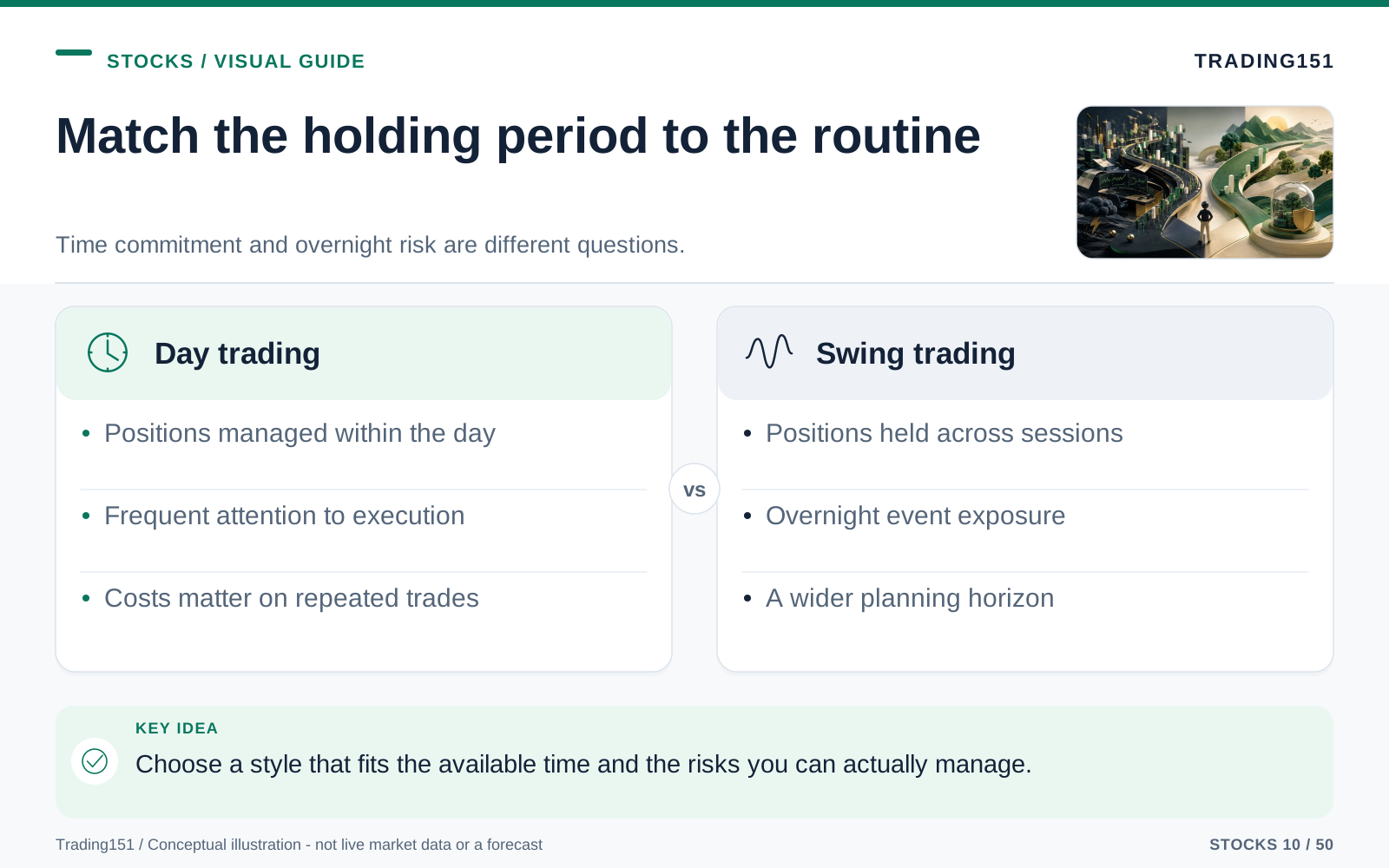
Read this diagram as text
- Day trading
- Positions managed within the day; Frequent attention to execution; Costs matter on repeated trades
- Swing trading
- Positions held across sessions; Overnight event exposure; A wider planning horizon
What Swing Trading Really Means
Swing trading is the sweet spot between hyperactive day trading and "buy-and-forget" investing. You buy a stock to ride a multi-day or multi-week trend. While you might hold for a couple of months, it's still an active strategy—you have a specific price target in mind, not a retirement horizon. But in exchange for a slower pace, you have to eat overnight risk. Earnings reports, surprise downgrades, or global news can crash a stock long before the opening bell rings. Because of this, you have to size your positions with the understanding that a stop-loss isn't a magical shield if the stock gaps down overnight.
Instead of agonizing over a 1-minute chart, swing traders usually zoom out to daily or weekly timeframes. They care about larger trends, major support and resistance levels, and broader market momentum. The mindset shifts from "What's happening in the next five minutes?" to "Is this chart gearing up for a serious move over the next two weeks?"
That shift in pacing changes the entire game.
Why Swing Trading Fits Real Life
For the vast majority of people, swing trading is just way more practical. It doesn’t demand your undivided attention from 9:30 AM to 4:00 PM. You can do your heavy lifting when the market is closed—scanning charts on the couch at night, building your watchlist, mapping out your levels, and setting automated orders for the next day.
I can't stress enough how important this is. Your trading style has to fit the life you have, not the life you wish you had. If you're working a desk job, going to school, or wrangling kids, trying to day trade is going to be a miserable, stressful experience. Swing trading lets you breathe.
It also gives you the luxury of time. You don’t have to place the trade in three seconds. You can stare at the chart, check what the overall sector is doing, calculate your exact risk, and thoughtfully decide if the setup is worth your money. That buffer prevents a lot of stupid, impulsive clicks.
Plus, it’s friendlier to smaller bankrolls. Because you aren’t churning through dozens of trades a week, that pesky PDT rule isn't really a problem. You absolutely still need strict risk management, but you don't necessarily need a large account balance just to get your foot in the door.
Finally, the reward targets are meatier. While a day trader might sweat over capturing a 40-cent move, a swing trader is looking to catch a wave of several dollars over a few weeks. It’s not necessarily "easier," but it means you don't have to be a precision sniper on the 1-minute chart to make a solid return.
The Risk That Comes With Patience
Sure, swing trading feels calmer, but calm doesn't always equal safe.
The glaring downside is gap risk. When you hold through the night, you are completely at the mercy of after-hours news. A CEO could resign, a competitor could drop a bombshell, or a macroeconomic event could send index futures tumbling while you're fast asleep.
This requires a totally different kind of mental toughness. Day traders need the guts to act instantly. Swing traders need the stomach to sit on their hands and tolerate ambiguity. Sitting still is harder than it sounds.
There's always that itch to micromanage. You might outline a flawless trade plan, enter the position, and then ruin the whole thing by checking the quote every 15 minutes. A perfectly normal 2% pullback suddenly feels like a disaster, so you panic-sell—only to watch the stock hit your original target three days later.
Oddly enough, boredom can be just as destructive as fear. Sometimes a swing trade will just sit there and do nothing for a week. The price chops sideways, volume dies down, and it feels like watching paint dry. A bored trader might close a perfectly good setup just because they want to feel like they're "doing something." That's not analysis; that's just needing to be entertained.
The Biggest Difference Is Not the Chart
A lot of people assume the main difference between these two styles boils down to chart timeframes. One guy watches the 5-minute chart; the other looks at the daily. One obsessively tracks the Level 2 tape; the other cares about the 50-day moving average. Sure, the tools are different, but that’s missing the bigger picture.
The real difference is the environment in which you make decisions.
Day trading compresses everything. You have to spot the setup, calculate risk, execute the entry, manage your adrenaline, and take profits all within a matter of minutes. It heavily rewards people who stay icy under pressure and act decisively. It completely chews up people who need time to process things.
Swing trading stretches everything out. You have plenty of time to build a plan, but that also gives you plenty of time to second-guess it. It rewards people who are naturally methodical and patient. It punishes those who are fidgety or constantly doubt their own analysis.
Neither personality type is "better." They're just wired differently. The secret is picking the style that doesn’t force you to fight your own brain every day.
Day Trading vs. Swing Trading: A Practical Breakdown
Let's break down how these two approaches compare in the real world.
1. Time Commitment
- Day Trading: You need to be glued to your desk while the market is open, especially during the volatile first couple of hours. Trying to do this while half-paying attention to a Zoom meeting is a recipe for disaster.
- Swing Trading: Super flexible. You can do your market homework at 9 PM with a beer in hand, set your orders, and let the broker handle the rest the next day.
2. Pace of Decision-Making
- Day Trading: Rapid-fire and reactionary. You might have ten seconds to decide if a breakout is real or fake.
- Swing Trading: Slow and steady. You can casually map out your entry and exit points days in advance.
3. Capital Requirements
- Day Trading: Generally needs a fatter wallet. If you're trading U.S. stocks on margin, the $25k PDT rule is a hard barrier. Plus, you need a comfortable cushion so a single bad red day doesn't mentally or financially wreck you.
- Swing Trading: Very accessible for smaller accounts. While you still need to be smart about position sizing, you can focus on building good habits and consistency without needing 30 grand to start.
4. Stress Profile
- Day Trading: High-octane, in-the-moment stress. Your heart rate spikes when you miss a fill, misclick an order, or watch a candle reverse on you instantly.
- Swing Trading: A slow burn. The stress here comes from the waiting game, holding through weekend news cycles, and fighting the urge to check your phone at dinner.
5. Tools and Setup
- Day Trading: You need a battle station. Direct-access brokers, hotkeys, real-time scanners, and ultra-fast internet are basically mandatory.
- Swing Trading: You can get away with a decent laptop, a standard charting platform, and a regular brokerage account that handles stop-limit orders.
6. Type of Analysis
- Day Trading: All about the micro-details: intraday volume spikes, breaking news catalysts, Level 2 tape reading, and short-term momentum shifts.
- Swing Trading: Focused on the macro: daily chart patterns, moving averages, sector rotation, upcoming earnings calendars, and the broader market trend.
7. Frequency of Trades
- Day Trading: You might take anywhere from one to twenty trades a day, though the best traders usually wait for a few prime setups.
- Swing Trading: Much lower volume. You might wait two weeks for the perfect chart to form, take the trade, and hold it for a month.
Which Style Matches Your Personality?
A lot of rookies pick a trading style because it looks cool on YouTube. Huge mistake. The market doesn't care about your aesthetic. It pays you for executing a boring, repetitive strategy with absolute discipline. Regulations, broker margins, and PDT rules will dictate a lot of what you can do. And your account needs to be big enough that your risk per trade makes sense—if you have to risk 20% of your account just to make a trade worth the commission fees, you're not trading, you're gambling.
You May Be Better Suited to Day Trading If:
- You have large blocks of uninterrupted free time during market hours.
- You think fast on your feet and don't freeze under pressure.
- You can take a punch (a loss), shrug it off, and not immediately try to "win it back."
- You love instant gratification and knowing the outcome of a trade right away.
- You absolutely hate the idea of holding stocks overnight and prefer a clean slate every evening.
- You have enough capital to meet the PDT requirements and absorb the inevitable losing streaks.
You May Be Better Suited to Swing Trading If:
- You have a full-time job, take classes, or have a busy daily schedule.
- You prefer analyzing things quietly rather than reacting to flashing lights and fast-moving charts.
- You have the patience to let an investment thesis play out over a few weeks.
- You don't mind overnight risk and won't obsessively check pre-market quotes in bed.
- You're working with a smaller starting account and want a more forgiving learning environment.
- You prefer taking a few well-planned, high-quality trades rather than clicking buttons every day.
Common Myths About Both Styles
Both of these trading styles are surrounded by a lot of internet folklore. Some of it is just silly, but a lot of it will actively drain your bank account.
Myth 1: Day Trading Is Easy Money
Because day trades only last a few minutes, outsiders think it’s a quick buck. It’s not. A five-minute trade takes hours of preparation, strict risk parameters, flawless execution, and total emotional control. If you aren't dialed in, you can make five distinct mistakes in a two-minute window.
Myth 2: Swing Trading Is Just Lazy Trading
Just because it’s slower doesn’t mean it’s passive income. A solid swing trader is always doing homework—scanning charts, managing risk, checking market breadth, and knowing exactly when a trade thesis is dead. It’s less frantic, sure, but it still requires real work.
Myth 3: More Trades Mean More Profit
Actually, overtrading just gives you more opportunities to screw up. A trader who forces twenty mediocre setups a week is going to get smoked by the guy who patiently waits for three A+ setups. Activity does not equal profitability.
Myth 4: One Style Is Always Safer
Day trading eliminates overnight gaps, but introduces execution and emotional risk. Swing trading gets rid of the split-second stress, but leaves you vulnerable to after-hours news. There is no inherently "safer" style. The safe choice is the one you understand and manage with strict discipline.
Risk Management Matters More Than the Label
Whether you're scalping the 1-minute chart or holding for a month, you are going to take losses. It’s unavoidable. Taking a red trade doesn't mean you're a failure; it means you're trading. The only real danger is letting one bad trade spiral into a blown account. You need to know exactly how many dollars you're willing to lose before you even think about the upside. Your entry price, invalidation level (stop loss), position size, and daily loss limit all have to work together. If a logical stop loss means you'd lose more money than you're comfortable with, your position size is simply too big. And no, moving your stop tighter just so you can buy more shares is a terrible idea—you'll just get chopped up by normal price fluctuations.
Before you even click "buy," you should know exactly where your thesis is wrong and what you'll do when the price gets there. Crossing your fingers, widening your stop loss, aggressively averaging down on losers, or just refusing to take the hit will obliterate your account faster than a bad strategy ever could.
Position sizing is your best defense mechanism. You can have a brilliant technical setup, but if you buy so many shares that you're sweating and staring at your P&L, it's too big. Good trading is supposed to feel focused and somewhat boring—not desperate.
Do yourself a favor and keep a journal. Write down why you got in, where you planned to get out, what went down, and how you felt emotionally. Over time, the journal will ruthlessly expose your bad habits. Maybe you panic-sell your winners too soon. Maybe you get sloppy and take terrible trades right after a large win. The data will tell you the truth, as long as you're willing to listen to it.
Can You Combine Day Trading and Swing Trading?
Pros do this all the time. They might have a core portfolio of swing trades and take a few day trades when the market is super volatile. But they can do this because they've learned how to compartmentalize the two mindsets.
If you're a beginner, mixing these styles is a recipe for disaster. What usually happens is you take a day trade, it immediately goes into the red, and instead of taking the loss, you suddenly decide, "You know what, this is a swing trade now." Or, you enter a long-term swing trade but panic and sell 20 minutes later because the 5-minute chart looked scary. That’s not a hybrid strategy. That’s just a complete lack of discipline.
Pick one style and stick to it for a while. Learn the rhythm, feel the specific emotional pressures, and master the risk management. Once you're consistently profitable and emotionally detached, then you can think about adding another tool to your belt.
A Simple Way to Choose
If you're still sitting on the fence, stop looking at stock charts and take a hard look at your actual daily routine.
If your mornings are chaotic, packed with meetings, or just unpredictable, swing trading is by far your best bet. If you try to day trade while half-distracted, you'll always be late to the punch and stressed out of your mind.
But, if your mornings are totally clear, you have the capital, you can hyper-focus, and you enjoy intense, rapid-fire decision-making, day trading might be your calling. Just remember to treat it like learning a high-level profession, not a quick side hustle. The learning curve is steep and expensive.
For complete beginners, swing trading is usually the safer sandbox. The slower pace gives you time to process what you're doing, study the market structure, and build discipline without a ticking clock in your ear. It’s not necessarily easier to make money, but it’s a much friendlier environment to learn the ropes.
Fit the strategy to an ordinary week
Map the strategy onto a normal week, including work, sleep, family commitments, and interruptions. A plan requiring decisions during hours when you cannot watch the market is not made realistic by a strong backtest. Equally, holding positions for several days may be unsuitable if overnight uncertainty repeatedly causes you to abandon the rules.
Count the work outside the trade. Preparation, checking announcements, reviewing fills, maintaining records, and testing changes all take time. A style involving fewer orders may still require substantial research. A style involving more orders may leave little room to recover from a platform problem or a lapse in attention.
A trial schedule can answer operational questions before money is involved. Follow the intended routine in a practice environment and record missed signals, rushed decisions, and interruptions. Do not treat simulated profits as proof of a live edge. Use the exercise to find out whether the process can be carried out consistently under ordinary conditions.
There is also a valid third choice: neither style. Someone whose objective is long-term investing may not need a short-term trading routine at all. The relevant comparison is not merely which trading label suits your personality, but whether the activity serves the financial goal after accounting for its time, costs, and risks. A schedule that cannot be sustained is a weakness in the plan, not a character flaw.
Include the work you do not see on the chart
Trading time includes preparation, recordkeeping, reviewing mistakes, and handling technical problems. A strategy that appears to need ten minutes at entry may require much more attention across the week. Track that workload during a trial period. The style that fits a job and family schedule is not necessarily the one with the most appealing backtest. Reliability depends partly on whether the routine can be maintained without rushing or neglecting other obligations. 1, 2
Choose the Pace You Can Sustain
The market doesn't care what label you slap on your Twitter bio. Day trader, swing trader, investor—it makes zero difference. The market only rewards preparation, risk control, and the ability to keep your cool when things go sideways.
Day trading is thrilling and highly rewarding for a very specific type of person. But it will chew up and spit out anyone who is underfunded, distracted, or easily rattled. Swing trading offers a much-needed buffer for people with busy lives, but it will drive an impatient, action-junkie absolutely crazy.
Pick the timeframe that aligns with the attention you can give it. You can't squeeze a hyper-active scalping strategy between Zoom calls, just like you can't run a multi-week swing strategy if every scary news headline makes you hit the sell button. Choosing a style that fits your lifestyle is step one of risk management.
Start on a simulator, track everything, and when you do trade with real money, trade so small that the only thing you care about is your execution, not your P&L. A winning trade where you broke all your rules is just positive reinforcement for bad behavior. A losing trade where you followed your plan perfectly? That’s a win.
Your trading style is essentially a peace treaty between the stock market and your central nervous system. Pick a pace you can survive, define your risk before you buy, and judge your success over a hundred trades, not just two or three exciting ones. The label you choose doesn't matter; all that matters is whether your strategy can survive contact with your real life.
Sources and further reading
Editorial revision: 7 October 2026. Numerical scenarios are hypothetical unless identified as historical. References support the added explanations and selected corrections; rules and product terms should be checked again before acting.