
Custodial and non-custodial storage solve different problems and create different responsibilities. A custodian can manage recovery and account administration, but it controls access under its terms. Self-custody gives the holder control of keys and responsibility for keeping them usable. The better choice depends on which risks you can understand and manage, not on which label sounds more independent.
The First Thing to Understand: Bitcoin Is Controlled by Keys
Before we dive into the rabbit hole of wallets, exchanges, and apps, we need to clear up what people mean when they talk about Bitcoin keys.
When someone says they “own Bitcoin,” they don't mean they have shiny little digital coins saved on their phone. The coins never actually leave the blockchain. What gives you the power to control them is a private key. That key is your absolute proof that you have the right to spend or move the Bitcoin tied to a specific address.
Think of it like a clear safety deposit box. Anyone can walk by, look inside, and see what's there. That glass box is your public address. You can hand it out to anyone when you want them to send you Bitcoin, just like handing out your email address.
But the private key? That's the secret code that unlocks the box. Whoever holds the key can take the Bitcoin. If you lose it, you're locked out forever. If you hand it to someone else, you've essentially handed over your money.
Now, most wallets won't force you to memorize a large string of random code. Instead, they give you a seed phrase—usually a list of 12 or 24 simple words. This phrase is basically the ultimate backup for your wallet. If your phone takes a swim, your laptop gets stolen, or your hardware wallet breaks, those words will bring your Bitcoin back to life on a new device.
But this little list of words isn't like a Netflix password. You shouldn't screenshot it, email it to yourself, type it into Apple Notes, or stick it in your Google Drive. If anyone gets their hands on that phrase, your Bitcoin is gone. There's no fraud department to call, no manager to complain to, and no hotline to reverse the transaction.
So, whenever you look at a way to store your crypto, the real question is always: who controls the private key?
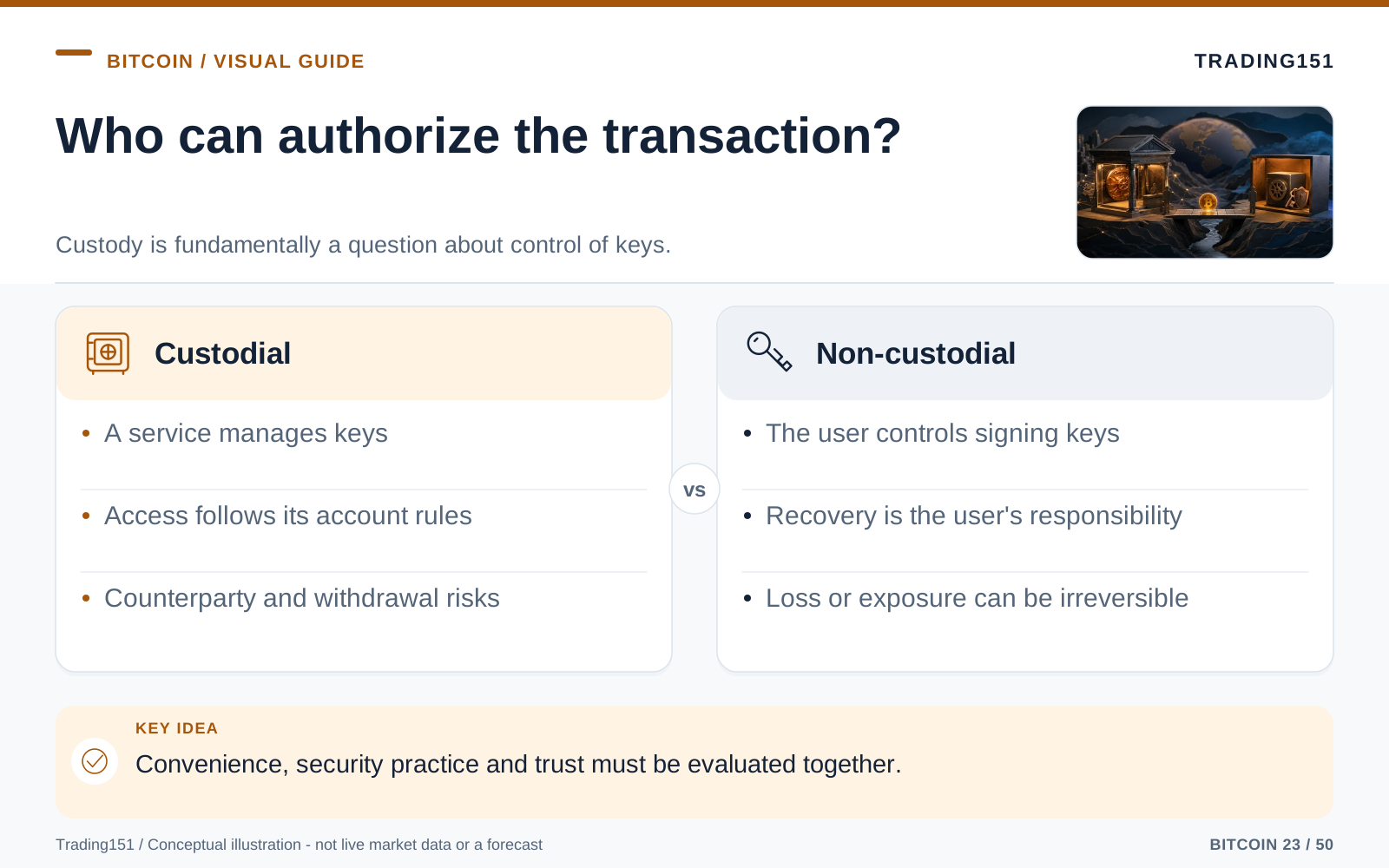
Read this diagram as text
- Custodial
- A service manages keys; Access follows its account rules; Counterparty and withdrawal risks
- Non-custodial
- The user controls signing keys; Recovery is the user's responsibility; Loss or exposure can be irreversible
What Is Custodial Bitcoin Storage?
Custodial storage simply means a company is holding the private keys for you. You make an account with them, and they take care of the heavy lifting behind the scenes. The balance you see on your screen is essentially an IOU from the platform, not a specific pile of coins with your name engraved on the blockchain. They might pool customer funds, move things between hot and cold storage, and handle all the internal accounting. The good companies have strict rules and systems for this, but you're trusting them to stay solvent, secure, and legally able to give you your money when you ask for it. It's substantially convenient, but it's not the same as direct ownership.
For most people, this is how they first dip their toes into Bitcoin. You buy some on an exchange or a money app, you see the numbers go up (or down) on your screen, and you log in just like you do for anything else—email, password, maybe a text message code. It's the go-to model for beginners because it feels safe, familiar, and easy to run on a large scale.
From where you sit, it feels exactly like checking your online banking. You open the app, look at your balance, make some trades, or hit withdraw. The app takes care of all the messy crypto stuff.
But behind the curtain, they are the ones holding the keys. Until you actively withdraw that Bitcoin into a wallet you control, your balance is just a promise in their database. That doesn't automatically mean custodial storage is a bad choice, but it does mean you are entirely reliant on that company to not go bankrupt, get hacked, or decide to lock you out of your account.
The Advantages of Custodial Storage
1. It’s effortlessly easy. These platforms are designed for regular people, not just tech nerds and crypto veterans. The interfaces are slick, the buttons make sense, and buying is basically frictionless. If you're just starting out, that simplicity is usually the only reason you don't throw your hands up and walk away.
2. You have a safety net. This is huge. If you forget your password, drop your phone in a lake, or lock yourself out, customer support can usually help you get back in after you prove who you are. With true self-custody, that safety net doesn't exist. Lose your seed phrase there, and your Bitcoin is gone forever.
3. Trading is fast. When your coins are already sitting on an exchange, you can trade them instantly. You don't have to deal with the hassle of sending funds from a personal wallet, waiting for the network to confirm the transaction, and then hoping the price hasn't changed. For people who trade a lot, that speed is everything.
4. They handle the hard stuff. Good custodial platforms spend millions on security infrastructure, audits, and cold storage vaults. —most regular people aren't ready to build a bulletproof security setup on day one. A trusted platform handles those risks so you don't accidentally wreck yourself while you're still learning.
5. It makes sense for pocket change. If you're just playing around with 50 bucks in Bitcoin, leaving it on a trusted app for a little while is totally fine. Not every tiny purchase requires you to buy a hardware wallet and bury your seed phrase in the backyard.
The Real Risks of Custodial Storage
1. You don't hold the keys. This is the big one. There's a popular saying in crypto: “Not your keys, not your coins.” A custodial balance is just a promise. If the platform halts withdrawals, gets hacked, mismanages their money, or goes bankrupt, you might be left empty-handed when you try to cash out.
2. They are giant bullseyes for hackers. Any company sitting on billions in crypto is going to attract bad actors. Yes, the big platforms have intense security, but no centralized database is completely bulletproof. Hacking an exchange is the ultimate payday, which means they are constantly under attack.
3. Your account isn't entirely yours. Custodians have to play by the rules—they deal with laws, regulations, and internal risk algorithms. If something about your account flags their system, they can freeze your funds while they investigate. Sometimes you'll know why; sometimes you won't. Either way, you're at the mercy of a gatekeeper.
4. Kiss your privacy goodbye. Regulated platforms are going to ask for your life story. You'll need to hand over your real name, address, ID, and maybe even details about your income. For most folks, that's just the cost of doing business. But for others, it defeats the entire purpose of getting into a decentralized currency like Bitcoin.
5. It makes you lazy. When an app feels just like Venmo or your bank, it’s easy to forget that Bitcoin was built for direct ownership. A lot of people accidentally let large balances build up on exchanges simply because setting up their own wallet feels like too much work. Over time, that laziness can become a huge liability.
What Is Non-Custodial Bitcoin Storage?
Non-custodial storage—often just called self-custody—means you are the only one holding the private keys. No bank, no app, and no broker has the power to move your Bitcoin. The wallet software (or hardware) just helps you manage the keys; it never actually holds onto them for you.
This is what Bitcoin was fundamentally designed for. You don't have to ask a company for permission to access your money. You interact with the network directly. If you have the keys, you can move the funds. If you don't, you can't.
It’s an empowering feeling, especially the first time you pull your Bitcoin off an exchange and drop it into a wallet you control. Suddenly, it’s not just numbers on a corporate dashboard. It’s yours.
But that total freedom comes with a large catch: you are now entirely responsible for your own security. Not kind of responsible. Not responsible until you need to call customer service. You are 100% on your own.
The Advantages of Non-Custodial Storage
1. You are in total control. Self-custody cuts out the middleman entirely. Nobody can block a transaction, freeze your account, or suddenly decide you violate their terms of service. As long as you have the keys and an internet connection, that Bitcoin is yours to command.
2. You don’t have to worry about a company going bust. Crypto history is full of horror stories where large, seemingly untouchable companies just vanished overnight. When a custodian goes down, a lot of people realize their money wasn't nearly as safe as they thought. If your Bitcoin is sitting in your own wallet, a corporate bankruptcy means absolutely nothing to your bottom line.
3. You get your privacy back. A self-custody wallet doesn't ask for a selfie, your passport, or your home address. Now, this doesn't mean Bitcoin is perfectly anonymous—the blockchain is still public—but it drastically cuts down on how much of your personal life is tied to your money.
4. You learn how Bitcoin works. Taking custody forces you to learn the ropes. You start understanding addresses, network fees, transaction times, and backups. It takes you from being a passive consumer to someone who understands the tech they’re investing in.
5. It's built for the long haul. A solid cold storage setup is durable. If you lock down your seed phrase and use a good hardware wallet, you can safely ignore the crypto world for years, knowing your funds aren't tied to the fate of a single website or app.
The Real Risks of Non-Custodial Storage
1. There are no do-overs. If you lose that seed phrase, send money to a typo in an address, or get tricked by a scammer, that’s it. It’s gone. Bitcoin gives you ultimate freedom, but it absolutely refuses to hold your hand if you mess up.
2. It can be intimidating. Wrapping your head around seed phrases, transaction fees, and test transfers can feel like learning a new language. It’s totally doable, but it requires you to slow down and pay attention. Rushing through the setup is exactly how people lose their money.
3. Physical security becomes a large issue. When you take custody, your physical backup is everything. If you write your seed phrase on a sticky note, it can get thrown away, burned in a fire, eaten by a dog, or stolen by a snooping roommate. You have to actively plan for both accidents and theft.
4. Trading gets annoying. If your Bitcoin is locked away in cold storage and you suddenly want to sell, you have to move it back to an exchange first. That means paying a network fee and waiting around for the transfer to clear. If you just want to hold, that’s fine, but if you’re trying to day-trade, it’s a nightmare.
5. Cockiness will ruin you. Holding your own keys isn't magically safer just because it sounds cooler on Twitter. A sloppy self-custody setup is way more dangerous than leaving your funds on a solid exchange. The goal isn't to look like a hardcore cypherpunk; the goal is to keep your money safe in a way you can manage.
Hot Wallets and Cold Wallets: The Two Main Self-Custody Choices
So, you’ve decided to take the leap and hold your own keys. The next big choice is what kind of wallet to use. Most non-custodial wallets fall into two main camps: hot wallets and cold wallets.
Hot Wallets
A hot wallet is basically any wallet connected to the internet. Think of apps on your phone, programs on your desktop, or browser extensions. You still control the keys, but they live on a device that’s constantly chatting with the web.
They are super convenient. You can download one in seconds, they’re easy to use, and they’re great for keeping a little spending money on hand. If you want to pay a friend, buy something quick, or just practice using crypto without buying a physical device, hot wallets are awesome.
- Best for: Pocket change, learning the ropes, daily spending, and quick access.
- Main risk: Since your phone or laptop is online, it's vulnerable to malware, sketchy links, fake apps, and hackers.
- Good habit: Treat your hot wallet like the leather wallet in your back pocket. Keep some cash in it, but don't stuff your life savings inside.
Cold Wallets
A cold wallet keeps your private keys completely offline. Usually, this means buying a hardware wallet—a physical device (like a fancy USB stick) designed specifically to sign transactions without ever letting your private keys touch the internet.
When you set them up right, hardware wallets throw a large wall between your Bitcoin and anyone trying to steal it online. You can draft a transaction on your laptop, but you have to physically click a button on the device to approve it. The secret key never leaves the piece of hardware.
- Best for: The long game, serious savings, and Bitcoin you don't plan on touching for a while.
- Main risk: Screwing up the physical backup, buying a tampered device from a sketchy seller, or just making a dumb mistake during setup.
- Good habit: Always buy directly from the manufacturer (never eBay), and always double-check the address on the device's screen before hitting send.
Paper Wallets and Other Older Methods
You might occasionally hear old-school crypto folks talk about paper wallets—printing your keys on a piece of paper. Back in the day, this was a common trick, but it’s a terrible idea for most people now. Making them securely is surprisingly difficult, and trying to spend money from them is asking for trouble. Stick to modern hardware and software wallets; they’re just vastly superior.
The Seed Phrase: Small Words, Huge Responsibility
If there's one thing in self-custody you absolutely cannot afford to rush, it's your seed phrase. Those 12 or 24 words are quite the master key to your wealth. And there's an awkward truth most people avoid talking about: estate planning. If you make a seed backup so ridiculously secret that nobody else can ever find it, your coins vanish forever if something happens to you. On the flip side, leaving explicit instructions lying around in an email or desk drawer completely destroys your security right now. A smart plan breaks the secrets up, sets clear boundaries on who can access what, and explains the steps without handing over the keys on a silver platter. Passing on your Bitcoin isn’t just a legal puzzle—it’s an engineering challenge, and you need to take it seriously.
A staggering amount of lost Bitcoin didn't happen because someone’s hardware wallet broke; it happened because they treated their seed phrase like a cheap shopping list. People take screenshots. They paste them into Google Keep or Apple Notes. They fill out fake support tickets on Discord. They write them on scrap paper and toss it in a junk drawer, only to throw it out two years later during spring cleaning.
The right way to do it is boring, physical, and deliberate. Grab a pen and write the words down cleanly by hand. Double-check every letter. Stash that paper somewhere secure and private. If you’re holding serious money, think about buying a stainless steel backup plate that won't melt in a fire or dissolve in a flood. And remember this forever: never type your seed words into a website, never tell them to "customer support," and never text them to anyone. Legitimate support will never, ever ask for your phrase.
Also, don't just write it down and assume you did it right—test it before loading up your wallet. Most setups let you run a quick verification check during the initial setup. If you want to be extra thorough, wipe the device and restore it from your words before sending any real funds. You definitely don’t want to discover you misspelled word number seven when your computer dies six months from now.
Real-World Lessons: Custodian Failure vs. Personal Error
All this debate about wallets can feel a bit theoretical until you look at what happens in the real world.
On the custodian side, things have gone spectacularly wrong over and over. Mt. Gox was the first large wake-up call, collapsing after hundreds of thousands of customer coins simply disappeared. Fast forward to recent history, and names like FTX, Celsius, and Voyager proved that huge marketing budgets, famous spokespeople, and stadium sponsorships don't mean your funds are safe behind closed doors.
The takeaway here isn’t that every exchange is an outright scam. It’s that leaving your coins with someone else introduces what finance people call counterparty risk. When you let a company hold the keys, you're not just betting on Bitcoin’s code; you’re betting on that company’s leadership, their bookkeeping, their legal troubles, and their honesty.
That said, self-custody isn't a walk in the park either. James Howells became legendary for accidentally tossing an old hard drive holding thousands of Bitcoin into a city dump. Countless others have lost fortunes because they misplaced a notebook, had a house cleaner throw out a piece of paper, got tricked by a malicious app, or pasted a clipboard malware address into a transfer.
The moral is pretty straightforward: self-custody doesn't make risk magically disappear. It just puts the steering wheel in your hands. If you are diligent, that gives you absolute freedom. But if you’re careless, it will not hesitate to punish you.
How to Decide Which Option Fits You
There is no one-size-fits-all answer here. The right choice depends on how much you have, how tech-savvy you feel, your personal habits, and what you’re trying to do with your crypto.
Custodial Storage May Make Sense If...
- You’re brand new to crypto and still trying to understand the basics.
- Your balance is small enough that if it vanished, you’d be annoyed, not ruined.
- You’re actively day trading and need funds ready to buy and sell instantly.
- You just don't trust yourself to safely manage and hide a physical seed phrase yet.
- You care way more about having a password reset button than having pure ownership.
Non-Custodial Storage May Make Sense If...
- You view Bitcoin as long-term savings and plan to hold it for years.
- Your balance has grown to the point where leaving it on an exchange makes you sweat.
- You want genuine, undeniable ownership rather than a corporate IOU.
- You're willing to take a quiet weekend afternoon to learn the process carefully.
- You have a clear, safe plan for hiding and backing up your recovery words.
A Simple Rule of Thumb
If losing that stash of Bitcoin would keep you awake at night or seriously ruin your finances, it deserves a lot more than casual storage. That doesn't mean you need to immediately build a bunker with retinal scanners, but it does mean you should stop dragging your feet and create a real plan.
For most people, this realization hits slowly. At first, you’ve only got a few hundred bucks on an exchange, so you don’t think much about it. But then you keep buying, the price climbs, and suddenly that balance looks like a large chunk of your net worth. The minute you feel a knot in your stomach thinking about an exchange freezing your account, that’s your sign it’s time to move to self-custody.
The Hybrid Approach: Practical, Flexible, and Realistic
If you talk to veterans in the Bitcoin space, most of them don’t treat storage like a religious war. They use different tools for different jobs. A hybrid approach makes a lot of sense if you give each layer a specific purpose. Want to buy some dip? Leave a bit of fiat or crypto on an exchange. Want to pay a friend for pizza? Keep a hundred bucks in a mobile wallet. Saving for retirement? Lock the vault and put it on a hardware device or multisig setup. Just make sure you write the whole plan down in plain English so you—or your family—can follow it when the pressure is on. Being overly complicated isn't the same as being secure. If your system looks like a Hollywood hacker movie but your spouse couldn't figure it out if they had to, you’ve built a fragile system, not a strong one.
Here’s what a normal, practical setup might look like: Keep a sliver of funds on an exchange for trading or buying dips. Keep a couple hundred bucks on a phone app so you can mess around with lightning payments or learn how transactions work. But stash the vast majority of your stack in deep cold storage, carefully backed up, and never touch it unless you absolutely have to.
This is basically how you treat normal money, right? You keep cash in your physical wallet for coffee, you keep enough to pay rent in a checking account, and you stick your retirement savings somewhere boring and hard to touch. Different piles, different purposes. You wouldn't walk around town with your entire life savings in your jeans, and you wouldn't lock twenty dollars in a bank vault.
Bitcoin makes a lot more sense when you apply that same logic. Pick the storage method that matches what you're trying to achieve.
Security Habits That Matter No Matter Which Method You Choose
Whether you trust Coinbase, run a slick app on your phone, or bury steel plates in the woods, there are some basic security habits that apply to absolutely everyone.
- Use serious passwords. Never, ever use the same password for your crypto exchange that you use for your streaming accounts.
- Lock it down with 2FA. Get an authenticator app (like Google Authenticator or Authy) or buy a physical security key. Do not rely on SMS text codes—they are painfully easy to intercept.
- Stay paranoid about phishing. The internet is full of fake customer support reps on Twitter, bogus emails pretending to be your exchange, and poisoned Google search ads. Trust no one.
- Double-check addresses. There is nasty malware out there that swaps the Bitcoin address you copied with the hacker’s address. Always check the first and last few characters of the string before you hit send. If you have a hardware wallet, confirm it on the tiny screen.
- Always send a test batch. If you’re moving a huge chunk of change, don't just yeet it across the blockchain. Send five bucks first, confirm it arrived safely, and then send the rest.
- Keep your secrets completely analog. Seed phrases live in the real world. Do not take photos of them, do not put them in your password manager, and do not save them in the drafts folder of your email.
- Think about the worst-case scenarios. What happens if your house floods? What if you drop your phone off a boat? What if something happens to you and your partner needs to access the funds? Make a plan.
What About Multisig?
As your stack gets bigger, you’ll probably start hearing people whisper about multisignature setups, usually just called "multisig." It’s an advanced form of self-custody where spending money requires multiple keys instead of just one. A classic setup is a "two-of-three" vault—meaning three keys exist, but you only need two of them to approve a transaction.
Multisig is awesome because it virtually eliminates the "single point of failure" problem. You could keep one key at your house, stash the second in a safe deposit box, and put the third with a trusted family member. If a thief breaks in and finds one key, they get absolutely nothing. If you accidentally lose a key, you still have the other two to recover your money.
But multisig cranks up the complexity. You now have multiple backups to manage, more devices to juggle, and a lot more room to confuse yourself if you don't take immaculate notes. It’s a brilliant option for large fortunes, company treasuries, or die-hard long-term holders, but if you bought your first satoshis last week, you don’t need to worry about it yet.
Common Mistakes to Avoid
Most crypto horror stories trace back to a few common screw-ups. If you just avoid these, you’re already doing better than half the people out there.
- Leaving large sums on an exchange out of laziness. "I'll move it this weekend" is not a security strategy.
- Taking digital photos of a seed phrase. Your phone syncs that photo to iCloud or Google Photos, and suddenly, it's just sitting on an Apple server waiting to be hacked.
- Typing your seed phrase online. Outside of very specific hardware wallet setups, typing those 12 words into a website is an instant way to get robbed.
- Buying used hardware wallets. Do not buy a Trezor off eBay to save twenty bucks. It could be loaded with malicious software. Always buy direct from the factory.
- Sending big transfers blindly. Always, always do a small test transaction first.
- Ignoring estate planning. If you pass away and nobody knows how to find or use your keys, your wealth is just burned into the blockchain forever.
- Building a fortress you don't know how to unlock. Security that is too complex for you to use safely is a large liability. Keep it manageable.
So, Which Is Better?
If you prioritize convenience, a safety net for passwords, and rapid trading, custodial storage wins. If you care about total independence, dodging corporate bankruptcies, and true long-term ownership, self-custody is the undeniable champion. Neither is flawless. You can use both intelligently, and you can screw both of them up spectacularly.
The biggest trap is treating this like a math problem with one right answer. It’s entirely personal. An organized person who’s holding for retirement is a perfect match for cold storage. A total rookie with fifty bucks is much better off sticking to a reputable app while they figure out how the tech works. The day trader needs the exchange, while the maximalist sleeps soundly knowing their keys are locked in steel.
The perfect setup is simply the one that protects you from the threats you’re facing. For some, the biggest threat is an exchange collapsing in a scandal. For others, the biggest threat is their own tendency to lose passwords. And for some, the real danger is clicking a shady link while scrolling half-asleep on the couch.
Test the arrangement against two different failures
Use two thought experiments. First, imagine the provider closes tomorrow. Second, imagine you become unable to operate the wallet yourself. An arrangement that handles one scenario well may handle the other badly. Keeping these tests separate prevents security discussions from focusing only on theft while ignoring recovery, incapacity, and access.
For a custodian, look for the contractual treatment of assets, withdrawal restrictions, subcustodians, and insolvency arrangements. A statement that assets are held securely does not tell you whether they can be lent, pledged, or mixed with the provider's own assets. Insurance also has exclusions and limits; do not treat the existence of a policy as a promise to reimburse every customer loss.
For self-custody, document the wallet type, backup requirements, and recovery procedure without exposing the secrets themselves. Consider whether a trusted person could follow the instructions when needed. A technically elegant setup that nobody else can understand may be fragile in a family emergency.
A mixed approach can be practical, but count the complexity it adds. More wallets and providers mean more credentials, records, and opportunities for confusion. The goal is a proportionate arrangement: enough separation to avoid a single preventable failure, but not so many moving parts that routine use becomes hazardous. Review the decision as the amount held and your circumstances change.
Segregation needs more than a label
A provider may say that customer assets are held separately, but the practical meaning depends on records, control arrangements, legal title, and insolvency treatment. Ask whether the terms allow lending, pledging, or other use of the assets, and whether the customer has consented to it. A reassuring dashboard does not answer those questions.
An independent audit or assurance report can be useful within its stated scope, but it is not a blanket guarantee. Check the period covered, the entities included, and the exclusions. Evidence about assets on one date may say little about liabilities, internal controls, or transfers that occurred outside the review. 1, 2
Choose the Failure Mode You Understand
Bitcoin offers something revolutionary: the chance to possess wealth directly, without having to beg a bank, payment processor, or government for permission. That kind of financial autonomy is incredible. But man, it demands a lot from you.
Custodial storage is the friendly front door to crypto. It lowers the hurdles, gets you off zero, and gives you some breathing room to learn without risking total disaster. Non-custodial storage is the deep end of the pool. It gives you the keys to the kingdom and lets you step completely outside the traditional financial system.
You don't need to become a cryptography expert overnight. Start small. Learn what a private key does. Get comfortable writing down a seed phrase. Practice sending five dollars across the network before you try sending fifty thousand. Build habits that are boring, repetitive, and calm.
As you get more comfortable, your storage game can level up. Maybe you start keeping the bulk on a hardware wallet. Maybe you mix and match with a hybrid setup. Or maybe down the road, your stack gets so big that you start learning how multisig works.
Whatever route you take, just make sure you’re choosing it intentionally. Keeping Bitcoin safe isn't just about buying expensive gadgets or memorizing passwords. It’s about knowing exactly who holds the power, understanding exactly what can go wrong, and making sure you’re ready to handle the responsibility.
Sources and further reading
- SEC Investor Bulletin: Crypto Asset Custody Basics for Retail Investors
- Bitcoin.org: Securing your wallet
Editorial revision: 7 October 2026. Numerical scenarios are hypothetical unless identified as historical. References support the added explanations and selected corrections; rules and product terms should be checked again before acting.