
Bitcoin scams often work by creating urgency: a supposed account problem, an investment opportunity that is about to close, or a person who needs an immediate payment. The technical transaction may be perfectly valid while the reason for sending it is false. The best defenses interrupt that pressure before money or recovery information leaves your control.
1. The Guaranteed-Profit Trap
The oldest trick in the crypto playbook is still alive and kicking because it works: someone slides into your feed promising to turn a little bit of your Bitcoin into a whole lot of Bitcoin, with basically zero risk. This pitch works because it sells relief just as much as it sells money. Markets are stressful, figuring this stuff out takes time, and we all kind of want a confident expert to step in and make the hard choices for us. Scammers trade on that fatigue by handing you absolute certainty—complete with fake screenshots, phony testimonials, and a ticking clock.
Here’s the truth: Real investments can be great, but nobody can honestly promise a zero-risk return. The second someone pitches you a guaranteed payout, a secret "arbitrage" glitch, or a system that cannot lose, your internal alarm bells should be deafening. Hype isn’t evidence, and giving away your coins is not custody.
How it looks: You stumble across a post on X, TikTok, YouTube, or Telegram. Some trader is flexing the absolute dream life. We’re talking screenshots of wild profits, beach villas, sports cars, and comments flooded with people saying stuff like, “I started with just 500 bucks and made $18k in three days. Thank you so much!”
They might claim they've cracked the code with an automated trading bot, an exclusive mining pool, an "AI-powered" algorithm, or a VIP signal group. The buzzwords change depending on what's trending, but the pitch never does: send your Bitcoin to them, and they'll send a mountain of it back.
Sometimes they put real effort into the illusion. They might give you a login to a slick, professional-looking dashboard where your balance goes up every day. You might even get emails from a "personal account manager." Heck, they might even let you withdraw a tiny bit of profit right off the bat. But don't be fooled—that early withdrawal isn’t proof they’re legit. It’s bait. They just want you to feel safe enough to deposit your entire stack.
And once you drop the big money in? That's when the excuses start. Suddenly, you have to pay a "tax clearance fee" to get your funds out. Then it's a "wallet verification fee." Then some bogus anti-money-laundering charge. Every payment is framed as the absolute last hurdle, but there's always going to be one more fee.
Why it works: Nobody is stupid for wanting some financial breathing room. Rent is severe. Groceries are up. Paychecks aren't stretching like they used to. When someone confidently promises a shortcut out of the grind, it’s tempting to believe them. The scammer weaponizes your hope.
How to beat it: Accept a hard truth right now—nobody is giving away free money on the internet. If someone had a magical, risk-free machine that prints Bitcoin, they wouldn't be begging you for a deposit on Telegram. They'd just run it themselves and be billionaires. Never, ever send your Bitcoin to someone else expecting a return.
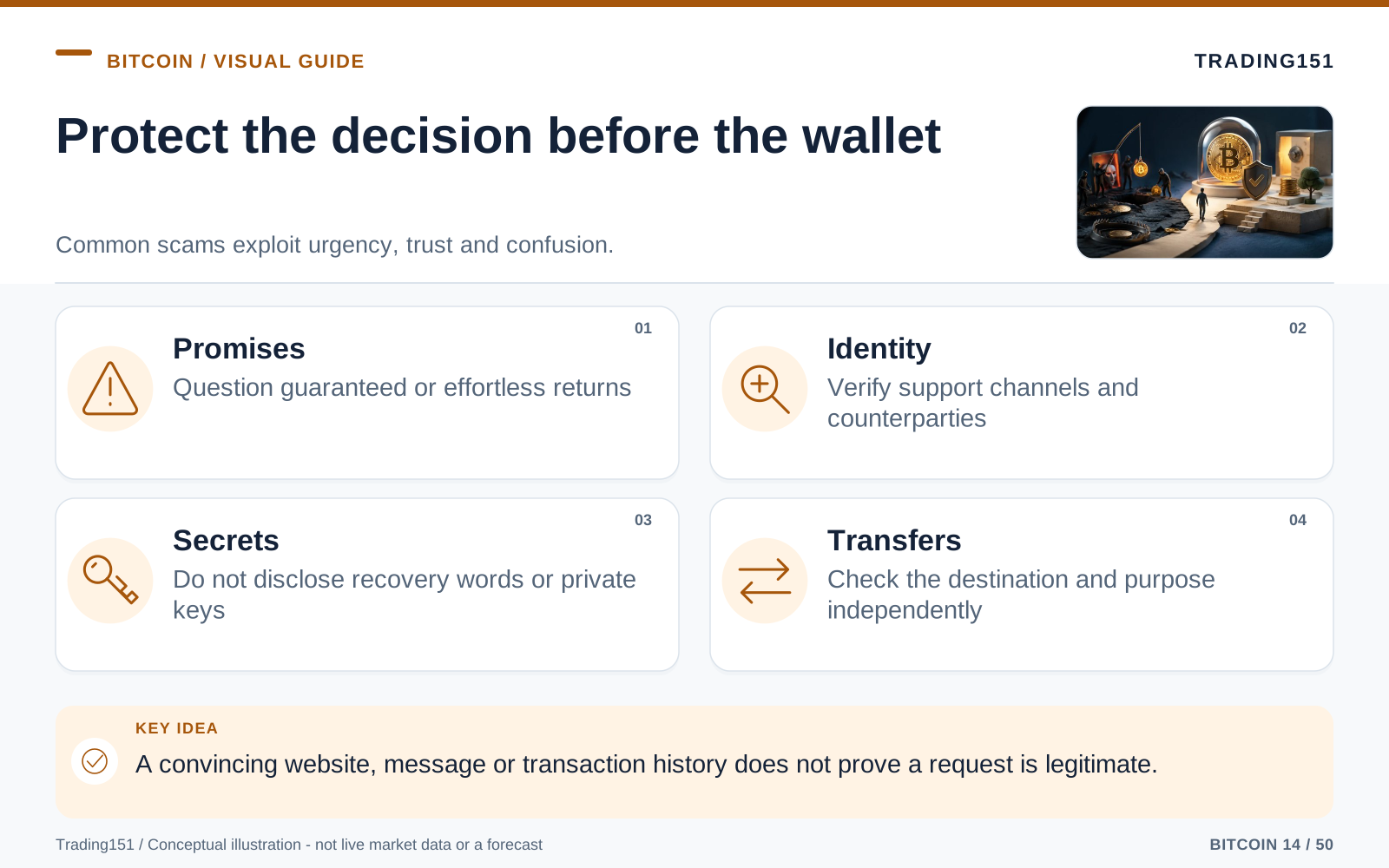
Read this diagram as text
- Promises
- Question guaranteed or effortless returns
- Identity
- Verify support channels and counterparties
- Secrets
- Do not disclose recovery words or private keys
- Transfers
- Check the destination and purpose independently
2. Phishing and the Panic Click
Phishing doesn’t usually prey on your greed. It preys on your fear.
How it looks: Your phone buzzes with a text or email that looks exactly like it’s from your exchange, hardware wallet company, or an authenticator app. The message screams urgency. It warns you about a suspicious login from halfway across the world, an unauthorized withdrawal, a frozen account, or some mandatory security update you need to do right now.
And of course, there’s a convenient button waiting for you. “Verify now.” “Cancel transaction.” “Secure my account.” You click it, and it drops you on a page that is a carbon copy of the real thing. It’s got the same logo, the same fonts, the same layout. The only thing that’s slightly off is the URL in the address bar—and when your heart is pounding because you think you're getting hacked, that’s the last thing you check.
You type in your username. Then your password. Then your two-factor authentication (2FA) code. Sometimes, the fake page will throw a bogus error message or just loop you back to the real website, making you think it was just a weird glitch.
But the damage is done. In the background, an automated script has already captured your credentials and used them to log into your actual account, instantly draining it before you even realize what happened.
Why it works: Phishing weaponizes your instinct to protect yourself. When you think your money is actively being stolen, your brain kicks into fight-or-flight mode. You don't pause to analyze an email address; you just want to stop the bleeding. Scammers use that sheer panic to make you hand over the keys.
How to beat it: Treat your inbox like a hostile environment. Never click a link in an unexpected email or text message. If an exchange tells you there’s an issue, totally ignore the message, open a new browser tab, manually type in the website’s real address, and log in there. If the problem is real, there will be a notification waiting for you in your actual account dashboard.
3. Fake Giveaways and Impersonation Scams
The fake giveaway is almost notably simple, which is exactly why it’s so easy to underestimate. It sounds too dumb to work, yet people are constantly losing money to it because the packaging is surprisingly slick.
How it looks: You’re scrolling and stumble on a livestream or a social media post featuring a large name in tech or finance. Maybe it's a famous CEO, a high-profile investor, or a popular crypto influencer. The video looks totally legit. The account has a blue check and a large follower count. The chat is moving a mile a minute, packed with people claiming they just doubled their money.
The pitch usually goes something like this: “To celebrate our new launch, we’re doing a large Bitcoin giveaway! Send 0.05 BTC to the address on the screen, and we will instantly send you 0.1 BTC back.” They’ll throw up a QR code, a ticking countdown timer, and a fake, constantly updating feed of "live transactions."
Here’s the catch: it’s smoke and mirrors. Sometimes they loop an old, unrelated interview. Sometimes they hijack a prominent YouTube channel, change the banner and name, and run the scam from there. Lately, they’re even using AI-generated deepfakes to make it look and sound exactly like the celebrity is endorsing it.
Why it works: The scam is borrowing trust. You aren't trusting the random wallet address on your screen; you’re trusting the famous face next to it. Add in the high-pressure countdown timer, and it pushes people to act fast. By the time the hype wears off and you stop to think about it, your Bitcoin is long gone.
How to avoid it: This one is easy. No legitimate company, billionaire, or influencer is ever going to ask you to send them money so they can send more money back. That rule alone will save you so much grief. If the deal is "send one, get two," it’s a scam. 100% of the time.
Think about how absurd this is in the real world. If a guy walked up to you on the street and said, “Hey, hand me a $100 bill and I’ll instantly hand you two $100 bills,” you’d laugh in his face. A QR code on a YouTube stream doesn’t change the math.
4. Romance Scams and Pig Butchering
While most crypto scams are loud, fast, and aggressive, this one is quiet, patient, and absolutely devastating.
Law enforcement calls it “pig butchering.” It’s an dark name for a long-con relationship scam where a criminal spends weeks or even months building deep trust with a victim before introducing a fake investment. The metaphor is severe but accurate: the victim is emotionally "fattened up" before the financial slaughter.
How it looks: It usually starts innocently enough. A match on a dating app, a DM on Instagram, a LinkedIn connection, or sometimes just a supposedly "accidental" text message from a wrong number. The person on the other end is friendly, substantially attractive, supposedly wealthy, and hyper-attentive. They ask about your day. They remember your dog’s name. They text you good morning every day. And crucially, they don't ask for a dime right away, which completely bypasses your normal scam filters.
Eventually, investing naturally slips into the conversation. They’ll casually mention a wealthy uncle who runs a hedge fund, a private VIP trading platform, or an exclusive mining operation. They don't push it. In fact, they might even tell you, "Oh, don't do it unless you're totally comfortable." That gentle, hands-off approach is the ultimate manipulation.
They’ll walk you through buying real Bitcoin on a legitimate exchange, but then they’ll instruct you to send it to their "exclusive" platform. And the platform looks incredible. Your account shows large daily profits. They might even let you withdraw a few hundred bucks to prove it works. But the moment you drop your life savings into the system? The trap snaps shut. Suddenly, you can't withdraw unless you pay an enormous "tax." Then an "audit fee." Then your account gets frozen.
By the time it's over, the victim hasn't just lost their savings. They’ve lost someone they cared about.
Why it works: The emotional connection does all the heavy lifting. When you feel close to someone, you naturally drop your guard. You overlook weird inconsistencies. You want to believe that this person who has been nothing but sweet to you isn't a complete monster running a global syndicate.
How to avoid it: Keep romance and investments in totally separate universes. A real romantic partner isn't going to pressure you into transferring crypto to some obscure website. Period.
Large red flags include: they refuse to video chat (or the camera is always "broken"), they constantly cancel plans to meet up, they claim to be constantly traveling for work, or they get defensive if you ask basic questions. If you spot a pattern like this, walk away.
5. Fake Customer Support
Navigating the crypto world can be confusing, and scammers know that a frustrated user is an vulnerable user. They lurk online waiting for the exact moment you ask for help.
How it looks: You’re having a bad day. Your hardware wallet won't sync, a transaction seems stuck in limbo, or an exchange won't let you withdraw. Annoyed, you hop on X, Reddit, Discord, or Telegram to ask for help. Almost instantly, someone slides into your DMs. They have an official-looking username, the company logo as their profile picture, and their tone is polite and professional.
They’ll tell you they're from the "escalation team" and offer to fix your problem right away. They might send a link to a "secure support portal." They’ll tell you they just need you to connect your wallet, enter your 12-word recovery phrase to "resync the node," or scan a QR code. In the worst-case scenarios, they’ll ask you to download a screen-sharing app so they can "troubleshoot it directly."
Why it works: Relief. When your money is stuck, you just want the nightmare to end. The scammer swoops in right when you're overwhelmed, offering a lifeline. Because they use all the right technical jargon, they sound totally legit.
How to avoid it: Here is the golden rule of crypto support: Assume anyone who DMs you first is a scammer. Real customer support teams from major exchanges are not hunting down random users in Telegram chats to fix their problems. More importantly, legitimate support will NEVER ask for your recovery phrase, your private keys, or remote access to your laptop.
If you need help, ignore all DMs. Go directly to the official website or app, log in, and use the official support channels. Also, be careful Googling for phone numbers—scammers buy search ads to make their fake support numbers show up at the very top of Google.
6. Fake Wallets, Fake Apps, and Malicious Downloads
Some scammers don’t even bother trying to talk to you. They just sit back and wait for you to download the wrong file.
How it looks: You’re hunting for a new Bitcoin wallet, a portfolio tracker, or a firmware update for your hardware wallet. You click a link and land on a site that looks clean and professional. The download button works. The app installs. It might even function normally for a little while.
But under the hood, it’s a total trojan horse. It might be quietly logging your keystrokes, snapping screenshots of your recovery phrase, or swapping out your receiving addresses. Fake mobile apps are especially severe because we’ve been trained to blindly trust anything inside an official App Store or Google Play Store.
Then there’s "clipboard malware." This nasty little script runs in the background of your computer, doing exactly one thing: watching for a Bitcoin address to hit your clipboard. When you click "copy" on a legit address and then hit "paste" into your wallet, the malware swaps the real address out for the scammer’s address in a fraction of a second. If you just hit send without double-checking, your money is gone.
Why it works: We live in a world of instant gratification. We search, click, install, accept terms we didn't read, and move on. Scammers rely on that muscle memory. A fake app doesn’t need to deceive you for months—it only needs a ten-second window of inattention to steal everything.
How to avoid it: Treat downloading crypto software like handling explosives. Only download wallets or updates from the official, verified source. If you're updating a hardware wallet, physically type the manufacturer’s URL into your browser—do not click a Google ad, and do not click a link on Reddit.
Also, make a habit of visually verifying addresses. When you copy and paste a Bitcoin address, check the first four and the last four characters before hitting send. If you’re moving a huge amount of money, send a tiny test transaction first. Sure, it takes an extra ten minutes and costs a bit in network fees. But that small inconvenience is infinitely better than finding out a clipboard hijacker just drained your life savings.
7. Address Poisoning and “Dust” Confusion
This scam doesn’t try to steal your passwords or hack your devices. It simply hacks your laziness.
How it looks: A scammer sends a microscopic amount of crypto (often called "dust") to your wallet. But here’s the trick: they generate a custom wallet address that looks almost identical to one you’ve interacted with before. Later on, when you're rushing to make a transfer, you pull up your transaction history, copy what you think is your friend’s address or your exchange address, and hit send.
Except you didn't copy your address. You copied the scammer's lookalike address that they poisoned your history with.
Why it works: Bitcoin addresses are a mess of random letters and numbers like bc1qxy2kgdygjrsqtzq2n0yrf2493p83kkfjhx0wlh. The human brain isn’t wired to read that like a sentence. We glance at the first few letters, glance at the last few, and say, "Yep, looks good." Scammers know you aren't reading the middle.
How to avoid it: Never blindly copy addresses out of your transaction history. It’s a terrible habit. Use the built-in address book feature in your wallet if you frequently send to the same people, and label them clearly. And if you're sending a large payment based on an address you got in an email, pick up the phone and call the person to confirm it out loud. A hacked email account can easily swap an invoice address without you noticing.
8. Bitcoin ATM and Payment-Demand Scams
This scam has absolutely nothing to do with investing or getting rich. It’s entirely about intimidation.
How it looks: You get a frantic phone call, text, or scary computer pop-up warning you that you’re in deep trouble. You missed a court date, you owe the IRS back taxes, you have an outstanding warrant, or your bank account has been compromised by hackers. The person on the other end claims to be a police officer, an FBI agent, a utility worker, or bank fraud support.
They’ll yell at you, threaten you, and eventually give you an out: you need to secure your funds or pay the fine immediately by buying Bitcoin—usually at a local Bitcoin ATM—and sending it to them. They will aggressively keep you on the phone while you drive to the machine. They’ll tell you that if you hang up, you’ll be arrested. If you talk to a bank teller, you’ll be arrested.
Why it works: Authority is concerning. A commanding voice using legal jargon can make even smart people freeze up and stop thinking logically. The scammer’s entire goal is to isolate you, keep your adrenaline pumping, and force you to act before you have a second to breathe.
How to avoid it: Memorize this fact: The IRS, the police, the FBI, your electric company, and your bank will NEVER ask you to pay them in Bitcoin at a gas station ATM. It doesn't happen.
If someone calls you demanding a crypto payment to avoid arrest, hang up the phone immediately. Don’t argue, just hang up. Look up the official phone number of whatever agency they claimed to be from and call them yourself. You’ll find out very quickly that there is no warrant for your arrest.
The Golden Rules of Bitcoin Safety
Protecting yourself from scams doesn’t mean you have to live in a state of constant paranoia. It just requires building a few non-negotiable habits that you stick to, especially when you’re feeling excited, stressed, or rushed.
1. Slow Down When You Feel Pressure
Almost every scam relies on artificial pressure. Act now. Verify your identity immediately. Deposit before the window closes. Your account will be permanently frozen. Your profits will vanish.
Pressure is your smoke alarm. The second you feel it, stop. Step away from your keyboard. Take ten minutes. Take an hour. If it’s a lot of money, sleep on it. Scammers absolutely hate delays because time is the one thing that gives your logical brain a chance to reboot.
2. Protect Your Recovery Phrase Like a Vault Key
Your 12- or 24-word recovery phrase is not a password. It is not a customer service pin number. It is not something you type into a website to "verify your identity." It is the literal master key to your funds. Anyone who has those words can recreate your wallet on their own computer and drain it in seconds.
Write it down on physical paper. Keep it somewhere secure. If you’re storing life-changing wealth, punch it into a piece of steel so it survives a house fire or a flood. Do not take a picture of it. Do not save it in Apple Notes, Google Drive, your password manager, or a draft email. Digital copies have a nasty habit of ending up in places you completely forgot about.
3. Use a Hardware Wallet for Meaningful Amounts
Keeping a couple of hundred bucks on an exchange or a mobile app is fine for walking-around money. Keeping your life savings there is reckless. Exchanges can freeze your account, get hacked, go bankrupt, or block your withdrawals for "compliance reasons." Your phone and your laptop can catch malware.
A hardware wallet fixes this by keeping your private keys entirely offline. It’s not a magic bullet—you still have to protect your physical recovery phrase—but it drastically reduces the chance of a hacker draining your stack over the internet.
And always buy hardware wallets directly from the official manufacturer. Never buy a "pre-configured" one from a random guy on eBay. If you open the box and the recovery phrase is already written down for you on a card, throw it in the trash.
4. Use Strong Two-Factor Authentication
A strong password is no longer enough. Passwords get reused, leaked in data breaches, and phished all the time. Two-factor authentication (2FA) is your last line of defense.
But please, stop using SMS text messages for 2FA. Hackers routinely bribe or trick phone company employees into porting your phone number to their SIM card (a SIM-swap attack), allowing them to intercept your text messages. Use an authenticator app like Authy or Google Authenticator. Better yet, buy a physical security key like a YubiKey. And whatever you do, make sure the email account tied to your crypto exchange is just as locked down as the exchange itself.
5. Verify Addresses Before Sending
Bitcoin does not care if you made a typo. It does not care if you meant to send it somewhere else. It simply executes the transaction you signed. Before you hit send, check the address. For huge transfers, send ten dollars first. Wait for it to confirm. Verify it arrived safely. Then send the rest.
If you use a hardware wallet, physically look at the screen on the device to confirm the address, not just your laptop monitor. Malware can spoof what you see on your computer screen. The hardware wallet's screen is the only screen you can trust.
6. Separate Public Advice From Private Access
It’s totally fine to hop on Reddit and ask for advice on how a wallet works. It is never fine to share private information. Let me be perfectly clear: No support agent needs your recovery phrase. No Discord moderator needs your private keys. No VIP trader needs your exchange login. No romantic partner needs you to "prove your trust" by moving coins to their platform.
Draw a hard line: public concepts can be discussed, but private access credentials are never shared with anyone.
7. Keep Your Bitcoin Life Boring
Boring is massively underrated in crypto. Bookmark your exchanges so you don't click fake Google ads. Use official apps. Turn on hardware 2FA. Test your backups. Ignore your DMs. Don’t chase "alpha" in secret Telegram groups. Don’t install experimental browser extensions. Don’t make giant financial decisions when you’re fired up.
The people who keep their Bitcoin over a ten-year timeframe aren't the smartest people in the room. They’re just the most disciplined.
What to Do If You Think You Have Been Scammed
If you realize you’ve made a terrible mistake, speed matters, but blind panic will only make things worse. First, sever all contact with the scammer. Do not send another dime. Even if they swear that paying one last "release fee" will unlock your funds, it won't. That final fee is just them milking you one last time.
If you think your exchange account is compromised, log in from a completely different, clean device and change your password immediately. Kick off any active sessions in the security settings and contact official support. If you accidentally typed your 12-word recovery phrase into a sketchy website, consider that wallet dead. Immediately generate a brand-new wallet with a new recovery phrase and transfer any remaining funds out before the scammer’s script sweeps it.
Document everything before they delete it. Take screenshots of chat logs, save transaction IDs, wallet addresses, phone numbers, and website URLs. File a report with local law enforcement and your national cybercrime division. Reporting it might not magically return your Bitcoin, but it helps authorities build cases against these large criminal networks.
Finally, brace yourself for the second wave: the "Recovery Scammers." Once you get scammed, you might desperately search Google or X for someone who can hack the blockchain and get your money back. Scammers know this. They run ads posing as "ethical hackers," "blockchain tracing experts," or "asset retrieval agents." Sometimes, it’s the same guy who scammed you the first time, back under a new name.
Here’s the reality: while blockchain analysis firms can help trace where funds went, nobody on Earth can just hack the Bitcoin network and reverse a confirmed transaction. Anyone who asks for an upfront fee promising to guarantee they can "hack your money back" is just scamming you a second time.
Write down the first steps before an emergency
A short incident plan can prevent a frightening message from dictating the next move. Keep the official contact route for your exchange or wallet provider somewhere separate from incoming messages. Know how to reach your bank, secure your email account, and review active sessions. None of those steps requires engaging with the person who claims to be helping.
The response depends on what was exposed. A leaked password calls for account security measures and session revocation. A revealed recovery phrase is different: changing the wallet's display password does not change the keys derived from that phrase. Funds still under your control may need to move to a securely created wallet with new keys. Follow the wallet provider's verified instructions and do not create the replacement on a device you believe is compromised.
For a suspicious payment, preserve the transaction identifier, destination address, messages, and dates. A blockchain record may help an investigation, but it does not provide an ordinary chargeback. Reporting quickly can still matter when a regulated service or bank is involved; no one should promise that recovery is certain.
Watch for the second approach. Someone who learns that you have lost money may offer to recover it for an advance fee or ask for additional keys. Treat that as a new request requiring independent verification. Shame and urgency help fraudsters. Bringing in a trusted person can make it easier to stop paying and start preserving evidence.
Plan for a compromised email account
A security incident may begin outside the wallet. An attacker who controls email can reset other services, impersonate a support team, or learn which platforms the victim uses. Recovery therefore needs to include the connected accounts, not just the place where coins were held.
Use a trusted device to review access, revoke unfamiliar sessions, and secure the accounts that control recovery. Preserve evidence before deleting messages. When substantial funds are involved, seek qualified help through independently verified channels rather than replying to unsolicited recovery offers. The next scam often arrives while the first incident is still being resolved. 1
Slow Down Before You Send Anything
Bitcoin gives everyday people a level of sovereign financial control that used to be strictly reserved for banks. That’s an incredible amount of power. But it’s also deeply uncomfortable, because true control means true responsibility.
The goal isn’t to walk around terrified of your own shadow or suspicious of every transaction. The goal is to build strong habits that protect you when you're tired, distracted, or emotional. You won't always be completely clear-headed. You won't always read every notification carefully. Good security habits are the guardrails for those vulnerable moments.
Be intensely skeptical of anyone promising easy money. Treat urgency as a large red flag. Keep internet strangers out of your finances. Guard your recovery phrase like the keys to a physical bank vault. Double-check your addresses. Lock down your accounts with real 2FA. And above all else, move slowly when the stakes are high.
Scammers feast on confusion. The more you understand their playbook, the less power they have over you. You don’t have to be afraid of the Bitcoin network. You just have to navigate it with your eyes wide open, your emotions in check, and your keys securely in your own hands.
Sources and further reading
Editorial revision: 7 October 2026. Numerical scenarios are hypothetical unless identified as historical. References support the added explanations and selected corrections; rules and product terms should be checked again before acting.