
A bitcoin exchange-traded product and bitcoin held in a wallet can give an investor exposure to the same underlying price while offering very different rights. One fits into a brokerage account; the other can be transferred on the Bitcoin network. The choice is less about which is universally better than about what you need to do with the holding and which responsibilities you are prepared to accept.
So, What Exactly Is a Spot Bitcoin ETF?
Simply put, a spot Bitcoin ETF is a fund that goes out and buys actual Bitcoin, then lets you buy shares of that fund on a normal stock market. When you buy in, you aren't getting Bitcoin dropped into a personal wallet. Instead, you're buying a heavily regulated financial product that mirrors Bitcoin's price.
Think about how people invest in gold. You could go buy physical gold bars, figure out a safe place to hide them, pay for insurance, and eventually try to find a buyer when you want to cash out. Or, you could just buy shares in a gold ETF and let a large fund deal with the vault while you watch your account balance grow.
A Bitcoin ETF works pretty much exactly like that. Huge financial companies buy up Bitcoin, lock it away with top-tier custodians, and let you buy shares that track its real-time value. You just click a few buttons on your brokerage app, and boom—it's sitting right there next to your index funds.
If you've always been curious about Bitcoin but wanted absolutely nothing to do with the tech side of things, this is hands-down the easiest way to jump in.
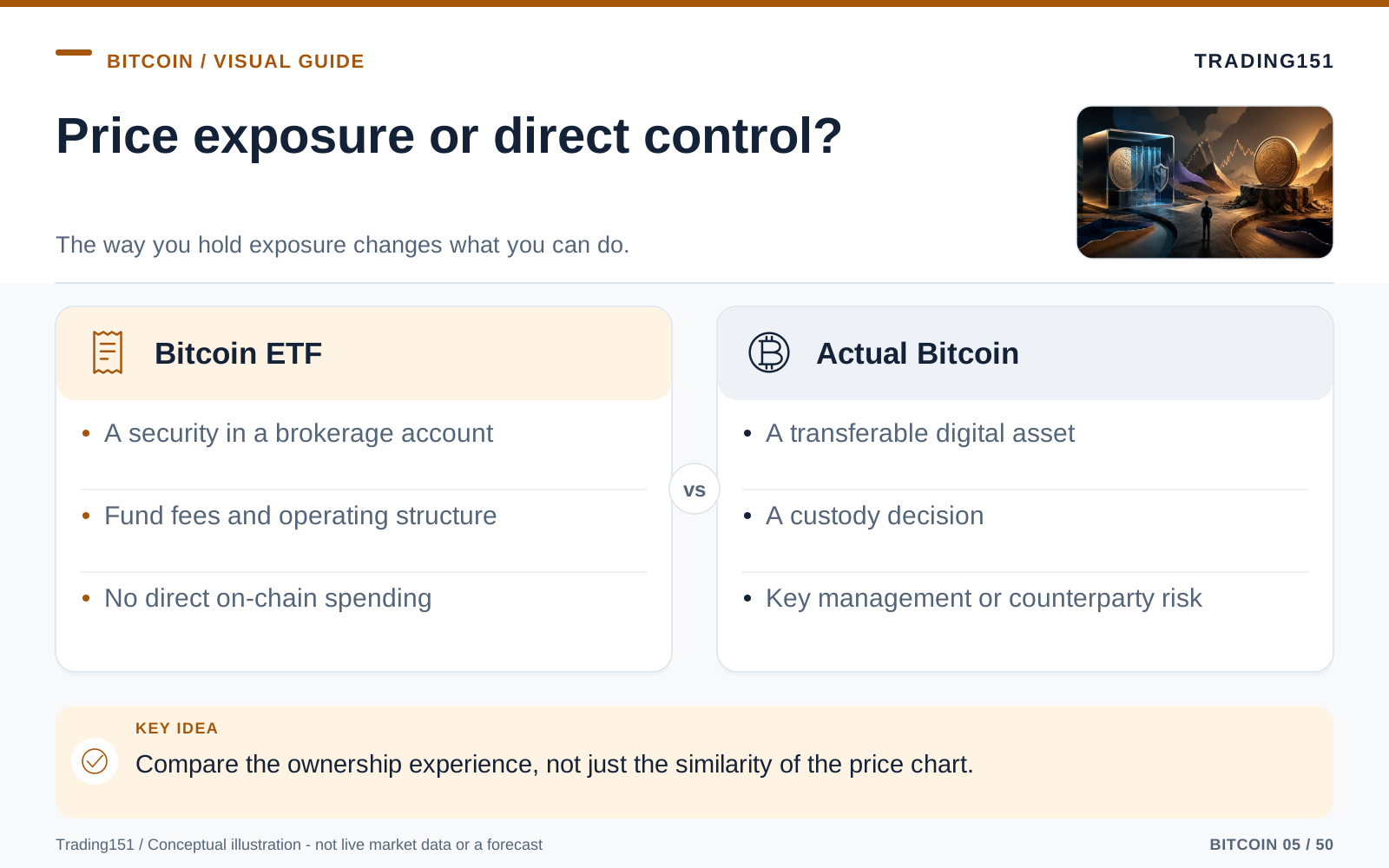
Read this diagram as text
- Bitcoin ETF
- A security in a brokerage account; Fund fees and operating structure; No direct on-chain spending
- Actual Bitcoin
- A transferable digital asset; A custody decision; Key management or counterparty risk
Why Everyone Is So Hyped About Bitcoin ETFs
The absolute best thing about a Bitcoin ETF is that it takes away all the headaches. You don't have to learn what a seed phrase is, stress over transaction fees, back up a digital wallet, or sweat bullets hoping you didn't accidentally send your money to the void. The appeal goes beyond just avoiding tech issues, too. You can easily manage these shares alongside your regular investments, get standard tax forms, and even tuck them into a retirement account. For a lot of families, that familiar paper trail is a big deal—try explaining a 12-word seed phrase to an estate planner. But here’s the catch: you're trading direct ownership for pure convenience. It’s an easy ride, but you're definitely handing over the steering wheel to someone else.
And that trade-off is perfectly fine for a lot of people. Most of us don't want our investments to feel like a part-time job. We just want the financial upside without the chaos, and a Bitcoin ETF totally delivers on that.
- It plays nice with your current accounts: You can buy and sell shares right from your normal brokerage app, using the same interface you already know.
- It fits in your retirement plans: Depending on your setup, you can often hold Bitcoin ETFs in your IRA or 401(k), which makes managing your taxes a million times easier.
- The paperwork is a breeze: Say goodbye to crypto tax nightmares. Your broker just sends you the standard tax forms and performance charts you're used to seeing.
- You don't have to be your own bank: You never have to worry about hiding a seed phrase in a fireproof safe or stressing over what happens to your coins if you lose your phone.
- It just feels safer: For someone who isn't super tech-savvy, clicking "buy" on a major financial platform is way less concerning than wiring cash to a random crypto exchange.
There’s a huge psychological win here, too. A lot of folks aren’t scared of Bitcoin’s wild price swings; they’re terrified of messing up the tech and losing everything. An ETF turns this intimidating digital currency into just another boring line item on your portfolio. Sure, the hardcore crypto crowd might hate that, but it's exactly what most everyday investors need to feel safe getting off the sidelines.
The Catch: What You Give Up With an ETF
Nothing is free, especially convenience. When you go the ETF route, you aren't just paying management fees—you're completely giving up your direct control.
When you hold an ETF, you don't own Bitcoin in a way that lets you touch or use it. You can't move your coins to a private wallet. You can't send them to a friend across the world on a Sunday night, and you definitely can't buy a cup of coffee with them. You just own a financial IOU that tracks the price.
If you only care about making money when the price goes up, maybe you don't care. But if you value what Bitcoin was built to do—give people a way to hold and move money without asking a bank for permission—an ETF totally misses the point.
- You're surrounded by middlemen: The fund manager, the broker, the custodian, the government—everyone is standing between you and the actual Bitcoin.
- The fees add up: Even a tiny annual fee can take a surprising bite out of your returns over a decade, especially if Bitcoin's price moons.
- You're stuck on Wall Street's clock: You can only buy or sell when the stock market is open, even though Bitcoin trades 24/7.
- You can't use it: An ETF share might get you the financial gains, but it has zero utility on the actual Bitcoin network.
- You're trusting the suits: An ETF saves you from hacking yourself, but you're still relying on large institutions not to screw up their own operations or get tangled in red tape.
An ETF makes Bitcoin easier to own by stripping away almost everything that makes it Bitcoin. For some folks, that’s a large relief. For others, it completely defeats the purpose.
What Owning "Real" Bitcoin Looks Like
Holding real Bitcoin means you buy the actual cryptocurrency and hold the private keys yourself. You aren't trusting a fund manager; you're holding the real deal. Your coins live directly on the blockchain, and your keys are the only thing that can move them. This flips Bitcoin from a stock ticker into a digital asset you physically possess. You can move it whenever you want, take it across borders, or transfer it instantly on a weekend—all the stuff that made people fall in love with crypto in the first place. But the flip side? Mistakes are permanent. If you mess up your bank password, customer service bails you out. If you mess up your Bitcoin wallet, there is no 1-800 number to call. Total control means total responsibility.
If you're serious about holding your own coins, you'll probably use a hardware wallet—a little USB-like gadget that keeps your keys safely offline. When you set it up, it spits out a recovery phrase (usually 12 to 24 random words). That phrase is your ultimate backup. If you lose the device, those words bring your money back. If someone else finds those words, they can drain your account in seconds. And if you lose both the device and the phrase? Your money is gone forever.
This is the part that usually trips up beginners. Real Bitcoin ownership is incredible because absolutely no one can freeze your account, block a transfer, or lock you out. But it also means absolutely no one can save you from your own mistakes.
That’s exactly why crypto veterans never stop preaching, “Not your keys, not your coins.” It’s half warning, half lifestyle. If a bank holds the keys, you're just trusting them. If you hold them, you're the boss.
Why Do People Still Bother With Real BTC?
Choosing to hold actual Bitcoin isn't just about dodging Wall Street fees. It’s about true ownership. Real Bitcoin lives completely outside the traditional banking system. You can move it whenever you want, without asking anyone’s permission, and you don’t have to worry about a brokerage suddenly changing its terms of service.
- You call the shots: You decide when and where your money moves, with zero delays from banking holidays or slow clearinghouses.
- You cut the cord: You aren't relying on an ETF issuer or a brokerage app to keep your account active.
- You tap into the network: Real Bitcoin can be used—whether you're sending it to a friend, paying a merchant, or just holding it as an untouchable savings account.
- You skip the annual fees: Once you pay the initial transaction costs, holding the coin in your wallet is completely free.
- You get the real experience: Managing your own keys really drives home why Bitcoin is so vastly different from the dollars sitting in your checking account.
For some people, that feeling of independence is priceless. Sure, an ETF makes sense on paper, but there is something substantially powerful about knowing you can carry your entire net worth across a border just by memorizing a few words or hiding a small metal plate. It transforms Bitcoin from an investment into a superpower.
The Ugly Truth: Being Your Own Bank Is Stressful
Total financial freedom sounds amazing until you realize you've just hired yourself as the head of security, compliance, and IT for your own money.
If you're a careful, organized person who likes tech, it’s an liberating feeling. But if you’re the type of person who constantly forgets passwords or rushes through important instructions, it can be an absolute nightmare.
Most people who lose their crypto don't get hacked by some mastermind in a dark hoodie. They lose it through deeply normal, everyday screw-ups: saving their seed phrase in a Google Doc, accidentally downloading a fake app, falling for a late-night phishing email, sending money to the wrong address, or passing away without leaving clear instructions for their family.
If you're going to hold your own coins, you need a strong routine. You have to buy your hardware straight from the manufacturer, set it up meticulously, write down your backup words on paper, hide them safely, and figure out a plan for what happens if you get hit by a bus. Some folks go as far as stamping their seed phrases into metal plates so they survive house fires, while others use advanced setups that require multiple devices to approve a transaction.
It’s totally doable, and plenty of everyday people manage it just fine. But it takes effort. The absolute worst thing you can do is buy real Bitcoin just to feel cool, and then leave it sitting on an exchange or snap a photo of your recovery phrase with your iPhone.
ETF vs. Real Bitcoin: The Showdown
So, which one should you choose? It really boils down to what you want out of this. Are you just trying to juice your retirement account? Are you looking for a backup plan outside the banking system? Do you plan to spend this stuff, or just watch the price go up?
1. How Easy Is It?
- Bitcoin ETF: Super easy. You buy and sell it exactly like a regular stock. Zero tech skills needed.
- Real BTC: There’s a learning curve. You need to figure out wallets, public addresses, keys, and backups.
- Best fit: If you want easy, go ETF. If you don't mind a weekend project, real BTC is totally manageable.
2. Who Owns It?
- Bitcoin ETF: You own a piece of paper (well, a digital record) saying you have a claim on Bitcoin. You don't hold the coin.
- Real BTC: You own the actual digital asset. It’s yours, and no one else can touch it.
- Best fit: If you care about true ownership and independence, real BTC wins by a mile.
3. Keeping It Safe
- Bitcoin ETF: Your personal security is much simpler. Forget your password? Just hit "reset." The real risk is the institutions messing up.
- Real BTC: Institutional risk drops to zero, but all the pressure is on you. If you lose your keys, the money is gone.
- Best fit: ETFs are better if you don't trust yourself. Real BTC is better if you don't trust the system.
4. What's It Going to Cost?
- Bitcoin ETF: You're on the hook for annual management fees. They seem small, but they bleed your profits over time.
- Real BTC: You pay upfront fees to buy and transfer, but holding it long-term is completely free.
- Best fit: Real BTC is usually cheaper for people who plan to hold for decades. ETFs are for those willing to pay a premium for a hands-off experience.
5. Taxes and Retirement
- Bitcoin ETF: Slides perfectly into your 401(k) or IRA. Tax time is as simple as handing a standard form to your accountant.
- Real BTC: Every time you sell, trade, or buy something with Bitcoin, it’s a taxable event. The bookkeeping can get annoying.
- Best fit: The ETF completely crushes real Bitcoin when it comes to taxes and retirement planning.
6. Trading Hours and Access
- Bitcoin ETF: You can only trade from 9:30 AM to 4:00 PM on weekdays. If the market crashes on a Saturday, you're stuck watching.
- Real BTC: The crypto market never sleeps. You can move or sell your money at 3 AM on a holiday if you want to.
- Best fit: Real BTC wins the 24/7 access battle, hands down.
7. Flying Under the Radar
- Bitcoin ETF: Your investment is fully tied to your identity, tracked by your broker, and reported to the IRS.
- Real BTC: You get a lot more personal privacy, though it's not totally anonymous since the blockchain is public. It takes some know-how to stay truly private.
- Best fit: Real BTC gives you more privacy, but only if you know what you're doing.
The Emotional Side Nobody Should Ignore
We like to pretend investing is purely about math, but it’s substantially emotional. You and your neighbor could look at the same situation and walk away with totally different feelings. The right choice is the one that lets you sleep at night when the market is crashing.
One person might look at a hardware wallet and feel a large sense of relief. They love the idea of holding an asset no bank can touch. They enjoy geeking out over the security features and would much rather trust themselves than some faceless corporation.
Another person might look at that same wallet and break out in a cold sweat. They’re terrified of losing the backup words, making a dumb typo, or leaving behind a complicated mess that their family can't figure out. For them, self-custody turns a fun investment into a lingering source of anxiety.
Neither reaction is wrong. It’s not about passing some crypto purity test; it’s about figuring out which system you won't mess up over the next ten years.
If you're the kind of person who constantly loses passwords, hates dealing with paperwork, or gets easily frustrated by tech, do yourself a favor and buy the ETF. If you’re organized, curious, and willing to practice with twenty bucks before moving real money, diving into actual Bitcoin is a highly rewarding experience.
Who Should Stick to the ETF?
A Bitcoin ETF is probably your best bet if you just want to ride the price waves without overhauling your entire financial routine. It’s absolutely perfect if you just want to set it and forget it in a retirement portfolio.
- You already use a standard brokerage app and love keeping everything in one place.
- You want to hold crypto inside an IRA or 401(k).
- You hate complicated taxes and just want simple reporting.
- The idea of managing private keys sounds miserable to you.
- You trust major banks way more than you trust yourself to not lose a piece of paper.
- You only care about making a profit and have zero interest in using Bitcoin as actual money.
For you, the ETF isn't a compromise—it’s a large upgrade. It strips away all the annoying parts of crypto and leaves you with the investment potential.
Who Should Go for Real BTC?
Real Bitcoin is the way to go if having absolute control over your money is just as important to you as the financial returns. It’s for folks who want to use the network and understand what makes this technology so special.
- You want to physically own your assets, not just an IOU from a fund.
- You enjoy learning about digital wallets and security.
- You love the idea of money that no government or bank can freeze or censor.
- You want the freedom to send funds across the globe at a moment's notice.
- You are highly organized and can stick to a strict security plan.
- You don't want all your wealth locked up inside the traditional banking system.
If this sounds like you, the extra homework isn’t a downside—it’s the whole reason you’re here. The effort you put in is the price you pay for true financial independence.
The Case for Owning Both
The internet loves a polarizing debate, and people talk about ETFs and real Bitcoin like you have to swear a blood oath to one side. In the real world? A lot of smart investors just use both.
You might throw some ETF shares into a Roth IRA so you can enjoy the tax-free growth, while keeping a stash of real Bitcoin on a hardware wallet just in case the traditional banking system goes sideways. Or maybe you start with an ETF just to get your feet wet, and eventually buy some real Bitcoin once you feel comfortable with the tech.
You don't have to prove anything to the crypto diehards or the Wall Street boomers. Just build a strategy that works for your lifestyle. A "pretty good" setup that you can easily maintain is always better than a flawlessly secure system that makes you completely miserable.
A Simple Decision Framework
Still on the fence? Just ask yourself these completely honest questions:
- Do I only care about the price going up? If yes, just buy the ETF.
- Do I want money that I can personally move without asking permission? If yes, you need real BTC.
- Am I trying to fund my retirement accounts? If yes, the ETF is going to save you a complication.
- Am I capable of hiding a piece of paper securely for a decade? If no, please do not try to self-custody a large amount of money.
- Who do I trust more: myself, or a regulated bank? Let your gut answer that one.
- If I got hit by a bus tomorrow, could my spouse or kids access my investment? If the answer is no, your plan is broken—regardless of which path you chose.
There is no single "right" answer here. There’s just the answer that makes the most sense for you.
Compare the whole ownership arrangement
Start with the reason for holding it. Someone seeking price exposure within an eligible investment account may value consolidated statements and familiar trading procedures. Someone who needs to send bitcoin to another wallet needs the asset itself, not merely a security whose value tracks it. These are different use cases, so comparing only annual fees misses the first decision.
Costs also arrive in different forms. For a hypothetical product charging 0.25% a year, a constant $10,000 asset value would imply about $25 of annual fund-level charges, before trading costs. Direct ownership has its own possible costs: purchase spreads, withdrawals, network fees, and security arrangements. The cheaper route depends on the amount, the holding period, and how often money moves. The example is arithmetic, not a quoted fee for a particular product.
Think through an inconvenient day. Can you trade when the underlying market is moving sharply? Can you transfer the position to another provider? What happens if the brokerage account is frozen for an identity check, or if your wallet device fails? These questions reveal dependencies that a price chart does not show.
Read the prospectus for the actual product rather than relying on the label "ETF." In the United States, spot bitcoin products have commonly been structured as commodity trusts, with legal features that differ from conventional investment-company ETFs. A convenient brokerage wrapper changes administration and access; it does not turn bitcoin price risk into the risk of a savings account.
Compare the result in the same currency
A fund's share price, the value of directly held bitcoin, and the investor's home-currency return may move differently. Fees, trading hours, premiums or discounts, and currency conversion can all affect the comparison. Use the same purchase date, sale date, and reporting currency. Otherwise, a difference attributed to the product may simply reflect a different measurement period or an exchange-rate movement. 1, 2
Ownership, Convenience, and the Choice Between Them
The Bitcoin ETF finally bridges the gap between traditional finance and the wild west of crypto. It took a deeply confusing, intimidating asset and packaged it into something you can buy on your lunch break. For millions of people who just want a piece of the action without adopting a new hobby, it’s a total game-changer.
But real Bitcoin is an entirely different beast. It’s not just a ticker symbol on a screen; it’s a digital bearer asset. You can hold it, move it, and secure it entirely on your own terms. That kind of freedom is rare, but it demands your full attention.
So, you aren't really choosing between a “smart” or “stupid” investment. You’re choosing between convenience and control. You’re deciding whether you want to outsource the heavy lifting or carry it yourself. You’re choosing between a financial product and a true monetary tool.
Take a hard look at your habits, your anxiety levels, and your financial goals. If you want a smooth ride, the ETF is waiting for you. If you want sovereignty, grab a hardware wallet and buy the real thing. And if you like the sound of both? Go ahead and mix them. The best way to hold Bitcoin is simply the way that lets you sleep at night.
Sources and further reading
- SEC Investor Bulletin: Exchange-Traded Products Providing Exposure to Bitcoin and Ether
- SEC Investor Bulletin: Crypto Asset Custody Basics for Retail Investors
Editorial revision: 7 October 2026. Numerical scenarios are hypothetical unless identified as historical. References support the added explanations and selected corrections; rules and product terms should be checked again before acting.