
A good trading book should leave you with clearer questions, not a feeling that you have discovered a secret. Some explain market mechanics; others examine risk, decision-making, or the experience of working traders. Read them for those distinct purposes. A persuasive author, a famous title, or an entertaining interview is not evidence that a strategy will work in your account.
Start with the Basics Before You Try to Be Clever
It’s almost a rite of passage: every new trader wants to skip the boring stuff. They want entry triggers and signals before they even know how a currency pair is priced, or how leverage can blow up an account in a matter of seconds. I get it, the basics aren't glamorous. But mastering them now saves you a lot of cash and heartache later. Quick tip: when you're reading about trading platforms or broker regulations, check the publication date. The core mechanics of how currencies work never really change, but broker tech and trading rules update all the time. Learn the concepts, but verify the technical specs with your own modern broker.
Currency Trading for Dummies by Brian Dolan and Kathleen Brooks
Don't let the title fool you. This isn’t some shallow, throwaway guide for people who will quit after a week. It’s one of the absolute best primers on the forex market because it breaks down complex stuff without talking to you like a child.
That alone makes it worth the read. Forex is full of jargon that only makes sense after you’ve been doing it a while—pips, lots, rollover, base vs. Quote currencies, slippage. If you aren't 100% clear on what those mean, you have no business risking real money yet. This book gets you up to speed fast.
It also does a fantastic job of giving you context. With stocks, you can sometimes get away with just knowing a company's story. Forex is entirely different. It’s a game of relative strength. You’re trading one economy against another, pitting central banks against each other. It’s a completely different mindset, and this book lays it out beautifully.
Why it deserves a place on the shelf: It hands beginners a mental map of the market. When you close this book and open your trading platform, you'll know what you're looking at—and that’s a bigger advantage than most people realize.
Day Trading and Swing Trading the Currency Market by Kathy Lien
Once you speak the basic language, Kathy Lien’s book is the perfect next stop because she dives into how the market moves. She has real industry experience, and you can feel it in her writing. This isn't just theory from an academic. It’s an inside look at what professional traders watch and why specific global events make price charts go crazy.
The best thing about this book? It refuses to treat technicals and fundamentals like opposing religions. Beginners often feel like they have to pick a side—you're either a chart fanatic or a news junkie. The truth is, currencies are driven by both. You can draw the most beautiful support levels in the world, but if a central bank drops a surprise announcement, the market will tear right through your lines without blinking.
Lien bridges that gap perfectly. She walks you through macro data, interest rates, and trading sessions, while giving you practical strategies—and she does it all without putting you to sleep. It’s a rare balance.
Why it matters: It breaks retail traders out of the habit of just staring at patterns and teaches them to look for the actual market drivers behind the price action.
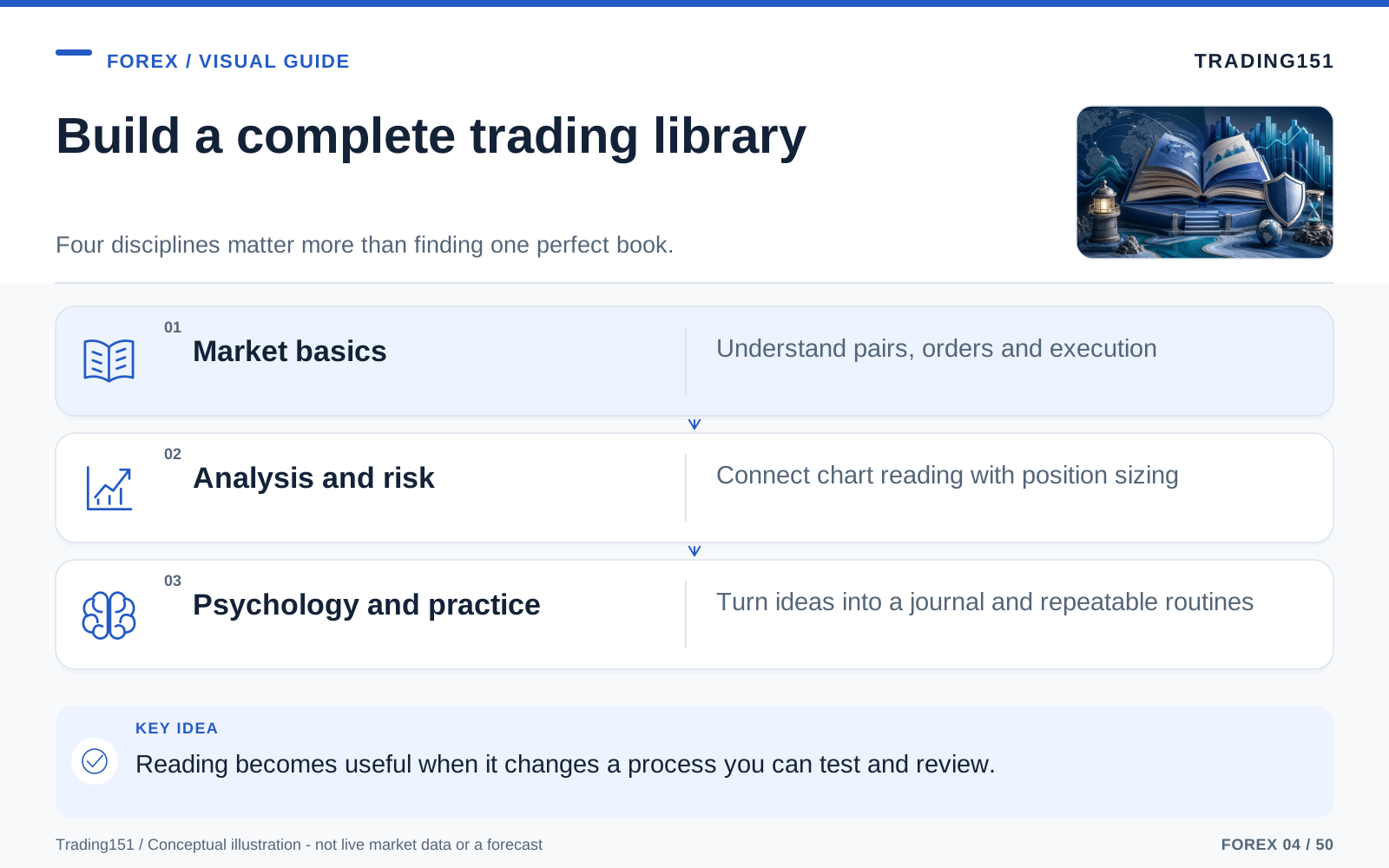
Read this diagram as text
- Market basics
- Understand pairs, orders and execution
- Analysis and risk
- Connect chart reading with position sizing
- Psychology and practice
- Turn ideas into a journal and repeatable routines
The Books That Fix Your Head Before the Market Breaks It for You
When things go wrong, almost everyone blames their strategy. They think they just need a cleaner entry rule or a secret indicator. Sometimes they do. But more often than not, the real issue is a toxic mix of impatience, fear, greed, and the stubborn refusal to take a small loss before it turns into a large one. The catch with psychology books is that they’re useless unless you turn them into action. If you read a chapter on discipline, you need to create a physical rule for your next session—like stepping away for ten minutes after a loss, or running a checklist before sizing up. Otherwise, you're just reading for entertainment.
Good trading books don't just teach you; they actively correct your bad habits.
Trading in the Zone by Mark Douglas
There is a reason everyone recommends this book. It's a classic because it puts words to the exact feelings we all struggle with but can't quite articulate. The hesitation right before you click 'buy.' The desperate urge to widen your stop loss. The toxic need to revenge-trade after you mess up. The habit of grabbing a tiny profit early because you're terrified the market will take it back.
Douglas doesn’t treat the market like an enemy you need to conquer. He frames it as pure, unavoidable uncertainty. And that’s the secret. The market doesn't owe you a win, and it definitely doesn't care about fairness. If you trade with the expectation of certainty, you'll get emotionally attached to every trade. When that happens, your discipline goes right out the window.
The absolute biggest takeaway here is the shift from predicting to thinking in probabilities. It sounds easy on paper, but it’s hard to do when you’re on a losing streak and doubting your sanity. Douglas drives home the point that one individual trade means absolutely nothing. Your edge only shows up over a long series of executions.
Why traders keep returning to it: Because it finally explains why smart people do irrational things with their money, and it does it without sugarcoating anything.
The Disciplined Trader by Mark Douglas
If Trading in the Zone is the polished masterpiece, The Disciplined Trader is the raw blueprint of how we self-sabotage. Douglas digs deep into the psychological baggage we all bring to the charts. We're raised to believe that hard work equals reward, that being right matters, and that mistakes are bad. Trading violently rejects all of those beliefs.
Think about it: you can do everything perfectly and still lose money. You can be wrong half the time and still be highly profitable. You can follow your rules to the letter and still get hit with a nasty drawdown. That disconnect drives people crazy. Douglas helps you realize why normal human instincts are your biggest liability as a trader.
What makes it valuable: It isn’t just cheap motivational fluff about "staying disciplined." It breaks down exactly why being disciplined goes against human nature in the first place.
Best Loser Wins by Tom Hougaard
This is a newer book, but it absolutely deserves a spot on this list. Tom Hougaard speaks to the severe reality of active trading with a level of bluntness you don't see often. He’s been in the trenches, feeling the psychological weight of the screens in real time, and he doesn’t try to sound like a perfect guru. He just exposes the messy internal battle we all fight.
The title itself is a large wake-up call. The best traders aren’t the ones who never lose. They’re the ones who lose gracefully, protect their mental capital, and stay ready for the next setup. It sounds simple, but thousands of accounts are blown every day purely because a trader couldn’t just admit they were wrong and move on.
Why add it: It’s the perfect companion to Douglas. If Douglas gives you the foundational theory, Hougaard gives you the raw, unfiltered experience of what it feels like to click the mouse.
Learn to Read Price Without Turning the Chart into a Carnival
Almost every trader hits a phase where they plaster their charts with indicators, hoping it will somehow give them certainty. A moving average turns into three. Then you add an RSI. Then a MACD to confirm the RSI. Suddenly, your screen looks like a neon control panel, and you can barely even see the price itself.
Good chart-reading books snap you out of this phase.
Japanese Candlestick Charting Techniques by Steve Nison
This one is legendary for a reason. Steve Nison didn’t just introduce candlesticks to the Western world—he gave us a completely new way to read market sentiment. Candlesticks aren't magic crystal balls, obviously. But they do give you a visual, intuitive footprint of the live battle between buyers and sellers.
A lot of people abuse the patterns in this book—engulfing candles, dojis, hammers—by treating them as blind buy/sell signals. That’s missing the point. Candlesticks aren’t meant to be used in isolation. They give you context. They show you rejection, exhaustion, and hesitation at key levels.
Nison’s work holds up because he teaches you the vocabulary of price action. Once you understand what the candles are telling you, the market stops looking like random noise.
Best use for this book: Use it to understand the nuance of price action and market sentiment, not as a cheat sheet for blind entry signals.
Naked Forex by Alex Nekritin and Walter Peters
This book is still hugely popular because it calls out the biggest beginner trap: thinking more indicators equals a better edge. The core argument is logical—if indicators are just lagging formulas based on price, why not just learn to read the price itself?
Naked Forex strips everything away. It forces you to focus on market structure, support and resistance, and making cleaner decisions. It doesn't bog you down with heavy math; it just asks practical questions. Where is price stalling? Where are retail traders getting trapped? What does it mean if a level gets tested four times? Those are the questions that make you money.
It’s also just a really easy, friendly read. It doesn’t try to sound overly intellectual, which is a breath of fresh air if you're sick of dense, jargon-heavy trading manuals.
Why it works: It forces you to trade with clarity. And clarity is severely underrated in this game.
Technical Analysis of the Financial Markets by John J. Murphy
If you want the ultimate, all-in-one encyclopedia of technical analysis, this is it. John J. Murphy’s book goes way beyond forex, but the concepts apply beautifully. It reads a bit like a textbook, sure, but that’s exactly why it needs to be on your shelf.
It covers everything from trend lines and chart patterns to intermarket analysis. That last part is huge for forex traders, because currencies don't exist in a vacuum. The bond market, commodities, equities, and interest rates are all deeply connected to FX. When you start seeing how they influence each other, your trading levels up significantly.
Who this helps most: Traders who are ready to slow down, study hard, and build a truly comprehensive technical foundation.
Understand the Macro Story Behind Currency Moves
Forex is a macroeconomic playground. You aren't just trading squiggly lines; you're trading expectations about inflation, employment data, shifting interest rates, and global risk appetite. If you ignore all that, you’re flying blind. Learning macro doesn't give you instant buy/sell signals—it gives you a framework. It helps you understand why a pair might trend for months while everyone else keeps trying to fade it. Read these alongside an economic calendar, and focus on learning how to ask the right questions rather than hunting for an immediate trade idea.
Trading and Exchanges by Larry Harris
Fair warning: this isn't a breezy read, and it’s not strictly about forex. But if you want to know how the plumbing of the financial markets works, Larry Harris is your guy. He breaks down liquidity, market participants, how orders are executed, and who holds the informational advantage.
Why does that matter for forex? Because beginners tend to think of the market as a sterile video game where a pattern prints and a payout happens. In reality, you are stepping into a large arena filled with misaligned incentives, huge institutions, and sharp elbows. Harris helps you see the invisible mechanics behind the price feed.
Why include a book like this: Because at some point, you have to graduate from just learning setups to understanding market micro-structure.
The Little Book of Currency Trading by Kathy Lien
If you want a punchy, highly readable dive into what drives currencies, Kathy Lien’s smaller book is fantastic. It connects the dots between big economic themes and actual chart execution without bogging you down in heavy economic theory. It’s the perfect bridge if you're past the beginner stage but not quite ready to read thousand-page macro textbooks.
What it adds: A quick, grounded, and highly focused look at the fundamental logic of the forex market.
Don’t Neglect Risk, Because the Market Never Does
Every trader thinks risk management is boring—right up until they get blown out by a large gap, a surprise rate hike, or a week-long losing streak. When the pain hits, suddenly risk is the most fascinating topic in the world.
The guys who survive in this business for decades aren't usually the ones hitting large home runs. They are the ones who know how to protect their chips during the dark periods.
The Black Swan by Nassim Nicholas Taleb
Nassim Nicholas Taleb didn’t write this for forex traders, but you absolutely need to read it if you think the market is a perfectly orderly, predictable machine. Taleb’s main point is terrifyingly simple: rare, unpredictable events impact the world far more than standard models suggest—and human beings are dangerously bad at preparing for them.
Forex traders have lived this. Just look at the 2015 Swiss Franc flash crash. It’s a severe reminder that markets can snap and break you long before your stop-loss even triggers. When liquidity vanishes and a move goes parabolic, leverage becomes a loaded gun pointed straight at your own head.
Why it belongs here: It will completely alter how you view market exposure, account fragility, and the false sense of security you get from a pretty backtest.
Fooled by Randomness by Nassim Nicholas Taleb
If The Black Swan makes you respect market crashes, Fooled by Randomness forces you to respect blind luck. It's a bitter pill to swallow, but a few lucky winners can make a terrible strategy look like genius, just like a string of bad luck can make a great strategy look broken. If you don’t have a solid framework, you'll misinterpret both.
Taleb brilliantly dismantles how we confuse random outcomes with actual skill. In trading, feeding your ego with a lucky win is a very expensive habit.
What it does well: It makes you deeply skeptical of neat, tidy trading narratives—especially the ones you tell yourself.
Read the Traders Themselves, Not Just the Teachers
Theory is great, but there is incredible value in getting inside the heads of people who have made millions in the markets. These books offer pure perspective. They prove that there isn't just one "correct" personality type or one ideal strategy.
Market Wizards by Jack D. Schwager
This might be the most fun you'll have reading a trading book. Jack Schwager sits down with absolute legends across every asset class and trading style imaginable. Some of them are wild risk-takers, some are deeply conservative, some only trade math, and others only trade fundamentals. Their strategies couldn't be more different, but their dedication is exactly the same.
The main takeaway isn't to copy any specific trader. It’s realizing that all these titans share the same core traits: relentless risk control, emotional detachment, radical self-awareness, and ironclad discipline.
It’s also weirdly comforting. Hearing market legends talk about their blown accounts, moments of depression, and horrible mistakes reminds you that trading is hard for everyone.
Why it stays relevant: It gives you a healthy dose of humility and a crystal-clear look at what real professional thinking entails.
The New Market Wizards by Jack D. Schwager
If you loved the first one, dive straight into this one. It's more interviews, more legends, and more proof that discipline and adaptability are the ultimate edges. Reading these back-to-back is the fastest way to cure the illusion that all successful traders trade the same way.
What it reinforces: There is no "perfect" way to trade, but there are undeniably perfect habits.
Reminiscences of a Stock Operator by Edwin Lefèvre
Yes, this book is a century old. Yes, it’s semi-fictional and focused on equities, not forex. But ask any pro trader for a book recommendation, and they will almost always mention this one. Why? Because the psychology of trading hasn't changed one bit. The greed, the fear, the urge to overtrade, the ego—it's all identical today. The screens got faster, but the human brain didn't.
There’s something really therapeutic about reading a guy from the 1920s struggling with the same emotional demons you faced this morning. It makes you realize you aren't uniquely broken; you're just playing the game.
Why traders love it: It reads like a phenomenal novel, but it secretly hardwires timeless market wisdom into your brain.
One Overlooked Tool: Keep a Trading Journal Alongside Your Reading
Books are amazing for teaching principles, but they can't execute trades for you. And they definitely can't tap you on the shoulder and tell you which of your personal bad habits is draining your account. For that, you need a journal.
This is where all that reading pays off. You might finish Douglas's chapter on probabilities, and then look at your journal and realize you constantly abandon your rules after two losing trades. You read Kathy Lien, and then realize you've been entering positions ten minutes before NFP drops, completely ignoring the calendar. You read Nison, and notice you’re taking random, garbage candle setups just because you're bored.
That right there is real progress. It's the shift from just hoarding information to changing your behavior.
A solid, simple journal should track:
- The setup you traded and the actual reason you took it.
- The market context (were there heavy news drivers or macro shifts?).
- Your risk on the trade and whether you followed your sizing rules.
- How you felt before you clicked buy, while you were in the trade, and after you closed it.
- What you nailed, what you screwed up, and what you need to fix for tomorrow.
Without doing this, reading trading books is just productive procrastination.
A Practical Reading Order for Forex Traders
A large pile of books is useless if you don't have a plan to tackle it. If you try to absorb it all at once, you’ll just end up confused. The best way is to build your knowledge layer by layer. Read a concept, put the book down, and go find real examples on your charts. Note where the theory fails in real time. Keep your reading list tight so you don't mix up contradictory strategies. A small, deeply understood reading list will always beat a large library of books you skimmed.
- Learn the language of the market first. Start with Currency Trading for Dummies so the basic vocabulary, mechanics, and structure stop feeling so alien.
- Add macro understanding early. Move on to Kathy Lien so you can grasp how central banks, data releases, and global policies drive the charts.
- Work on psychology before you trust yourself with size. Read Trading in the Zone and The Disciplined Trader. These hit a lot harder after you've blown some money, but reading them early sets a great foundation.
- Develop your chart-reading ability. Check out Nison for candlestick context, then grab Naked Forex or Murphy's book, depending on whether you want minimalist price action or a heavy technical framework.
- Deepen your understanding of uncertainty and risk. This is where Taleb comes in. Read him the second you start feeling overly confident—that’s usually when the market is about to humble you.
- Keep perspective by reading trader interviews and classics. Lean on the Market Wizards series and Reminiscences of a Stock Operator to remind yourself what long-term survival in this game looks like.
Don't rush this process. Rushing is a terrible trait for a trader anyway. Read, test the concepts on a demo account, journal your results, and only implement the stuff that makes sense for your personal style.
What Makes a Trading Book Worth Reading in the First Place?
Not every trading book on Amazon is worth your time. A lot of them are stuffed with tired clichés. Some just reword basic common sense to sound deep. And plenty of them are just 200-page sales pitches for a course. A truly great trading book does one of three things: it teaches you a hard, actionable skill; it upgrades the way you think; or it forces you to stop lying to yourself about your bad habits.
The books on this list have stuck around because they deliver on those fronts.
They also disagree with each other sometimes, which is perfectly fine. The market is way too complex for one author to have all the answers. A good library doesn’t hand you a rigid religion to follow; it helps you build your own intuition.
Turn a chapter into a testable exercise
After a chapter, write down one claim precisely enough to test or verify. A statement such as "trade with the trend" is too vague. Which price series defines the trend? Over what period? What counts as an entry, and when does the position close? Translating prose into explicit rules often reveals how much discretion the author has left to the reader.
Use a separate exercise for books about psychology. Rather than trying to become fearless, choose one behavior to observe during the next practice session: moving a stop, taking an unplanned trade, or increasing size after a loss. Record whether the behavior occurred and what preceded it. That produces something more useful than underlining a sentence about discipline.
Edition dates matter for practical details. A classic can still offer valuable reasoning while describing old settlement arrangements, platform features, regulations, or costs. Verify those details against current official guidance and your provider's contract. When a book discusses an unfamiliar product, do not assume that the version available in your country has the same rules.
There is also value in disagreement. Read two authors who interpret the same market differently and identify the assumptions behind each view. You do not have to pick a winner immediately. Learning which claims are measurable, which are personal preferences, and which are stories told after the event is itself a useful part of learning to trade.
Read disagreements before collecting more titles
Two trading books may offer incompatible advice because they assume different holding periods, instruments, or costs. Before choosing a winner, identify those assumptions. A method designed around daily charts is not automatically contradicted by a different approach to short intraday moves.
Keep a small reading note for each useful idea: the proposed rule, the circumstances in which it should work, and a test that could show it does not. That turns reading into a research process. Buying another book is less valuable when the ideas from the previous one have never been defined clearly enough to evaluate. 1
Final Thoughts: The Best Forex Book Is the One That Changes How You Trade
We don't have an information shortage in trading. You can find infinite strategies online for free. The real challenge is filtering out the garbage, keeping only what's useful, and having the patience to master it.
Reading these books won't magically make you profitable. They won't stop losing streaks from happening, and they definitely won't make the market predictable. But what they will do is save you from making rookie mistakes, help you keep a cool head when your money is on the line, and guide you in building a system that can survive the chaos of live markets.
The end goal here isn’t adrenaline, endless screen time, or flexing on Twitter. The goal is steady, quiet improvement, backed by the humility to know the market is always in charge.
So take your time building your library. Read slowly. Take notes in the margins. Re-read the chapters that hurt your ego a little—because those are usually the exact ones calling out your worst habits. Then, let your trading journal dictate which ideas you keep and which ones you throw away.
Ultimately, your trading education is entirely on your shoulders. These books are just phenomenal starting points. Try this trick: keep a one-page cheat sheet for every book you read. Jot down the main idea, three things you want to test on the charts, one thing you completely disagreed with, and one specific rule you’re adding to your trading plan. Look back at those notes a few months later. You'll find that the best books get better as you gain more screen time, while the flashy, gimmick books fall apart the second you test them in the real world.
Sources and further reading
Editorial revision: 7 October 2026. Numerical scenarios are hypothetical unless identified as historical. References support the added explanations and selected corrections; rules and product terms should be checked again before acting.