
Forex scams often borrow the appearance of ordinary financial services: a familiar trading platform, a professional-looking account statement, or a registration number copied from a real firm. The sales pitch may be friendly rather than aggressive. Protecting yourself starts with independently checking who receives your money, what they are permitted to offer, and how the arrangement actually works.
Why Forex Scams Keep Working
When we hear the word "scam," most of us picture a poorly spelled email from a fake prince. But modern Forex scams are terrifyingly slick. The websites look professional. The social media profiles are highly active. They even have fake "testimonials" that sound entirely authentic. A lot of times, a scammer will spend weeks chatting with you, slowly building a friendship before they ever ask for a dollar.
What they’re doing is playing a large psychological game.
They know that money anxiety makes people vulnerable. They know that creating a sense of urgency shuts down our critical thinking. And they definitely know that social proof—even when it's completely fabricated—works wonders. When you see screenshots of large profits, videos of lavish vacations, and comments from "students" swearing the program changed their lives, your guard drops. You start wondering, What if this is real? What if I’m missing out?
And boom, you're caught. Scammers don't need to be perfectly credible forever; they just need to look legit long enough to get you to send that first transfer.
They also weaponize FOMO—the fear of missing out. When they throw around phrases like "Only three spots left," "This market setup won't happen again," or "Serious inquiries only," they aren't giving you a heads-up. They're trying to panic you into moving so fast that you don't have time to think. Whenever someone pressures you to rush a financial decision, slam on the brakes. Real investment opportunities will still be there tomorrow. Scammers, on the other hand, absolutely hate it when you take time to sleep on it.
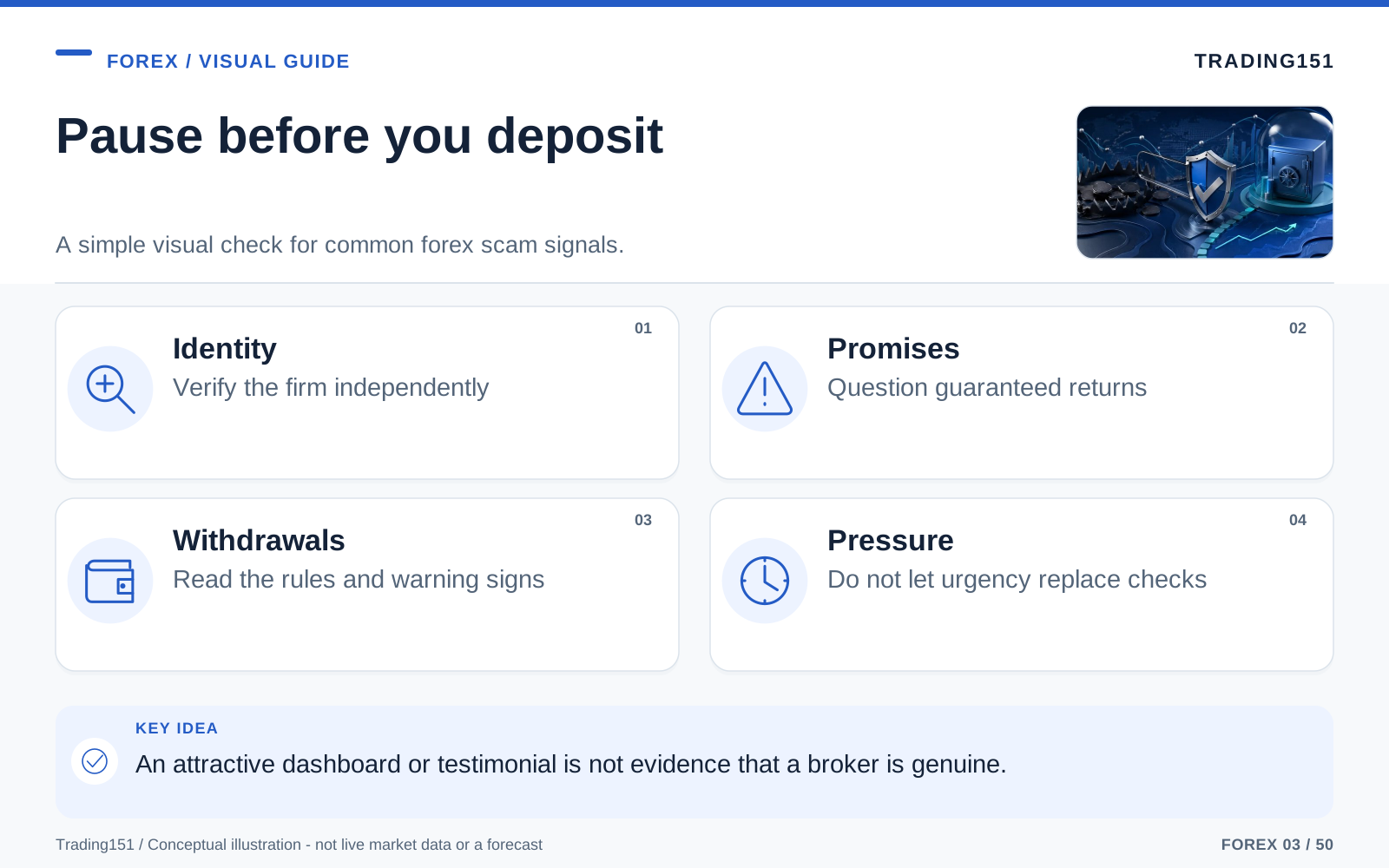
Read this diagram as text
- Identity
- Verify the firm independently
- Promises
- Question guaranteed returns
- Withdrawals
- Read the rules and warning signs
- Pressure
- Do not let urgency replace checks
The Most Common Types of Forex Scams
Fraudsters are always finding new ways to dress up their cons, but underneath it all, they usually rely on a few classic playbooks. Once you learn to recognize the patterns, they stick out like a sore thumb.
1. The Signal Seller Fantasy
This one is everywhere because it’s easy to set up. A "signal seller" promises to tell you exactly when to buy and sell. All you have to do is pay a monthly fee, join their VIP Telegram group, and wait for winning trades to be sent straight to your phone.
It sounds like a dream, right? You don't have to spend years learning technical analysis or staring at charts. Just copy-paste the trades and get rich. But that exact promise is why it's so dangerous.
Behind the scenes, these sellers are usually just guessing, stealing signals from other groups, or cherry-picking their wins while quietly deleting the losing trades from the chat. Some trade exclusively on demo accounts to show off large "profits" without risking a cent of their own money. Others run five different private groups and only brag about the one that happened to have a lucky week.
Think about it: if someone honestly had a secret, foolproof strategy that printed money every day, why would they be begging you for $50 a month on Instagram? Sure, there are real trading educators out there, but anybody promising you guaranteed wins is selling pure fiction.
2. The “Magic Bot” or Trading Robot
This scam preys on our desire for passive income. The pitch usually goes something like, "Why trade manually when our software can do it for you?" They’ll throw around big buzzwords—institutional algorithms, artificial intelligence, neural networks, or bots that "never sleep."
It sounds high-tech until you pull back the curtain. Automated trading systems absolutely exist, and hedge funds use them. But the ones being peddled to beginners online are usually junk. They promise large win rates with zero effort, which is exactly what exhausted people want to hear.
The reality is that the market is a living, breathing thing. It reacts to news, politics, and global events. A cheap bot that happens to work on a quiet Tuesday will completely self-destruct when the market gets volatile. Most of these "magic bots" are just basic scripts wrapped in slick marketing and photoshopped performance charts.
If someone swears their software will quietly make you wealthy while you nap, treat that as a large red flag, not a selling point.
3. The Fake Broker
This is where things get truly devastating. A fake broker doesn't just sell you a bad bot or lousy advice—they act as the actual platform holding your money. These "clone brokers" will often steal the name, address, and license number of a real, regulated firm to look totally legitimate. Always verify a broker on the official regulator's website yourself, rather than clicking a link the salesperson sends you. A real license number means nothing if it's attached to a fake clone website.
This scam is a slow burn. You sign up, the website looks great, and you might even get a friendly phone call from your "personal account manager." They tell you to just start with a small amount. Magically, your first few trades are hugely profitable.
But those profits aren't real. It's just an illusion designed to build your confidence.
They want you to feel so good about winning that you deposit more of your savings. They might even let you withdraw a tiny bit of money early on to prove they’re "legit." But the second you try to withdraw a large amount, the nightmare starts. Suddenly, there are "liquidity fees," "taxes," or "anti-money-laundering blocks." They will bleed you dry with fake fees until you run out of money or finally realize the truth.
The hard truth is, your money was gone the second you made that first deposit. The whole platform was just an elaborate video game meant to keep you stringing along.
4. Managed Account and “Expert Trader” Scams
In this scenario, someone slides into your DMs offering to trade for you. They call themselves a portfolio manager or a seasoned pro. They assure you that you don't need to know anything about Forex—just fund the account and let them work their magic.
They might ask for your login details, or they’ll ask you to send crypto directly to their wallet so they can "invest it for you." Please hear this: the moment you hand your money or your passwords to a stranger on the internet, you are no longer investing. You are just hoping.
These scammers are persuasive because they act like your friend. They check in on how your day is going. They celebrate your "gains" with you. But that friendly relationship is entirely weaponized. Just because they text you back late at night doesn't mean they aren't robbing you.
5. Ponzi and Pyramid Schemes Wearing a Forex Mask
Some operations just use Forex as a cover story for a classic pyramid scheme. They promise guaranteed monthly payouts, claiming their "proprietary strategy" never loses. Then, they heavily incentivize you to recruit your friends, family, and coworkers to get bonus payouts.
This should trigger large alarm bells. Real trading does not produce perfect, straight-line profits every month without risk. If a company is paying its older members using the deposits of newer members, it's a Ponzi scheme. It’s not a matter of if it will collapse, but when.
The worst part of this scam is the collateral damage. Because victims recruit people they love, a collapsed Ponzi scheme doesn't just destroy bank accounts—it destroys families and lifelong friendships.
Red Flags You Should Never Ignore
People who get scammed almost always look back and realize the warning signs were there all along. It’s so much easier to spot them when you know exactly what to look for. Pushiness, secrecy, and asking you to give up control of your devices are huge warnings. Be careful if someone insists on being paid in crypto, wants to download screen-sharing software on your computer, or suddenly demands a "tax" before you can withdraw your own money. Real brokers will ask for an ID to verify who you are, but they will never ask for your passwords or unrestricted access to your devices.
- Guaranteed profits: If someone promises you’ll never lose, or talks about "safe" profits, walk away. By definition, trading always involves risk.
- Pressure to act now: Scammers absolutely hate it when you take time to think. If they’re pushing you to deposit right now before a "special offer" expires, the urgency is fake.
- A lifestyle-first pitch: Be highly skeptical of anyone who spends more time showing off rented yachts and Rolexes than explaining how they manage risk.
- Unsolicited messages: A random stranger messaging you on Telegram or WhatsApp about a "lucrative trading opportunity" is almost never going to end well.
- Complicated explanations that never become clear: If they use a lot of financial jargon but can’t explain their strategy in plain English, they are using confusion to hide the scam.
- Trouble withdrawing money: This is the ultimate red flag. If you try to take your money out and are hit with endless delays, excuses, or surprise fees, assume the worst.
- Crypto-only payments: While crypto isn't inherently bad, scammers love it because once you send it, you can almost never get it back.
- Fake authority: Posting motivational quotes and flashing cash on Instagram doesn't make someone a financial expert. Neither do fake screenshots of winning trades.
- Isolation tactics: If they tell you to keep this a secret from your spouse, or tell you to ignore your bank's fraud warnings because banks "just don't want you to be rich," they are intentionally cutting you off from reality checks.
A good rule to live by: the more someone tries to hype you up, make you feel special, or rush your decision, the tighter you need to hold on to your wallet.
What Legitimate Trading Usually Looks Like
Want to spot a fake? Get familiar with the real thing. Actual trading is infinitely less glamorous—and way more methodical—than what you see on social media.
Real trading is about studying market structures, strictly managing your risk, and keeping your emotions in check when you take a loss. A lot of the time, it's pretty boring. There are no flashy movie montages. No guaranteed daily payouts. No magic mentor handing you a shortcut to skip the hard work.
But that doesn’t mean it's impossible. It just means it's real.
You make yourself a prime target for scammers when you look at trading as a quick fix for your financial problems. If you treat it like a serious skill that takes patience to master, you’ll naturally become immune to the guys promising overnight miracles.
How to Protect Yourself Before You Deposit a Single Dollar
If you're ready to dip your toes into Forex, a few simple habits can save you a lot of heartbreak. Always use payment methods that leave a clear paper trail. Start small, and test the withdrawal process as soon as possible. Read the fine print to see what exact legal entity is taking your money, and do your own independent research—don't just trust a review page that the broker handed to you. Scammers want you to skip the verification phase, so do the exact opposite.
Check the Broker Properly
Don’t just look at a shiny homepage and assume it’s safe. Scammers are great at copying official logos and registration numbers. Go directly to your country's financial regulator website and look them up yourself. If the details don't match perfectly, or you can't confirm they are authorized, walk away. And look for real reviews off-site—especially on forums where regular people talk about having their accounts frozen or dealing with aggressive salespeople.
Start With a Demo Account
Any real platform will let you practice with virtual money first. This is crucial because it lets you learn the ropes without risking your savings. But it's also a great test: if a broker is heavily pressuring you to ditch the demo account and deposit live funds immediately, they’re telling you exactly what they’re really after.
Keep Control of Your Money
Never send money directly to a stranger who promises to trade for you. Never share your login credentials. And absolutely never download remote-access software (like AnyDesk) just because a broker claims they want to "walk you through the platform." Those are all fast tracks to losing complete control of your finances.
Protect Your Personal Information
Real brokers have to ask for ID for standard compliance reasons, and that's normal. But if some random guy on Telegram is demanding a photo of your passport and your credit card to "release your profits," block him. Scammers don’t just want your deposits; sometimes they want your identity data so they can reuse it or sell it later.
Test the Withdrawal Process Early
If you do decide to fund an account, test the waters first. Try to withdraw a small amount of money before you commit anything major. Scams usually run smoothly right up until the second you ask for your money back. Testing a withdrawal early is the quickest way to pull the mask off.
The Secondary Scam Nobody Warns You About Enough
This is where the industry gets truly despicable. Once someone has been scammed, they often get targeted all over again. Enter the "recovery scammers." These predators track down people who have already lost money and pose as cybersecurity experts, blockchain investigators, or lawyers. They promise they can get your money back—but of course, you have to pay an upfront fee first. Real authorities will never ask you to pay them in cryptocurrency to release recovered funds. Treat any out-of-the-blue offer to rescue your money as a brand-new threat.
Think about the psychology here. You’ve just lost money to a fake broker. You’re embarrassed, furious, and desperate to fix it. You start searching online for help, and you stumble across a "fund retrieval specialist."
A lot of the time, these "investigators" are the same scammers who stole your money in the first place. They know you're desperate. They'll tell you they traced your funds and have the scammers cornered, but they just need one quick payment for "legal fees."
Then they’ll need another fee for "tax clearance," followed by more charges every time you supposedly get close to getting your money back.
If someone asks you to pay money to recover money you already lost, run. Desperation makes us blind, and fraudsters count on the fact that you’ll be too embarrassed by the first scam to ask friends for advice on the second one.
What to Do If You Think You have Been Scammed
If you're reading this because you've already been scammed, please take a deep breath. It is completely normal to panic, and it’s completely normal to feel ashamed. But you are not stupid. These people are professional manipulators. They rehearse this all day, and they know exactly how to push your buttons.
Right now, you need to push the embarrassment aside and act quickly:
- Stop sending money immediately. Stop paying them. No matter what they say—no release fees, no taxes, no final "security deposits" to unlock your account. Just stop.
- Cut off direct communication. Don't tip them off by saying you know it's a scam, or they might delete evidence. Just quietly save all your chat logs, screenshots, and transaction records, and stop responding.
- Contact your bank or card provider right away. Call your bank’s fraud department immediately. Let them know you were targeted by an investment scam and ask exactly what your options are.
- Change important passwords. Do this immediately, especially if you reused passwords on the fake platform, sent them photos of your ID, or let them screen-share your computer.
- Report the fraud through the appropriate official channels in your country. File a report with your bank, financial regulator, and local cybercrime units. It creates a paper trail that helps authorities build cases against these networks.
- Tell someone you trust. Scammers thrive on your silence. Telling a friend or family member will help ground you and keep you from making panicked decisions.
Seriously, don't let shame isolate you. Smart, highly educated people get scammed every day. Falling for a con doesn't mean you're naive; it just means a highly sophisticated trap worked exactly as it was designed to.
A convincing withdrawal is not the end of the check
A small withdrawal can be reassuring, but it is not proof that a platform is legitimate. A dishonest operator may allow early withdrawals because they make a much larger deposit easier to obtain. The important check is whether the business, legal entity, website, and payment recipient match independent records, not whether one transaction went smoothly.
Keep copies of the account agreement, the receiving bank details, and the messages that led you to the service. Verify contact information through the regulator's own website rather than a link sent by the salesperson. A genuine firm's name and registration number can be copied; the domain and telephone number are often where an impersonation becomes visible. Absence from a warning list is not approval.
When something goes wrong, resist the urge to make one more payment to release the balance shown on screen. Claims about a special tax, a compulsory security deposit, or a refundable unlocking charge deserve independent verification. Contact your bank or payment provider promptly and preserve transaction references. Report the matter to the relevant authorities, understanding that reporting does not guarantee recovery.
There is no need to win an argument with the person pressuring you. Stop the conversation, secure your accounts, and make the next decision away from the sales pitch. Asking an uninvolved person to review the documents can interrupt the pressure that made the offer feel urgent in the first place.
Preserve evidence without sending more money
When a withdrawal dispute begins, keep account statements, transaction references, messages, and the terms that applied when the deposit was made. Avoid paying a new 'release fee' merely because the platform says it is necessary. Contact the relevant payment provider and authority through independently verified channels. An orderly record is more useful than an argument in a chat window controlled by the same people holding the money. 1, 2
A Few Closing Thoughts
Forex is a weird space where reality and total fantasy are mixed tightly together. The market itself is very real. The risks are real, and the potential to build a skill over time is real, too. But layered on top of all that is a thick swamp of hype, fake gurus, and outright theft.
You don't have to be completely cynical to survive in this space, but you do need to be patient.
Take your time. Verify everything yourself. Treat large financial claims as cheap advertising, not fact. Read the fine print, ask difficult questions, and test the waters before diving in. If a broker seems way more focused on getting your deposit than explaining the risks to you, trust your gut and walk away.
You worked hard for your money. Don't hand it over just because some guy on the internet figured out how to fake a screenshot and rent a sports car for the afternoon. In the trading world, being skeptical doesn't make you a pessimist—it makes you safe. If you suspect you're currently in the middle of a scam, lock everything down. Save your messages, transaction records, and website links before the scammers delete them. Call your bank, and whatever you do, do not send them "just one more payment" to get your money out. Act fast, but keep your head clear so you don't make a second panicked decision trying to fix the first one.
Sources and further reading
Editorial revision: 7 October 2026. Numerical scenarios are hypothetical unless identified as historical. References support the added explanations and selected corrections; rules and product terms should be checked again before acting.